
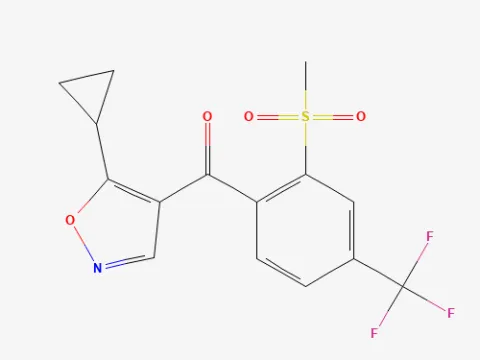
Isoxaflutole
Isoxaflutole is a systemic herbicide belonging to the isoxazole chemical class, primarily functioning as a soil-applied agent. It acts by inhibiting the 4-hydroxyphenylpyruvate dioxygenase (4-HPPD) enzyme, which is vital for carotenoid biosynthesis.
What the section contains
Isoxaflutole
Blocking the synthesis of carotenoids prevents the protection of chlorophyll from photo-oxidation, leading to rapid bleaching of susceptible weed foliage and subsequent plant death.
A key agronomic advantage is the "reactivation" property. If no rain occurs after application, the herbicide remains stable in the soil and resumes its activity upon sufficient moisture, providing long-lasting control.
The substance is absorbed mainly through the roots and emerging shoots of weeds, ensuring effective control of both germinating seeds and early-stage seedlings.
Isoxaflutole demonstrates excellent mobility in the upper soil layer, which allows it to cover the germination zone effectively regardless of soil moisture fluctuations.
Isoxaflutole is primarily used for pre-emergence weed control in maize (corn) fields, targeting a broad spectrum of broad-leaved weeds and specific grass species.
It provides effective control against stubborn weeds such as common lambsquarters, pigweed, black nightshade, and various smartweed species.
The herbicide exhibits high selectivity, meaning it effectively manages weed pressure without causing harm to corn crops when label instructions are followed.
It acts as a residual herbicide, preventing secondary flushes of weeds that often plague fields during the early stages of crop development.
By eliminating early competition for nutrients and water, isoxaflutole helps maximize the crop's genetic yield potential.
Application is typically performed pre-emergence (soil-applied), with dosage rates dictated by soil texture, organic matter content, and target weed spectrum.
Lower rates are recommended for coarse-textured soils or those with very low organic matter to minimize potential crop sensitivity risks.
The ideal application window is immediately following planting, provided there is enough soil moisture to activate the residual barrier.
Isoxaflutole is often used in tank mixes with other herbicides to broaden the spectrum against specific grass weeds and enhance overall field management.
Crop safety is highly dependent on planting depth; seeds should be planted at least 3-4 cm deep to prevent the herbicide from interacting with the emerging shoot.
Avoid application on sandy soils with extremely low organic matter content to prevent the risk of leaching into the crop's root zone.
Crop rotation restrictions must be strictly observed, as residues can affect subsequent crops like sugar beets or sunflowers depending on soil conditions.
Personnel must wear appropriate personal protective equipment during handling to avoid direct contact with eyes or skin.
Storage should be in original packaging within a secure, well-ventilated area away from direct sunlight and extreme temperatures.
Dispose of container waste and equipment wash water in accordance with local environmental regulations to protect surrounding water bodies.