
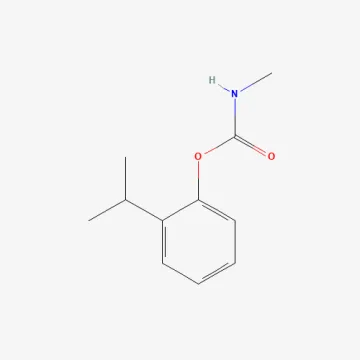
Isoprocarb
Description
Mode of action
Isoprocarb belongs to the carbamate chemical class and functions as a systemic and contact insecticide. Its primary mode of action is the inhibition of the enzyme acetylcholinesterase within the insect's nervous system.
The inhibition leads to the accumulation of acetylcholine at the synaptic junctions, resulting in continuous nervous excitation. This causes paralysis and eventual death of the target pest shortly after exposure.
The compound is highly valued for its rapid knockdown effect, which is crucial for preventing crop damage during heavy pest outbreaks. Being systemic, it can be absorbed by the plant and transported to tissues that were not directly sprayed.
Isoprocarb maintains moderate residual activity, providing a protective window that helps maintain pest-free conditions during critical growth stages. It is highly effective even under varying environmental conditions.
Integration into agricultural programs is common, as isoprocarb offers an alternative to organophosphates, assisting in resistance management strategies when rotated with other classes of insecticides.
What it targets
Isoprocarb is primarily used to control sucking and chewing pests, including aphids, leafhoppers, planthoppers, thrips, and certain species of bugs. It is a key tool in rice cultivation for suppressing devastating pests.
Beyond rice, the insecticide is applied in vegetable farming and on various field crops. Its ability to target vectors of plant viruses makes it essential for maintaining crop health and high yields.
Rates and timing
Application rates are determined based on the target crop and the specific pest pressure identified during field monitoring. The substance is typically formulated as emulsifiable concentrates or wettable powders.
Timing the application is critical; it should be executed based on economic threshold levels rather than fixed dates. Early treatment during the younger instar stages of pests provides the most efficient control outcomes.
Restrictions
Isoprocarb is highly toxic to bees and other beneficial insects. Therefore, application during flowering periods must be avoided, and local beekeepers should be notified according to regional regulations.
Environmental precautions include strictly avoiding runoff into water bodies, as the substance is toxic to aquatic life. Buffer zones near water sources must be respected during all spraying operations.
Operators must wear personal protective equipment, including respirators and chemical-resistant gloves, to avoid skin contact and inhalation. Proper decontamination of equipment is required after use.
To prevent the development of insect resistance, do not use isoprocarb repeatedly on the same plot. It is best practice to rotate it with products that feature a different chemical mode of action.
Storage must be in a cool, dry, and secure location, away from food and animal feed. Containers should remain tightly sealed to prevent contamination and maintain the chemical stability of the product.
Status in the European Union
Not approved in the EU
- CAS number
- 2631-40-5
EU status is for reference only and does not replace national registration in your country.