

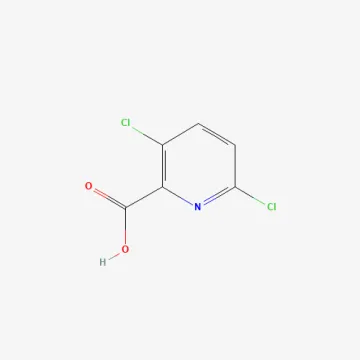
Description
Mode of action
Clopyralid belongs to the pyridinecarboxylic acid chemical class and acts as a highly selective systemic herbicide.
It is absorbed primarily through the foliage and translocated rapidly to the meristematic tissues and roots of the target plants, ensuring deep systemic control.
The mechanism of action mimics the plant's natural growth hormone, auxin, which triggers uncontrolled cell growth and prevents the plant from absorbing necessary nutrients.
Sensitive weeds show symptoms such as twisting, curling, and abnormal thickening of stems within hours, eventually leading to plant death.
Because the herbicide targets the entire root system, it is exceptionally effective against persistent perennial weeds that can regenerate from underground structures.
What it targets
Clopyralid is widely used across various crops including small grains, corn, sugar beets, canola, and flax, offering flexible control options.
It is specifically valued for its ability to eliminate hard-to-control perennial weeds in the Asteraceae family.
It provides long-lasting suppression of deep-rooted weeds, preventing their spread and reducing competition for sunlight and nutrients.
The herbicide remains effective even on mature weed specimens if the application is timed correctly within the plant's growth cycle.
- Canada thistle (Cirsium arvense)
- Perennial sowthistle (Sonchus arvensis)
- Cornflower (Centaurea cyanus)
- Scentless chamomile (Matricaria inodora)
Rates and timing
The application rates for clopyralid are determined by the targeted weed density and the physiological growth stage of the cultivated crop.
Typically, dosage ranges from 0.16 to 0.66 kg of active ingredient per hectare, depending on the specific product formulation and the local weed spectrum.
Application is most effective when weeds are in the rosette stage and are actively growing, as this maximizes uptake through the leaves.
For cereal crops, application should be completed before the jointing stage to minimize any potential stress on the young plants.
Optimal environmental conditions, including moderate humidity and temperatures between +10°C and +25°C, are required for the best performance.
Restrictions
Clopyralid has significant soil persistence, necessitating strict adherence to crop rotation intervals to protect future plantings.
Certain sensitive crops such as legumes, potatoes, and sunflowers should not be planted in treated soil in the subsequent season due to residual activity.
Proper cleaning of spray equipment is essential to prevent cross-contamination, as even trace amounts can damage sensitive ornamental or agricultural species.
Operators must take precautions to prevent spray drift toward neighboring fields, as many broad-leaved vegetables are highly sensitive to this herbicide.
Always review the product label for specific tank-mix limitations and safety guidelines, as environmental conditions can significantly influence the degradation rate.
Content graph
Connections · Clopyralid
Most often together:
Marketplace
Products · 137


Galera 334 SL
Доу АгроСайенсіс С.А.С., Друзенхайм, Франція
Herbicides
0
0
·
2.6K
4 offers
14.3 €per 1 l
Buy


Galeon
«Нанджин Ессенс Файн-Кемікал Ко. Лтд» (Китай)
Herbicides
0
4
·
1.3K
2 offers
77.23 €per 1 l
Buy


Herbicide NARAPS w.r.k.
«Нанджин Ессенс Файн-Кемікал Ко. Лтд» (Китай)
Herbicides
0
0
·
61
6 offers
17.89 €per 1 l
Buy

MASTAC, V.R., (CLOPIRACID, 300 G/L)
«Нанджин Ессенс Файн-Кемікал Ко. Лтд» (Китай)
Herbicides
0
0
·
61
1 offer
130.3 €per pack
Buy


Trilon VG
ДВА Кемікалс Ко. Лтд., Китай (DVAChemicalsCo.Ltd.),China;
Herbicides
0
0
·
60
2 offers
0.88 €per 1 l
Buy


DEFAULT
«Нанджин Ессенс Файн-Кемікал Ко. Лтд» (Китай)
Herbicides
0
0
·
58
3 offers
28.44 €per 1 l
Buy


Galera 334 SLv.r.
Доу АгроСайенсіс С.А.С., Друзенхайм, Франція
Herbicides
0
0
·
57
1 offer
95.48 €per pack
Buy


Galeas, w.r., (Cloquarilid, 267 g/l + Picloram, 67 g/l)
Yangzhou Pioneer Chemical Co., Ltd.
Herbicides
0
0
·
54
1 offer
3.74 €per 1 l
Buy

WILLIAMS, V.G.
China Chemical Industrial & Rice Co. Ltd
Herbicides
0
0
·
54
1 offer
154.44 €per 1 l
Buy


Istilayk 334
Фадер Альянс Лтд., Великобританія (Fader Alliance Ltd., England) на заводах Нідерландів, Польщі
Herbicides
0
0
·
52
3 offers
7.3 €per 1 l
Buy


Triera, RK, (Cloquerial, 300 g/l + Picloram, 75 g/l)
ЗАТ Фірма Август, Росія.,селище Вурнари,
Herbicides
0
0
·
51
1 offer
45.05 €per 1 l
Buy

Mikado, water-based solution, (Cloquarid, 267 g/l + Picloram, 67 g/l)
Peters & Burg Kft.
Herbicides
0
0
·
50
2 offers
4.65 €per 1 l
Buy

DILYAR V.G.
«Lier Chemical Co., Ltd», Sichuan, Китай
Herbicides
0
0
·
50
14 offers
27.13 €per 1 l
Buy

Slash, EC
Доу АгроСайенсіс С.А.С., Друзенхайм, Франція
Herbicides
0
0
·
49
5 offers
7.59 €per 1 l
Buy


Clopid, WG, (Clopiralid, 750 g/kg)
«Lier Chemical Co., Ltd», Sichuan, Китай
Herbicides
0
0
·
47
1 offer
52.43 €per 1 l
Buy


Lontrel Grand
Квізда , Австрія на замовлення Доу АгроСайенсіс
Herbicides
0
0
·
44
3 offers
146.08 €per 1 l
Buy

CUKRON + V.R., (CLOPIRACLID, 300 G/L)
Sunrise Agrochemical Co., Ltd.
Herbicides
0
0
·
44
2 offers
22.75 €per 1 l
Buy


Cresar, RK, (Cloquaralid, 267 g/l + Picloram, 67 g/l)
Yangzhou Pioneer Chemical Co., Ltd.
Herbicides
0
0
·
43
2 offers
77.04 €per pack
Buy