
Common smut of corn
Ustilago maydis
The causative agent of the disease is the basidiomycete fungus Ustilago maydis, which belongs to the order Ustilaginales. It is a highly specialized parasite that infects exclusively corn (Zea mays) at all growth stages.
What the section contains
Common smut of corn
The fungus overwinters as teliospores in the soil or on plant debris, which serve as the primary inoculum for new crops in the spring season.
Under favorable conditions, these spores germinate to produce basidiospores that are dispersed by wind, water splashes, or insects onto healthy corn plant tissues.
The infection enters the plant through wounds, mechanical injuries, or natural openings like stomata, inducing cellular hypertrophy that leads to the formation of characteristic galls.
As an obligate parasite, this fungus requires living plant host tissue to complete its life cycle, propagate, and survive between seasons.
The disease affects all above-ground parts of the corn plant, including stalks, leaves, husks, ears, and tassels, leading to significant yield losses.
Ear infections are particularly destructive as they interfere with kernel development and significantly reduce both the quality and quantity of the harvest.
Stalk infections can lead to lodging during windy conditions, making mechanical harvesting difficult and causing additional field losses.
Overall plant vigor is compromised due to the infection, which hinders photosynthesis and disrupts the normal metabolic processes of the corn plant.
Economic losses also include the reduction in the nutritional value of silage if it contains smut spores, which can be detrimental to livestock health.
Massive disease development usually occurs during the summer months when temperatures range from +20 °C to +25 °C with adequate humidity levels.
The first symptoms typically appear from the jointing stage through the silking stage, when the plants are most vulnerable to infection.
Warm, wet weather cycles create ideal conditions for spore dispersal and repeated secondary infections throughout the entire growing season.
Epidemics often arise in fields with poor crop rotation practices, where high levels of fungal inoculum have accumulated from previous corn crops.
The intensity of pathogen development is highly dependent on environmental conditions, with dry seasons typically resulting in lower infection rates.
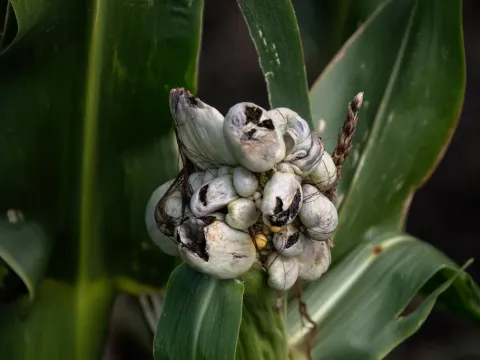
The primary symptom is the formation of blister-like galls, initially covered by a white or grayish membrane, which later darken as millions of black spores form inside.
These galls can reach considerable sizes and develop on any plant organ, causing severe deformity and structural damage to the host.
- Appearance of swellings or tumors on leaves and stems.
- Conversion of kernels in the ear into a black, powdery spore mass.
- Stalk deformation and growth suppression.
- Total destruction of the tassel when infected early in the season.
Once the gall membrane ruptures, the black spore mass is released and easily spread by wind to infect new plants across the field.
The most important control measure is crop rotation, which helps significantly reduce the fungal spore load in the soil through natural mortality.
Using resistant corn hybrids is the most effective strategic approach for managing and preventing the impact of common smut in corn fields.
Cultural practices include deep tillage to facilitate the decomposition of crop residue and the prompt removal of volunteer corn plants.
Managing insect pests, such as the European corn borer, is essential, as their feeding injuries create entry points for the fungal infection.
Seed treatment with certified fungicides can help protect seedlings from early-season soil-borne infection, providing a better start for the crop.