
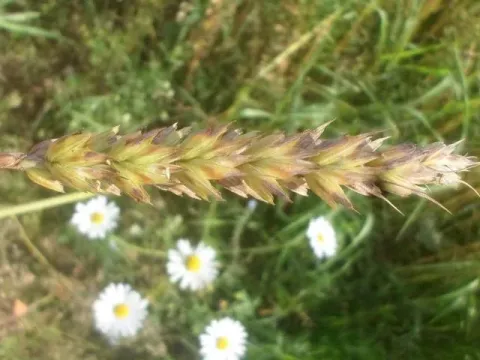
Common wheat
Triticum aestivum
Common wheat (Triticum aestivum) is an annual grass species in the Poaceae family, widely cultivated for its grain which is a staple food for much of the world.
What the section contains
Common wheat
Botanically, it is a hexaploid cereal with a fibrous root system, a hollow culm, and a complex spike inflorescence, showing significant morphological diversity among varieties.
The plant transitions through distinct growth stages including germination, tillering, stem elongation, heading, anthesis, and grain filling.
Identification is based on characteristics such as leaf blade structure, auricle presence, and specific glume features found in the wheat head.
Its physiological adaptability allows it to be grown in various climates, although this same adaptability often makes it a host for a wide variety of pathogens.
Common wheat is highly susceptible to numerous fungal pathogens, including Puccinia spp. (rusts), Fusarium spp. (blight), and Blumeria graminis (powdery mildew).
These diseases damage the crop by disrupting photosynthesis, nutrient translocation, and vascular integrity, leading to significant yield losses.
Fusarium head blight is particularly damaging as it not only reduces grain weight but also contaminates the harvest with harmful mycotoxins.
Root rots and foot rots physically degrade the structural support of the plant, often resulting in lodging and stunted growth across the field.
Beyond yield quantity, these pathogens severely affect grain quality, including protein composition and milling performance.
The disease cycle for many wheat pathogens is synchronized with the wheat growth season, starting from autumn seedling emergence to late-stage maturity.
Overwintering pathogens typically persist in crop residue, soil, or alternative hosts, becoming active as soon as temperatures rise in the spring.
The critical window for infection for many foliar diseases occurs during the rapid stem elongation and heading stages when canopy humidity is highest.
Summer rainfall and moderate temperatures often trigger rapid spore dispersal, leading to the development of secondary infections throughout the crop.
Toward the end of the season, pathogens produce survival structures such as sclerotia or chlamydospores that remain in the field to threaten the next crop cycle.
Recognizing early symptoms is vital for effective disease management, as visual indicators are often the first sign of a significant problem.
Key symptoms of wheat diseases include the following:
- Chlorotic or necrotic leaf spots that gradually expand and coalesce.
- Visible fungal structures such as mycelial mats, powdery coatings, or rust pustules.
- Premature yellowing or browning of the leaves and stems.
- Abnormal ear development, such as bleached spikes or replaced grain tissues by smut spores.
- Darkened, decaying root tissues or necrotic lesions at the stem base.
Integrated disease management involves selecting resistant or tolerant wheat varieties that are better suited to local disease pressure.
Cultural practices like crop rotation and tillage are essential to reduce the inoculum load of pathogens surviving in crop residues.
Timely application of chemical fungicides during the booting and heading stages is a standard practice to suppress outbreak progression.
Seed treatments are crucial for preventing early-season diseases and ensuring uniform crop establishment from the very start.
Monitoring the field for environmental conditions favorable to diseases allows for precise intervention, preventing losses from large-scale epidemics.