
Common smut of maize
Usually in
Description
How to identify
The pathogen responsible for common smut in maize is the basidiomycete fungus Ustilago maydis. It is a highly specialized parasite that exclusively targets maize plants, causing systemic changes in tissue development.
The life cycle begins with teliospores surviving in soil or crop residues. Under warm and moist conditions, these spores produce basidiospores that are disseminated by wind or rain splash onto developing maize tissues.
Ustilago maydis invades host tissues, triggering intense cellular division and hypertrophy. This results in the formation of galls, which are essentially tumors filled with millions of dark, powdery spores.
Unlike many other smut diseases, this fungus is not systemic in the entire plant. Infections occur locally at the site where the spores land and penetrate the plant epidermis during active growth phases.
The disease development is highly climate-dependent. Optimal growth occurs at temperatures between 20°C and 30°C. High humidity is crucial for the germination of spores and the subsequent infection of the plant.
What it damages
The primary economic impact of common smut is the direct loss of yield. Galls can develop on ears, destroying them entirely, or on stems and leaves, leading to stunted growth and reduced vigor.
Plants severely affected by Ustilago maydis exhibit reduced nutrient transport. This leads to significant losses in grain weight and lower overall quality of the harvested produce.
In addition to yield loss, the pathogen affects the plant's overall health, making it more susceptible to environmental stresses such as drought or secondary microbial infections.
In livestock farming, infected maize silage can be a concern. While not typically toxic, the presence of large quantities of fungal spores may reduce the palatability and nutritional value of the silage.
Outbreaks can result in substantial financial losses for farmers, especially if susceptible hybrids are planted in fields with high spore inoculum levels and favorable weather conditions.
Signs of infestation
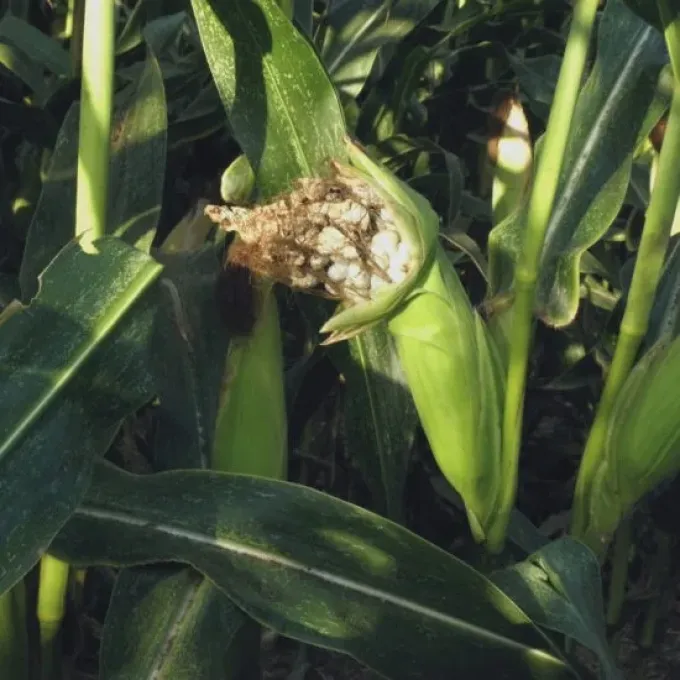
The most distinctive sign of common smut is the presence of galls. These are fleshy, tumor-like swellings that appear on any aerial part of the maize plant, including ears, tassels, leaves, and stalks.
Initially, these galls are covered by a smooth, white-to-grayish membrane. As the fungus matures, the internal tissue is converted into a mass of black, dusty teliospores, causing the membrane to rupture.
The exposure of the black spore mass is the hallmark of the disease. These spores are then released into the air, spreading the infection to other parts of the field or contaminating the soil for years.
Infected ears are often severely deformed, with the individual kernels being replaced by galls. This makes the disease highly visible and easy to diagnose during the late vegetative and reproductive stages.
Stunted growth, leaf twisting, and chlorosis near the infection sites are also common symptoms, indicating that the fungus has disrupted the normal hormonal balance of the plant.
Control measures
The most effective strategy for managing common smut is the use of genetically resistant maize hybrids. Breeders continuously develop new varieties with improved resistance levels to this pathogen.
Crop rotation is vital because teliospores can survive in the soil for several years. Avoiding maize cultivation in the same field for multiple consecutive years helps reduce the primary inoculum load.
Proper field hygiene is essential. Destroying or deep-plowing crop residues helps incorporate the spores into the soil, where they degrade faster, thus limiting the source of infection for the next season.
Reducing mechanical damage during cultivation is important because wounds provide easy entry points for the fungus. Precision farming practices help minimize such injury to the growing plants.
- Plant resistant maize hybrids as the first line of defense.
- Implement a 3–4 year crop rotation cycle.
- Ensure balanced fertilization to prevent rapid, tender growth that is more prone to infection.
- Use professional seed treatments to protect seedlings during the early stages of growth.
- Practice deep tillage to bury infected plant residues.
Causes diseases · 1
Discussion
No discussions yet — be the first.