
Tubercularia lateritia
Tubercularia lateritia
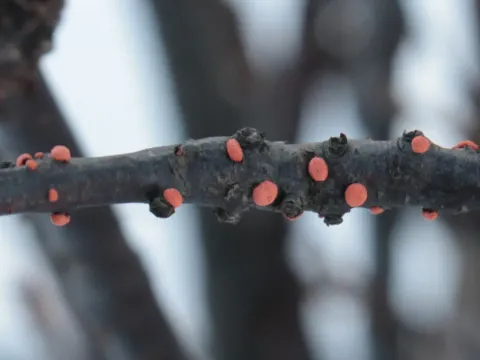
Tubercularia lateritia is a fungal pathogen classified within the Ascomycota division. It is commonly identified by its asexual (anamorphic) reproductive structures, which appear as small, bright brick-red pustules on the bark of infected hosts.
What the section contains
Tubercularia lateritia
The fungus exists primarily as a parasite or saprophyte within the bark and cambium layers of woody plants. Its spores are produced in dense clusters, making the infection sites clearly visible to the naked eye during humid weather conditions.
Taxonomically, it is frequently associated with the Nectria group of fungi. While the sexual stage is rarely observed in the field, the asexual stage provides high reproductive capacity through conidia dispersal.
Dissemination typically occurs through water splashes, wind currents, and mechanical transmission via contaminated pruning tools. The pathogen is highly opportunistic, often entering through pruning wounds or winter injury sites.
It survives harsh winter conditions by maintaining dormant mycelium within the dead or dying bark of previously infected woody tissues, ensuring a source for reinfection in the spring.
The primary hosts of Tubercularia lateritia include a wide range of fruit trees, such as stone fruits and pome fruits, as well as various ornamental shrubs and forest trees. It specifically targets the woody parts of the plants.
The fungus causes necrotic lesions on stems and branches. These lesions often girdle the affected branch, leading to the rapid drying out and death of the distal portions of the canopy.
In addition to direct tissue damage, the infection weakens the overall vitality of the tree, rendering it more susceptible to secondary infestations by bark beetles and other wood-boring insects.
Commercial orchards may face significant economic losses due to decreased yield, poor fruit quality, and the high labor costs associated with removing infected trees or branches.
Severe infections can lead to the total decline of young saplings, often causing significant setbacks in nursery production and new plantation establishment.
The most distinctive symptom of infection is the appearance of characteristic brick-red or orange-red cushions on the surface of the bark. These indicate the active sporulation of the pathogen.
Affected branches often exhibit symptoms of wilting during the summer, even if soil moisture is adequate, as the fungal growth disrupts the plant's vascular water transport system.
Upon removing the bark, one can observe localized areas of discolored, necrotic wood, often separated from healthy tissue by a distinct border. The wood may also appear brittle or decayed.
Gummosis, or the oozing of sap from cracks in the bark, is another common reaction observed in stone fruit species infected by this fungus, indicating host stress and tissue damage.
- Bright red pustules on the bark surface.
- Branch dieback and localized necrosis.
- Premature wilting of leaves during the growing season.
- Cracked and peeling bark in the affected areas.
Sanitation is the cornerstone of managing Tubercularia lateritia. All infected branches must be pruned back to healthy wood, with cuts made several centimeters beyond the visible necrosis.
Proper disposal of pruning material is essential. All removed wood must be destroyed or burned immediately to eliminate the source of fungal spores that could spread to neighboring trees.
Sterilizing pruning tools with alcohol or a disinfectant solution between each cut is critical to prevent spreading the pathogen from infected to healthy trees during orchard maintenance.
Applying copper-based fungicides during the dormant season and immediately after pruning provides a protective barrier against new infections and reduces the overall inoculum load.
Good agricultural practices, such as providing adequate nutrition and minimizing physical stress to the trees, are vital to helping trees develop natural defenses against this pathogen.