
Tuberculina
Tuberculina
Description
How to identify
Tuberculina is a genus of fungi belonging to the phylum Ascomycota. It is characterized by its role as an obligate hyperparasite, meaning it feeds exclusively on other fungi rather than plants.
The primary hosts of Tuberculina are rust fungi (order Pucciniales). These fungi are highly specialized to inhabit the spore-producing structures of their hosts, effectively suppressing their reproductive capacity.
The fungus develops mycelium within the tissues of the rust fungus, eventually forming distinct fruiting bodies known as sporodochia on the surface of the host's pustules.
Taxonomically, the genus is complex, as many species were historically identified as anamorphs (asexual stages) of more complex fungi, necessitating careful morphological and molecular classification.
In modern agricultural science, Tuberculina is studied for its potential as a natural biocontrol agent, capable of mitigating the damage caused by significant rust pathogens in crops.
What it damages
Tuberculina is not a plant pathogen; it does not harm the agricultural crops it colonizes. Instead, it serves as a beneficial microorganism by attacking the pathogens themselves.
By infecting the uredinia or telia of rust fungi, Tuberculina deprives the host of nutrients, preventing the formation of viable rust spores and halting the spread of the disease across the field.
While the rust fungus suffers significant damage from this parasitism, the crop plant benefits from the reduction of the inoculum load and the slowing of disease progression.
Under heavy infestation conditions, however, Tuberculina may struggle to completely eliminate a rust outbreak if the primary pathogen has already spread extensively across the field.
The presence of this fungus is considered an indicator of biological balance, as it naturally contributes to the regulation of fungal populations within the agroecosystem.
Signs of infestation
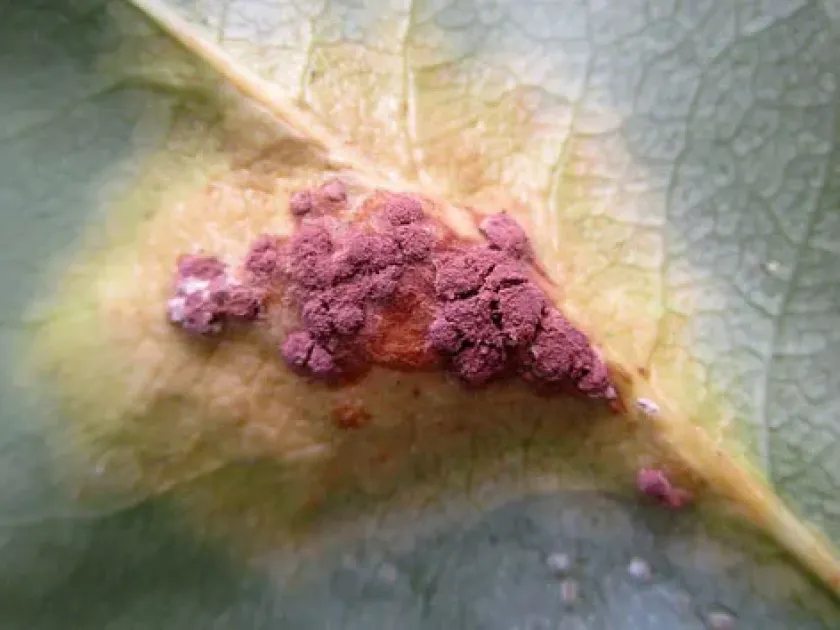
The most visible sign of Tuberculina infection is the distinct discoloration of rust pustules. Infected pustules turn from the typical bright yellow, orange, or brown to a dark purple, violet, or black.
This color shift is accompanied by the formation of velvety, cushion-like structures on the surface of the infected pustules, which represent the massed conidiophores of the hyperparasite.
These sporodochia effectively displace the rust spores, turning the pustule into a dense mass of Tuberculina conidia that are incapable of inducing rust infection in healthy plants.
The visual contrast between healthy rust colonies and those colonized by the hyperparasite is usually quite sharp, making it easy for trained agronomists to spot the infection in the field.
The process is most active under high humidity conditions, where the fungus can rapidly colonize and consume the host pustules.
Control measures
No control measures are needed for Tuberculina, as it is a beneficial organism that assists in disease management. Protecting its population is a goal in sustainable farming.
The use of broad-spectrum fungicides can kill Tuberculina along with the rust pathogens, potentially removing a natural check on the disease and leading to a dependency on chemical treatments.
Integrated pest management strategies suggest monitoring the level of hyperparasitism in fields to decide whether a fungicide application is truly necessary or if the natural control is sufficient.
Preserving natural biodiversity in the field, including hyperparasites, is an essential component of modern ecological agriculture.
- Regular scouting for darkened rust pustules.
- Avoidance of prophylactic fungicide use when hyperparasites are active.
- Integration of biological monitoring into the crop scouting process.
Causes diseases · 1
Discussion
No discussions yet — be the first.