
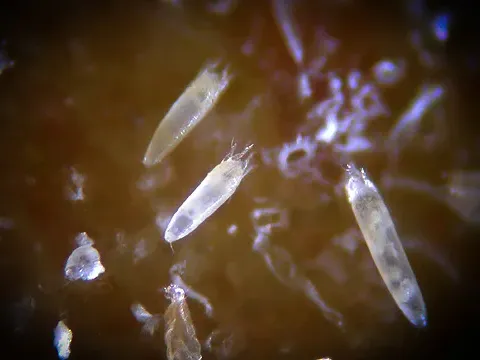
Tulip bulb mite
Eriophyes tulipae
The tulip bulb mite, scientifically known as Eriophyes tulipae, belongs to the family Eriophyidae. It is a minute, microscopic mite with an elongated, creamy-white body. Because of its size, infestation is often detected only after significant damage has occurred to the plant tissues.
What the section contains
Tulip bulb mite
As a taxonomic group, these mites are specialized herbivores. They possess highly adapted mouthparts designed for piercing plant cells and extracting nutrients. Their microscopic size allows them to hide effectively between the tight scales of bulbs, making them difficult to detect during standard inspections.
The primary hosts of this mite are bulbous plants, most notably tulips, garlic, and onions. The damage caused by the mite is twofold: direct feeding damage and the transmission of viral pathogens, such as the tulip breaking virus, which causes severe mosaic symptoms and color abnormalities in blooms.
By feeding on the basal plate and the inner scales of the bulb, the mite weakens the plant's structural integrity. This leads to stunted growth, reduced floral development, and, in severe cases, the complete death of the bulb before it even sprouts in the spring.
The life cycle of the tulip bulb mite is primarily synchronized with the storage period of bulbs. In warm storage conditions with moderate to high humidity, the mite population can increase exponentially, spreading from infested bulbs to healthy ones in close proximity.
During the spring and summer, the mites migrate from the stored bulbs to the foliage of the emerging plants. They take refuge in the protected environment of leaf sheaths and buds. As the plants senesce and go dormant, the mites retreat back toward the bulbs to survive the next storage cycle.
Early signs of infestation include the appearance of brownish, sunken patches on the outer scales of the bulbs. As the infestation progresses, the scales become soft, brittle, or take on a corky appearance, often leading to the bulb shriveling significantly.
- Irregular growth and twisting of the plant stems.
- Leaf chlorosis and stunted overall development.
- Development of "broken" patterns on flower petals.
- Failure of the bulb to produce roots or sprout leaves.
Sanitation is the most critical aspect of managing the tulip bulb mite. Growers must inspect all bulbs thoroughly before storage and discard any that show signs of damage or decay. Maintaining a cool, dry storage environment is essential to suppress the mite's reproductive rate.
For high-value crops, chemical control involving systemic or contact acaricides used as a bulb dip prior to planting is recommended. Furthermore, avoid continuous cultivation of bulbous crops on the same site to break the pest's environmental cycle and reduce the local population pressure.