
Strigula elegans
Strigula elegans
Description
How to identify
Strigula elegans is a species of microscopic fungi that functions as an obligate epiphyll, forming lichenized associations on the surface of plant leaves. It belongs to the kingdom Fungi, phylum Ascomycota, and the genus Strigula.
This pathogen develops on the surface of living leaves, predominantly in tropical and subtropical regions. It acts as a foliicolous lichen, establishing a symbiotic relationship with the cuticle of the host plant.
The mycelium grows in thin, branched filaments that penetrate the epidermis just enough to anchor, without causing immediate tissue necrosis. It reproduces through ascospores contained within small structures called perithecia.
Identification typically requires laboratory analysis, as the fungal colonies appear as inconspicuous gray or greenish patches, often mistaken for simple debris or normal leaf surfaces.
Studies emphasize that this species is highly specialized, adapted to high-humidity environments where it contributes to the complex microbial community on leaf surfaces.
What it damages
Strigula elegans primarily affects evergreen broad-leaved plants, particularly in forest ecosystems. In agricultural settings, it is occasionally found on ornamental crops and trees in high-humidity cultivation areas.
The damage caused by this pathogen is mainly related to the reduction of photosynthetic area. By covering significant parts of the leaf, the mycelium limits sunlight penetration and disrupts normal metabolic functions.
Over time, heavy colonization leads to premature chlorosis and leaf abscission. This weakens the plant, making it less productive and more susceptible to secondary environmental stresses.
The aesthetic value of ornamental plants is significantly reduced when their foliage becomes covered with these fungal colonies, leading to commercial losses in landscaping and nursery industries.
Long-term impact on host plants includes reduced nutrient accumulation, which can stunt growth and decrease the overall vigor of the affected trees or shrubs.
Signs of infestation
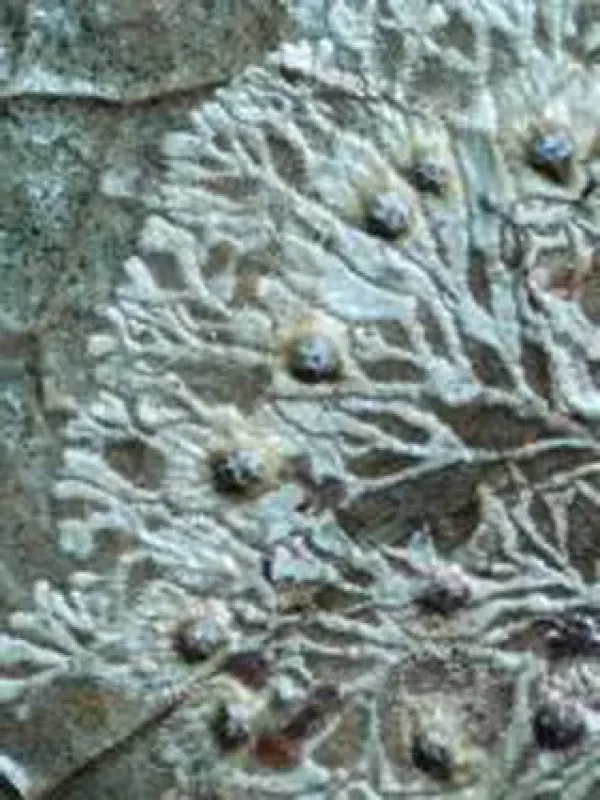
The first signs of infection include the appearance of small, dark, or grayish spots on the upper side of the leaf blades. These spots gradually expand as the fungal colony grows.
Close inspection with a hand lens reveals tiny black dots scattered across the surface, which are the perithecia where spores are produced. These dots are characteristic of the genus Strigula.
Unlike common surface mold, these colonies are firmly attached to the cuticle and cannot be wiped off. This indicates a stable, long-term colonization of the leaf surface by the fungus.
As the infection progresses, symptoms often include localized chlorosis directly beneath the fungal patches, indicating a physiological disruption in the host tissue.
The spread of these symptoms is typically vertical, starting from the lower, more humid parts of the canopy and moving upwards during prolonged periods of wet, stable weather.
Control measures
The primary control strategy involves cultural management, such as increasing canopy ventilation. Pruning dense branches helps lower local humidity, making the environment less hospitable for fungal growth.
Ensuring that plants have access to sufficient sunlight is critical, as well-lit leaves are less likely to support the development of heavy epiphyllous lichen colonies.
If colonization is severe, copper-based fungicides or appropriate broad-spectrum systemic fungicides can be applied to suppress the fungal growth on the foliage.
Sanitation practices, including the removal and destruction of heavily infested leaves in nurseries, are essential to prevent the spread of spores to healthy plants in the collection.
Monitoring plants, especially after long rainy seasons, is a recommended practice to catch early signs of colonization before it becomes widespread across the plantation.
Causes diseases · 1
Discussion
No discussions yet — be the first.