
Sporisorium
Sporisorium
The genus Sporisorium belongs to the kingdom Fungi and the phylum Basidiomycota. These pathogens are recognized as significant causative agents of smut diseases in various agricultural crops.
What the section contains
Sporisorium
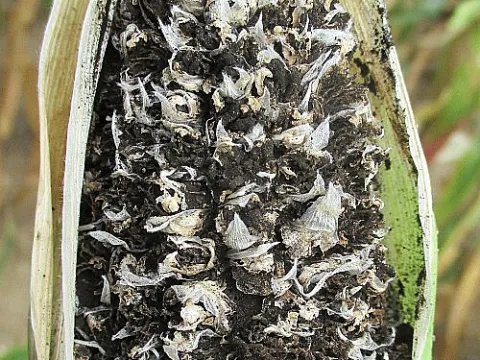
The genus is primarily characterized by the formation of sori, which are structures filled with teliospores that replace the floral parts or the entire inflorescence of the host plant.
Species within this genus exhibit specific morphological traits, including spore wall ornamentation and sori structure, which are crucial for accurate identification under laboratory conditions.
Taxonomically, these fungi have been reclassified over the years, with many species previously assigned to the genus Sphacelotheca now falling under the Sporisorium label.
They are obligate parasites that strictly depend on their host to complete their biological cycle, which often leads to systemic infection within the plant tissue.
The pathogen causes significant yield losses by hijacking the reproductive organs of cereals, specifically destroying grain production in crops like sorghum, millet, and maize.
Plants infected by Sporisorium often exhibit stunted growth, reduced tillering capacity, and abnormal inflorescence development, which severely impacts overall crop biomass.
The total replacement of healthy grains with mass quantities of dark spores not only reduces harvest weight but also affects the market value and food safety of the harvested grain.
In addition to direct losses, the infected crop can become a source of inoculum that spreads spores to adjacent fields, creating an escalating problem over several seasons.
The damage is most severe when environmental conditions favor early-season infection, allowing the fungus to colonize the plant systemically before the flowering stage.
Infection typically begins at the seedling stage when soil-borne or seed-borne teliospores germinate and penetrate the host tissue during the early phases of growth.
The development of the fungus is highly dependent on ambient temperature and soil moisture levels, with the range of +15°C to +25°C being optimal for most species.
The dispersal of spores primarily occurs via wind and rain splash during the anthesis stage of the host plant, facilitating the contamination of neighboring healthy grains.
The lifecycle is tightly synchronized with the growth stages of the host, ensuring that spores are ready to disperse exactly when the plant is most vulnerable to colonization.
These spores are known for their resilience, capable of remaining dormant in the soil or on plant residues for several years, waiting for favorable conditions to reactivate.
Seed treatment with systemic fungicides is the most effective proactive control measure, ensuring that the initial infection is neutralized before the seed germinates in the soil.
Implementing a strict crop rotation schedule helps to deplete the soil-borne spore bank, reducing the likelihood of subsequent outbreaks in the same field.
Breeding and planting resistant cultivars is considered the gold standard for long-term management of Sporisorium-related diseases in commercial agriculture.
Field sanitation practices, including the thorough removal and destruction of infected crop residues, are essential to minimize the inoculum levels for the following season.
- Utilizing clean, certified seed lots to avoid importing pathogens.
- Adjusting sowing dates to avoid conditions that favor fungal germination.
- Monitoring crops frequently during the vulnerable flowering period.
- Applying foliar fungicides if disease pressure in the area is detected.