
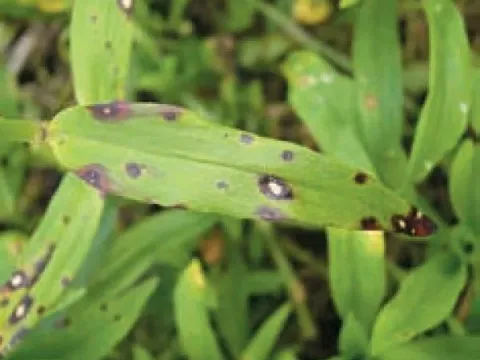
Carnation Septoria Leaf Spot
Septoria dianthi
The causal agent of this disease is the fungus Septoria dianthi, which is classified as an anamorph within the Ascomycota division. It is a specialized pathogen that specifically targets Dianthus species.
What the section contains
Carnation Septoria Leaf Spot
The fungus produces pycnidia, which are small, flask-shaped reproductive structures embedded within the leaf or stem tissue of the host plant. These are visible as dark spots.
Conidia are the spores produced inside the pycnidia. They are typically thread-like, hyaline (clear), and multi-septate, allowing them to travel easily through water splashes.
The pathogen overwinters as mycelium or pycnidia in crop debris left in the soil or on infected perennial plants. This persistence makes it a recurring problem in gardens.
Understanding the biology of Septoria dianthi is crucial, as the fungus relies heavily on free moisture to initiate the infection of healthy plant tissues.
Carnation plants (Dianthus caryophyllus) and several other related ornamental varieties are susceptible to this fungal infection. It is particularly damaging in greenhouse environments.
The fungus primarily attacks leaves and stems. As the infection progresses, it disrupts the plant's vascular and metabolic processes, leading to reduced vitality.
Photosynthesis is impaired as spots enlarge and cover the leaf surface. Severely infected plants may lose their lower foliage entirely, significantly reducing their aesthetic value.
Floral development is often negatively affected. Infected buds may fail to open correctly, or they may drop prematurely, causing major losses for floriculture operations.
In addition to cosmetic damage, weakened plants are more susceptible to secondary infections and may fail to survive through harsh winter conditions.
Septoria leaf spot thrives in conditions of high humidity and moderate temperatures. It is most prevalent during rainy seasons or when irrigation practices keep foliage wet.
Greenhouse settings are especially conducive to the spread of the pathogen, as poor air circulation and high relative humidity create an ideal environment for spore germination.
Splash dispersal is the primary mode of transmission. Rainfall or overhead irrigation hits the infected areas, spreading the conidia to healthy leaves on the same or neighboring plants.
The optimal temperature range for the development of Septoria dianthi is between 18°C and 24°C. Rapid life cycles occur during these warm, moist windows.
During the cooler months, the pathogen slows down its activity but remains dormant in the plant tissue, ready to re-emerge when the weather warms up again.
The initial symptom appears as small, light-colored or yellowish spots on the leaves. These spots gradually expand and transition to brown or gray-brown tones.
A yellow halo (chlorosis) often develops around the necrotic lesions as the plant reacts to the fungal infection. This is a common defensive response of the host.
The presence of tiny black dots in the center of the brown spots is the hallmark of Septoria. These are the pycnidia, where the spores are produced for further spread.
Stems can also be affected, leading to localized rotting or girdling. If the stem is severely damaged, the portion of the plant above the lesion will wilt and die.
- Light yellow spots developing into brown necrotic lesions.
- Presence of black pycnidia within the lesions.
- Yellowing and shriveling of the lower leaves.
- Premature death of shoots and stems.
Cultural control is the first line of defense. Ensure proper plant spacing to improve air circulation and reduce the duration of leaf wetness after rain or irrigation.
Practice bottom watering or drip irrigation rather than overhead sprinkling to keep the foliage dry, which prevents the spores from splashing and germinating.
Sanitation is critical; remove all infected leaves and dispose of crop debris at the end of the season. Do not compost infected plant material on site.
Chemical control involving copper-based fungicides or systemic triazoles can be effective if applied at the first sign of symptoms during the growing season.
Regular monitoring of plants allows for early intervention, which significantly reduces the need for heavy chemical usage and limits the potential for epidemic spread.