
Cassava vein mosaic
Cassava vein
Description
How to identify
Cassava vein mosaic virus (CsVMV) is a viral plant pathogen that belongs to the genus Cavemovirus within the family Caulimoviridae. This pathogen specifically targets plants of the genus Manihot, primarily affecting cassava crops.
The virus is a pararetrovirus characterized by a double-stranded DNA genome. Diagnosis in the field is based on visual symptoms, although definitive identification requires advanced laboratory techniques such as ELISA (enzyme-linked immunosorbent assay) or PCR.
The primary vector for the transmission of the virus in nature is the whitefly Bemisia tabaci. The virus is transmitted in a persistent manner, meaning the insect acquires the virus while feeding on infected plant sap and remains infectious for its entire life span.
In addition to insect vectors, the virus is spread through infected planting material, specifically stem cuttings. Using infected stems for propagation leads to the systemic spread of the virus throughout the plantation, which is a major factor in severe outbreaks.
The pathogen is most prevalent in South American regions, particularly in Brazil, where tropical climate conditions favor the constant activity of the whitefly vector throughout the year.
What it damages
The disease affects cassava (Manihot esculenta), a critical staple food crop in many tropical countries. The virus resides in the plant's vascular tissues, disrupting the transport of essential nutrients and photosynthetic products.
The primary damage results in severe stunting and inhibited plant growth. Infected bushes show deformed above-ground structures, and the root system fails to develop healthy storage tubers, leading to significant reductions in total yield.
In severe infections, losses in marketable tuber mass can reach 50–70%. The quality of the harvested product is also severely compromised, with tubers often being smaller, having lower starch content, and exhibiting poor shelf-life characteristics.
The systemic nature of the virus weakens the host's overall immune system, increasing susceptibility to secondary fungal and bacterial infections. This often leads to premature leaf senescence and stem dieback.
Economic damage is substantial, encompassing not only lost production but also the high cost of replacing infected planting material, as there is currently no cure for infected cassava plants.
Signs of infestation
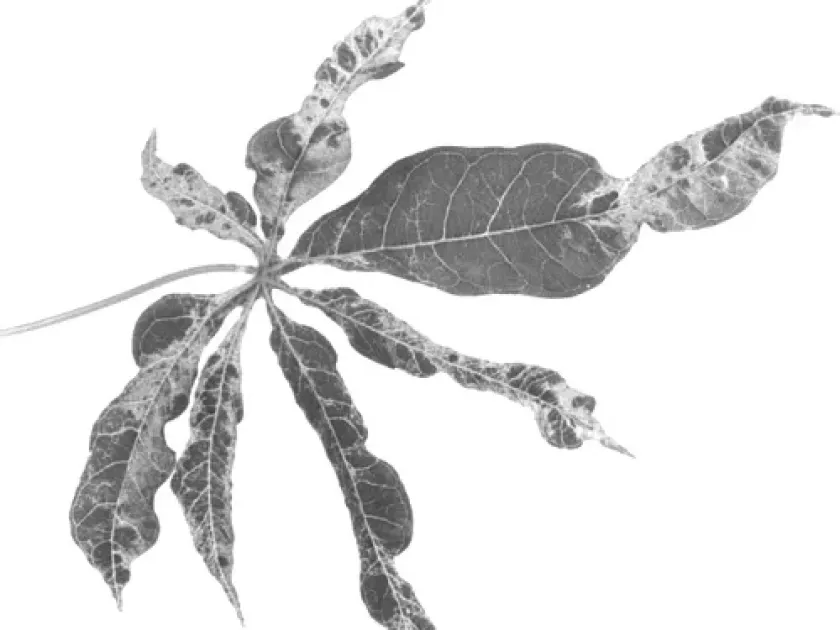
Initial symptoms appear on the leaves as chlorosis localized along the veins. Over time, the chlorosis spreads, creating a distinctive vein-clearing or mosaic net pattern, which serves as the primary visual indicator of the infection.
Leaves of infected plants are often deformed, showing signs of curling, crinkling, or significant reduction in size (microphylly). In advanced stages, leaf mottling and necrotic lesions may also become visible.
Stems of infected cassava often display shortened internodes, giving the plant a stunted and dwarf-like appearance. The normal branching pattern of the plant is often disrupted, making infected individuals easily distinguishable from healthy ones.
Upon inspection of the root system, tubers are often underdeveloped, thin, or misshapen compared to the vigorous and fleshy tubers found on healthy plants of the same variety.
- Chlorosis along leaf veins
- Leaf deformation and curling
- Overall plant stunting
- Shortened internodes
- Underdeveloped storage tubers
Control measures
The primary management strategy is the use of virus-free planting material. Growers are encouraged to source certified cuttings that have been produced through meristem culture techniques in authorized laboratory facilities.
Effective control of the whitefly vector is a crucial agronomic practice. The application of systemic insecticides is recommended to reduce vector populations on plantations during the critical early stages of crop development.
Strict spatial isolation between new plantations and older, infected fields must be maintained. Regular weed management is essential, as many weed species act as alternative reservoirs for the virus and breeding grounds for the whitefly.
Timely phytosanitary rogueing, which involves the identification and immediate removal of infected plants showing mosaic symptoms, is vital to limiting the spread of the virus within the field.
Current research efforts are focused on breeding cassava cultivars with natural resistance to CsVMV. Utilizing genetically tolerant hybrids is considered the most sustainable long-term solution for disease control.
Discussion
No discussions yet — be the first.