
Carnation etched ring virus
Carnation etched
Carnation etched ring virus (CERV) is a plant pathogen classified within the genus Cavemovirus, family Caulimoviridae. It specifically targets plants of the Caryophyllaceae family, with carnations being the primary host.
What the section contains
Carnation etched ring virus
The virus contains double-stranded DNA. It is known for its ability to persist in plant tissue for extended periods, often exhibiting latent infection symptoms, which complicates early detection.
The transmission of CERV predominantly occurs through mechanical means. Farm tools, pruning equipment, and handling during maintenance are the most common vectors in greenhouse environments.
Aphids act as natural vectors for the virus, spreading it from infected specimens to healthy plants in the field. This biological transmission contributes to the establishment of viral hotspots.
Effective identification relies on laboratory testing, specifically ELISA (Enzyme-Linked Immunosorbent Assay) or molecular methods like PCR, as physical signs alone can be ambiguous.
Infection with CERV leads to a significant decrease in the commercial value of carnation crops. The disease stunts plant development and reduces the overall quality of blooms.
Plants affected by the virus show reduced vigor and stunted growth. The resulting flower stems are often crooked or too short for cut flower standards, leading to direct economic loss.
The virus disrupts the plant's metabolic processes, resulting in smaller flowers, diminished coloration, and a lack of vitality, making the plants less resistant to environmental stress.
Over time, the cumulative impact of the virus on the plant population can lead to severe crop degradation, forcing growers to remove entire batches of infected stock.
CERV often interacts with other viruses, such as Carnation mottle virus, creating synergistic effects that exacerbate damage to the plant tissue and reduce production cycles.
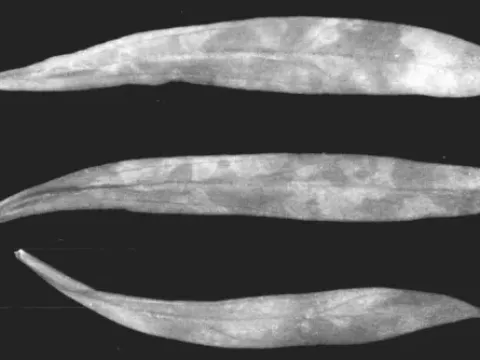
The defining symptom of CERV is the appearance of chlorotic lines, rings, and patterns on the leaves that resemble fine etching, hence the common name of the virus.
Leaves on infected plants may exhibit crinkling or distortion, which is frequently observed during the early stages of growth and becomes more pronounced under stress conditions.
Floral symptoms often include petal color breaking or the appearance of non-typical streaks on the petals, which severely reduces the aesthetic quality of the marketable flower.
In severe cases, necrotic spots may develop on the stems and leaves, eventually leading to tissue collapse and the drying out of foliage if the disease is not managed.
Symptoms are often masked or appear very mild during periods of optimal temperature and light, but they become highly evident when the plant is subjected to thermal fluctuations.
The primary control measure is the use of virus-free propagation material. Growers should source cuttings exclusively from certified, disease-free nursery stocks.
Strict sanitation protocols must be implemented, including the regular disinfection of all pruning tools, knives, and equipment with appropriate antiviral chemical agents after each plant is processed.
Implementing an integrated pest management (IPM) program is essential to control aphid populations, which are the main biological vectors of the virus in greenhouses.
Early roguing of infected plants is mandatory to reduce the inoculum pressure in the greenhouse. Once a plant is confirmed as infected, it should be removed and destroyed immediately.
Regular monitoring and training of personnel on hygienic practices are vital to prevent human-assisted transmission of the pathogen throughout the cultivation site.