
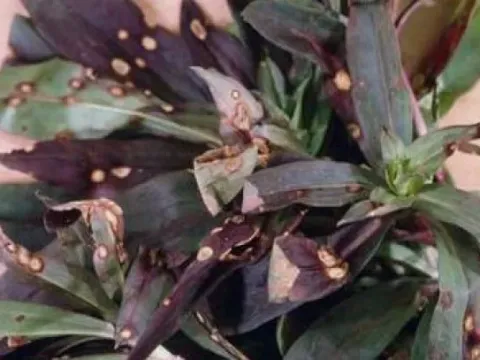
Carnation necrotic fleck
Carnation necrotic
The causative agent of this disease is the Carnation necrotic fleck virus (CNFV), which belongs to the genus Carlavirus and contains a single-stranded RNA genome.
What the section contains
Carnation necrotic fleck
The virus is transmitted by aphids, most notably the green peach aphid Myzus persicae, in a non-persistent manner during the insect's feeding process.
Mechanical transmission is a common pathway for spread within greenhouse environments through contaminated cutting tools used during pruning or propagation procedures.
Infected vegetative cuttings are the primary source of the virus. Because the infection is systemic, any propagation material taken from a diseased mother plant will carry the virus.
Often, CNFV occurs in mixed infections with other carnation viruses, such as the Carnation mottle virus, leading to severe synergetic damage to the host plant.
The primary host for this pathogen is the carnation (Dianthus caryophyllus), which is highly susceptible to the virus in both greenhouse and field conditions.
Infection results in significant growth retardation, causing stunted stems and foliage, which renders the flowers commercially unviable for the floral market.
The virus severely depletes the vigor of stock plants, drastically reducing the yield and quality of cuttings produced for propagation purposes.
Economic losses are driven by the need to discard low-quality produce, reduced flower vase life, and the premature removal of infected greenhouse crop cycles.
Widespread systemic infection eventually makes the affected crop unproductive, forcing growers to invest in expensive virus-free replanting programs.
Early symptoms include the appearance of small chlorotic spots on young leaves, which gradually darken into characteristic necrotic streaks or flecks.
Affected leaves often exhibit curling, distortion, and premature yellowing. As the virus progresses, severe necrosis of the leaf veins becomes highly visible.
Stems may show elongated necrotic lesions, which weaken the plant structure and give the carnation an overall sickly and collapsed appearance.
Flowers can suffer from morphological deformities, loss of petal color intensity, or irregular color patterns, making them unfit for sale.
The symptoms typically manifest systemically, moving from the lower leaves toward the younger growing points as the virus spreads throughout the plant tissue.
The most effective strategy is the exclusive use of virus-free, certified stock material obtained from specialized, disease-indexed laboratories.
Rigorous aphid management using systemic insecticides is essential to prevent the insect vector from spreading the virus between plants in the greenhouse.
Strict sanitation protocols must be enforced, including the regular disinfection of all cutting tools with alcohol or sodium hypochlorite solutions to prevent mechanical spread.
Routine phytosanitary monitoring of the crop is necessary to identify and remove symptomatic plants immediately, thereby preventing the establishment of an infection reservoir.
Maintaining optimal growing conditions and controlling weed hosts in the vicinity can help reduce the overall pest pressure and the likelihood of viral introduction.