
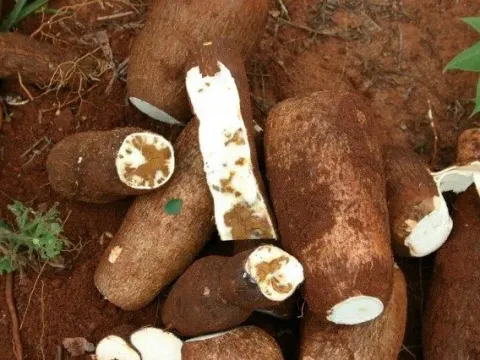
Cassava
Cassava
Cassava Manihot esculenta is scientifically recognized as a primary host and reservoir for several devastating viral pathogens, most notably the Cassava Mosaic Virus (CMD) and Cassava Brown Streak Virus (CBSD).
What the section contains
Cassava
These pathogens, which include begomoviruses and ipomoviruses, colonize the phloem of the plant, disrupting the transport of nutrients and the overall metabolic balance.
The plant serves as a long-term host because viral particles remain dormant within the vascular tissues, ensuring survival throughout the year and across different planting seasons.
Systemically, these viruses integrate into the host cell machinery, making the cassava plant a permanent source of inoculum for other susceptible species within the Euphorbiaceae family.
Identification often requires advanced diagnostic tools like PCR to distinguish between complex viral strains that may present similar but distinct symptoms in the field.
Viral infections in cassava cause severe stunting and root damage, leading to yield losses of up to 90% in affected agro-ecosystems.
The accumulation of starch in the storage roots is drastically inhibited, rendering the tubers small, fibrous, and commercially valueless for starch or food production.
In regions heavily dependent on cassava as a staple food, these pathogens pose a significant threat to regional food security and agricultural economic stability.
Secondary damage occurs as the weakened plants exhibit lower tolerance to environmental stress, making them highly susceptible to opportunist fungal diseases and pests.
The long-term impact on soil health and the inability to replant from local stocks perpetuate the cycle of disease, necessitating costly interventions and seed replacement.
The development and spread of these viral diseases are closely tied to the lifecycle of the whitefly Bemisia tabaci, which acts as the primary vector for viral transmission.
Infection cycles typically accelerate at the start of the rainy season when young, succulent shoots appear, offering an ideal target for feeding and viral inoculation by insect populations.
Dry periods with high temperatures can also influence the movement of vectors, leading to localized outbreaks that can decimate entire plantations within a few months.
Mechanical transmission is also a significant factor, as contaminated tools used during pruning or harvest can inadvertently spread pathogens from infected to healthy plants.
The latent period of the infection varies based on climate, but active virus replication often peaks during periods of rapid plant growth, facilitating widespread systemic infection.
The hallmark of infection is mosaic symptoms—a distinct yellow or light green mottling pattern that appears on the leaf blades, indicating the inhibition of chlorophyll production.
Leaves often exhibit severe deformation, including twisting, curling, and a reduction in size, which limits the total photosynthetic capacity of the canopy.
The overall plant architecture changes, with shortened internodes resulting in a bushy, stunted appearance known as the "witches' broom" effect.
Cassava Brown Streak Virus specifically manifests as dark, necrotic streaks on the stems and, in severe cases, necrotic brown lesions inside the edible storage roots.
- Mottled leaf patterns (mosaic).
- Deformed and curled leaf surfaces.
- Severe stunting of the entire plant.
- Shortened internode length.
- Internal necrosis of storage tubers.
The most effective strategy for disease management is the deployment of certified, virus-free planting material derived from tissue culture (meristem-tip culture).
Strict phytosanitary practices, including roguing and the immediate destruction of symptomatic plants, are essential to reduce the viral load in the field environment.
Integrated pest management (IPM) focusing on the control of whitefly populations significantly reduces the rate of new infections in both established and young plantations.
Breeding and distributing resistant or tolerant cassava varieties remain the most sustainable solutions for long-term control against evolving viral strains.
Education of local farmers regarding the importance of selecting healthy stem cuttings for propagation is critical to breaking the disease cycle within communal farming systems.