
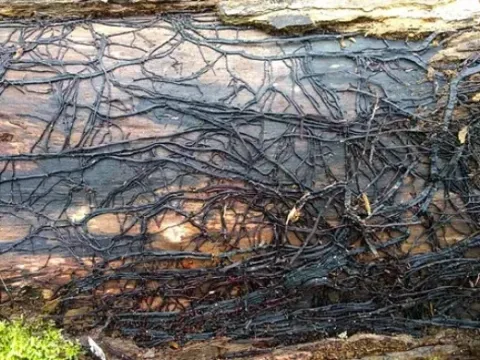
Rhizomorpha subcorticalis
Rhizomorpha subcorticalis
Rhizomorpha subcorticalis represents the vegetative mycelial structures of Armillaria species, commonly known as honey fungi. These structures consist of densely packed fungal threads that form cord-like networks.
What the section contains
Rhizomorpha subcorticalis
Classified under the kingdom Fungi, these rhizomorphs function as organs for spreading the pathogen through soil and wood. They are the primary agents of colonization for Armillaria.
Physically, they appear as dark, root-like strands with a tough, protective outer layer. These cords are highly resistant to environmental stressors and can survive in the soil for years.
The term identifies the "subcortical" habit of the fungus, referring to its tendency to spread beneath the bark of infected trees, effectively girdling and killing the host.
Identification is confirmed by removing the bark at the base of a dying tree, where these black, branching strands are clearly visible as they infiltrate the cambium layer.
These rhizomorphs impact a wide range of woody plants, including conifers like spruce and pine, as well as various fruit trees. They are notorious for causing white root rot.
The fungus invades the host via root-to-root contact or through colonization of existing wood debris. Once established, the rhizomorphs disrupt the tree's vascular system, preventing nutrient transport.
This leads to widespread wood decay, compromising the structural integrity of the tree. Infected trees often show signs of decline, leaf yellowing, and eventually, sudden mortality.
In orchards, the presence of rhizomorphs can be devastating, as the pathogen spreads rapidly from one infected root system to the next, causing significant economic losses.
In forested areas, the activity of these rhizomorphs leads to localized forest dieback, often creating gaps in the canopy that necessitate intensive management and reforestation efforts.
Active growth of rhizomorphs occurs throughout the growing season, provided that soil moisture remains high enough to support mycelial expansion and nutrient absorption.
Autumn is a critical period for the maturation of these structures. During this season, favorable conditions often trigger the formation of fruiting bodies on decaying wood.
During winter, the rhizomorphs remain dormant in the soil or protected under the bark of stumps and trees, preserving their viability until the next growing season.
Spring and early summer rains facilitate the rapid growth of rhizomorphs in the upper soil layers, allowing them to search for and infect new, vulnerable root systems.
Regular monitoring of tree stands during late summer and autumn is recommended to identify the presence of Armillaria activity before the symptoms become severe.
Early symptoms include a thinning crown and premature foliage discoloration. However, these signs are often non-specific and occur only when the root system is already significantly compromised.
The most diagnostic sign is the presence of white, fan-shaped mycelial mats beneath the bark of the lower trunk, which eventually evolve into the characteristic black rhizomorphs.
Decayed wood often exhibits a distinct mushroom odor and a bleached appearance, showing white, fibrous rot with visible black "zone lines" throughout the wood structure.
The appearance of clusters of honey-colored mushrooms around the base of the tree is a final indication of a advanced stage of infection by the fungal colony.
Cracking and sloughing off of the bark near the root collar are also common indicators that the underlying tissue has been destroyed by the aggressive action of the fungus.
Management focuses on sanitation. Removing infected trees along with their entire root systems is the most effective way to eliminate the inoculum source in the immediate area.
Improving tree vigor through proper horticultural practices, such as irrigation and balanced fertilization, helps trees withstand potential infection by Armillaria.
In some cases, physical barriers such as deep trenches around infected zones can prevent the further spread of rhizomorphs through the soil to neighboring healthy trees.
Chemical control is rarely effective as a primary measure but can be used in combination with silvicultural methods to reduce the overall fungal load in the soil.
- Stump removal to eliminate the reservoir of the pathogen.
- Preventing injury to tree roots during site maintenance.
- Using biological control agents that compete with Armillaria in the soil.