
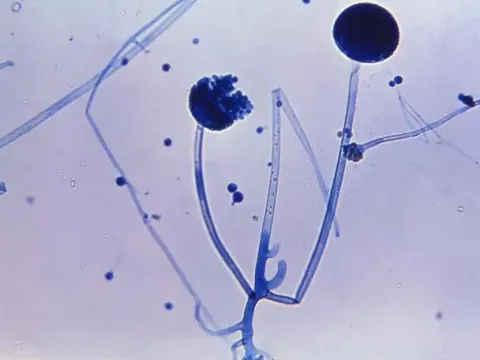
Rhizopus arrhizus
Rhizopus arrhizus
Rhizopus arrhizus belongs to the kingdom Fungi, phylum Zygomycota, and genus Rhizopus. It is a widely distributed soil saprotroph that acts as a facultative parasite under favorable conditions.
What the section contains
Rhizopus arrhizus
The fungus produces fast-growing, abundant mycelium, often forming a fluffy grayish or white mold. A characteristic feature is the formation of sporangiophores clustered together, with black or dark brown sporangia containing spores at their tips.
The fungus reproduces both asexually through sporangiospores and sexually via zygospores, which grants the pathogen high resistance to adverse environmental conditions.
This species is notably thermophilic, capable of active growth at temperatures exceeding 30-35 degrees Celsius, making it highly dangerous for produce stored in warm environments.
The fungus produces specific enzymes, such as pectinases and cellulases, which break down plant cell walls, leading to tissue softening and rapid decay.
Rhizopus arrhizus affects a wide range of agricultural crops, including vegetables, fruits, and grains. It is most frequently recognized as the cause of soft rot in fruits, berries, and tubers.
It poses a severe threat to tomatoes, cucumbers, strawberries, bell peppers, and potatoes during the ripening stage and post-harvest storage. It also impacts the root systems of young seedlings.
In the field, the pathogen attacks weakened plants, especially those with mechanical injuries or insect feeding damage. During storage, the fungus spreads rapidly from infected items to healthy ones.
Beyond destroying marketable produce, Rhizopus arrhizus can produce mycotoxins, rendering the infected crop unfit for human or animal consumption.
Significant economic losses occur when transportation temperature regimes are violated, as heat and high humidity foster rapid fungal proliferation.
The pathogen is most active during the warm season, starting from fruit setting until the completion of the harvest. The temperature optimum for fungal development ranges between 25 and 40 degrees Celsius.
High relative humidity (above 80-85%) is a critical factor that stimulates spore germination and mycelial penetration into plant tissues.
During storage, the risk of infection increases significantly with poor ventilation and moisture accumulation within containers. Rot can develop even at relatively high storage temperatures.
Spore dissemination occurs via air currents, water droplets, and insect vectors that carry inoculum to healthy fruits through skin abrasions.
Under optimal conditions, the fungus can complete its development cycle in a matter of days, leading to an explosive outbreak of disease in favorable environments.
The first sign of infection is the appearance of small, water-soaked spots on the surface of the fruit or tuber, which rapidly expand and turn brown or dark in color.
Tissues of the infected plant quickly lose structural integrity, turning into a soft, watery mass often accompanied by a distinct unpleasant, fermented odor.
Shortly after infection, a heavy cotton-like mycelial growth appears on the surface, initially white but darkening as sporangia begin to form.
When stems are affected, they exhibit browning and constriction at the collar region, leading to wilting and death of young plants.
- Tissue darkening and loss of structural firmness.
- Appearance of gray or black fluffy mold.
- Fruit softening and rapid liquid exudation.
- Distinctive sour or fermented smell during rotting.
To prevent infection, it is essential to follow crop rotation practices and promptly remove crop residues that serve as reservoirs for the pathogen in the soil.
Preventative measures against insect pests are critical, as physical damage to the fruit skin provides primary entry points for the fungus.
In storage facilities, maintaining strict temperature controls and providing constant ventilation is necessary to prevent condensation buildup.
Fungicide applications are primarily directed at soil treatment and protecting plants during the active growth phase, though efficacy depends heavily on the timing of treatments.
Important post-harvest practices include careful handling to avoid skin abrasions and immediate cooling of the produce to inhibit spore germination.