
Rhizoctonia
Rhizoctonia solani
The pathogen Rhizoctonia solani is a basidiomycete fungus that is widely known for causing severe soil-borne diseases in various crops.
What the section contains
Rhizoctonia
It does not produce asexual spores (conidia) and primarily exists as vegetative mycelium or as compact survival structures known as sclerotia.
Under specific environmental conditions, it can develop a sexual state, Thanatephorus cucumeris, characterized by the production of basidia on the host plant tissue.
The fungus is a versatile saprophyte, surviving on decaying organic matter in the soil or as dormant sclerotia that can persist for several years.
Dissemination occurs via movement of infested soil, infected seeds, tubers, and agricultural equipment contaminated with the fungus.
Rhizoctonia solani has an extremely broad host range, damaging crops such as potatoes, vegetables, sugar beets, cereals, and ornamental plants.
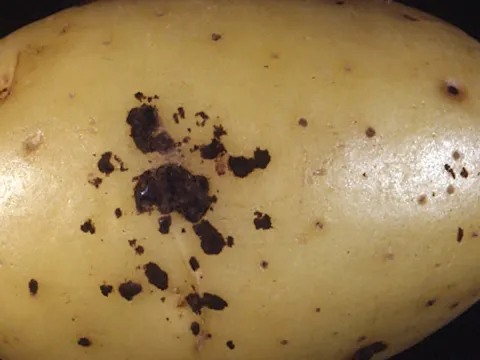
In potatoes, it causes black scurf and stem canker, leading to significant gaps in plant stands and poor tuber quality.
Vegetable seedlings are highly susceptible to "damping-off," where the fungus rots the stem base, resulting in mass mortality shortly after germination.
Cereal crops often exhibit root decay and basal stalk rot, which compromise the plant's ability to transport water and nutrients, causing stunted growth.
In perennial plants, the fungus slowly degrades the root system, causing chronic health decline, leaf chlorosis, and eventual death of the plant.
The disease is most prevalent in early spring when cool, wet soil conditions prevail, favoring the growth of the fungus over the host crop.
Slow emergence due to cold temperatures makes plants highly vulnerable to infection, as they remain in the soil for a prolonged period.
The fungus continues to spread throughout the growing season if soil moisture remains high, affecting root development of mature plants.
High summer temperatures may slow the mycelial growth, but the fungus remains present in the rhizosphere, continuing its colonization process.
As the season ends, the fungus shifts its metabolic activity to the production of sclerotia on plant residues to survive the winter dormancy.
The presence of small, dark brown or black sclerotia on potato tubers, often mistaken for dirt, is a diagnostic symptom of black scurf.
Seedlings may appear necrotic at the soil line, often collapsing or showing reddish-brown lesions on the stems and roots.
During humid weather, a web-like white mycelial growth may be visible at the base of the stems, especially near the soil surface.
Affected foliage can show curling or an upright, stiff appearance accompanied by a purplish discoloration due to hindered nutrient transport.
- Stem cankers or sunken lesions.
- Root and crown rot.
- Poor emergence and plant stands.
- Presence of sclerotia on tubers.
- Leaf chlorosis and plant wilting.
Using high-quality, disease-free seed material is the first line of defense to prevent introducing the pathogen into clean fields.
Crop rotation remains a crucial management practice, avoiding the cultivation of susceptible hosts in the same field for at least 3-4 years.
Optimizing soil conditions through proper drainage and planting when soil temperatures are ideal helps plants outgrow the susceptible stage.
Biological control agents, particularly Trichoderma species, are effective in suppressing the growth of Rhizoctonia in the soil.
Chemical seed treatments using systemic fungicides provide a critical protective zone during the initial seedling establishment phase.