
Rhizoctonia
Rhizoctonia solani
Description
How to identify
Rhizoctonia solani is a soil-borne fungal pathogen belonging to the Basidiomycetes phylum. It does not produce asexual spores, surviving instead as mycelium or sclerotia—hardened, dark masses of fungal tissue that persist in the soil and on crop residues for several years.
The fungus is characterized by its wide host range and ability to thrive as a saprophyte on organic matter when a susceptible host is unavailable. Its ability to penetrate plant tissues at any growth stage makes it one of the most destructive soil-borne pathogens in agriculture.
What it damages
This pathogen causes severe damage to a wide range of economically important crops, including potatoes (black scurf), sugar beets, tomatoes, beans, and various cereal grains. It primarily attacks roots, hypocotyls, and stems, leading to necrosis and stunted growth.
Severe infestations result in "damping-off," where seedlings wither and die before or shortly after emergence, leading to significant gaps in plant stands. In mature plants, root decay compromises nutrient uptake, leading to reduced yield and lower quality produce.
When it appears
Rhizoctonia is most active under cool, moist soil conditions, typically during early spring. Temperatures ranging from 10°C to 18°C are optimal for the infection of young, susceptible plant tissues, allowing the fungus to establish itself before the crop develops resistance.
Later in the season, high humidity and fluctuating soil moisture can promote further development. The sclerotia, which form on the surface of tubers or other plant parts, serve as the primary inoculum for the next growing season, ensuring the pathogen's persistence in the field.
Signs of infestation
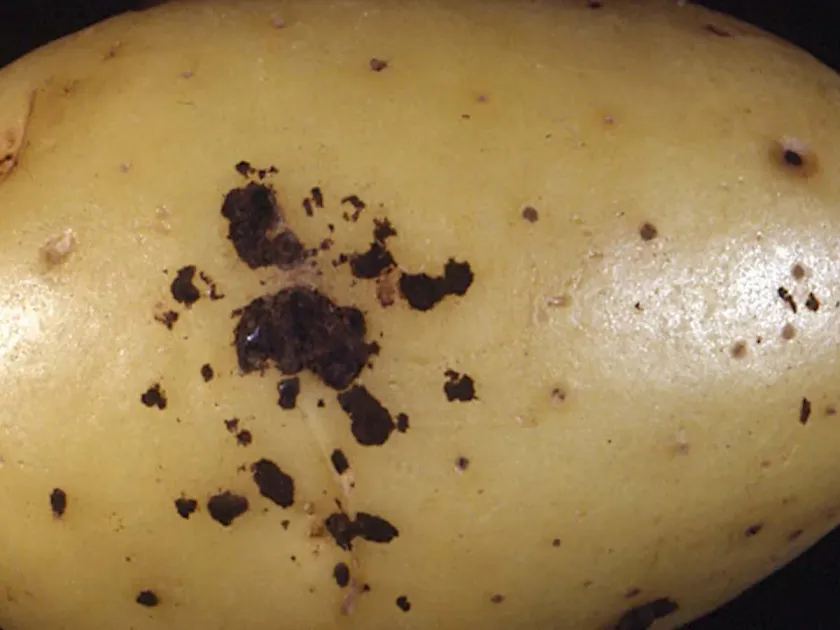
Symptoms often include reddish-brown lesions or cankers on the underground parts of the stem. On potatoes, the most notable sign is "black scurf," which consists of black, crusty sclerotia found on the skin of harvested tubers.
- Damping-off of young seedlings.
- Brown cankers on roots and stem bases.
- Upward curling of leaves (rolling) during hot, dry periods.
- Formation of aerial tubers on potato stems.
- White mycelial growth at the base of stems in high humidity.
Control measures
Integrated disease management is essential, beginning with the use of pathogen-free, certified seed material. Crop rotation with non-host crops (such as cereals or grasses) for at least 3 years helps to reduce the build-up of the inoculum in the soil.
Fungicide seed treatments are highly effective, specifically those containing fludioxonil, pencycuron, or carboxamides. Additionally, soil amendments with organic matter and the application of biological control agents, particularly Trichoderma species, can help suppress the pathogen's activity in the root zone.
Causes diseases · 2
Discussion
No discussions yet — be the first.