
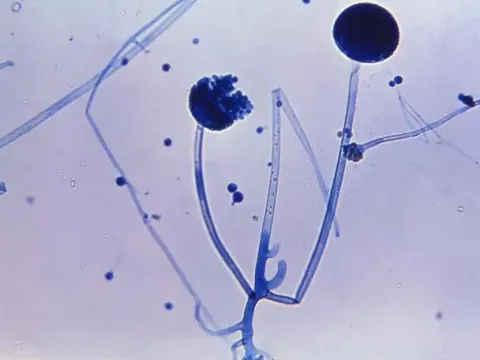
Rhizopus arrhizus
Rhizopus arrhizus
Rhizopus arrhizus is a ubiquitous filamentous fungus belonging to the order Mucorales. It is widely recognized as a significant opportunistic plant pathogen capable of causing rapid decay in many agricultural commodities.
What the section contains
Rhizopus arrhizus
The fungus is characterized by the production of a fast-growing, white, cottony mycelium that covers the surface of the infected tissue. As it matures, it develops distinctive sporangiophores with dark, globose sporangia containing thousands of spores.
Taxonomically, it is classified within the kingdom Fungi, phylum Zygomycota. Its ability to grow rapidly at moderate to warm temperatures makes it a highly successful colonizer of available organic substrates.
The pathogen utilizes a variety of extracellular enzymes to degrade plant cell walls, which allows it to penetrate host tissues effectively and absorb nutrients from the resulting breakdown products.
Identification is confirmed through microscopic analysis, focusing on the presence of rhizoids (root-like structures) and the arrangement of sporangiophores, which are key diagnostic features for this species.
Rhizopus arrhizus is best known for causing soft rot in a wide array of fruits and vegetables, including tomatoes, peppers, strawberries, stone fruits, and sweet potatoes. It also poses a threat to cereal grains stored in humid conditions.
The damage is characterized by a rapid collapse of plant tissue, often referred to as "leak." Infected fruits lose their firmness, become watery, and eventually collapse into a foul-smelling mass.
In addition to direct losses in the field, this fungus is a major cause of post-harvest spoilage. It spreads easily through contact, meaning that a single infected fruit can quickly contaminate an entire shipment.
In stored grains, the fungus can infect the germ of the seed, leading to reduced germination rates and overall loss of quality. Furthermore, some strains may produce secondary metabolites or mycotoxins that decrease product safety.
The economic impact of this pathogen is substantial, as it necessitates strict post-harvest management and often leads to the rejection of produce at the retail and export levels.
The development of Rhizopus rot is highly favored by warm, humid conditions. Temperatures between 20°C and 30°C, combined with high relative humidity, are optimal for the growth and sporulation of the fungus.
Rhizopus arrhizus can persist in the soil as dormant zygospores. These resistant spores allow the fungus to survive adverse environmental conditions and serve as a reservoir for infection in subsequent growing seasons.
While field infections are common during the ripening and harvest stages of crops, the disease is particularly prevalent in indoor storage facilities where stagnant air and temperature fluctuations occur.
Wind and water splashes serve as the primary means of dispersal for the spores, spreading the pathogen across fields and greenhouses during the active growing season.
Because the life cycle can be completed in just a few days, the fungus can cause significant outbreaks if the environment remains conducive to its spread, often leading to rapid losses before or after harvest.
The initial symptoms include the appearance of small, water-soaked spots that quickly enlarge. As the infection progresses, the tissue loses its structural integrity and becomes soft and mushy.
A dense, white, "fuzzy" mycelial growth develops on the surface of the affected area, which soon becomes peppered with black dots—the sporangia—giving it a grayish or blackish appearance.
Infected tissues may exude a clear or brownish liquid, and a distinct, somewhat sour or fermented odor often accompanies the advanced stages of decay.
When seeds are infected, they may clump together due to the dense growth of mycelium. This is often accompanied by a significant change in color and a decrease in seed vitality.
The visual combination of soft, rapidly disintegrating tissue and the presence of abundant dark sporangia is a hallmark indicator of Rhizopus infection in agricultural produce.
Effective management begins with careful handling during and after harvest. Minimizing physical damage such as bruises, cuts, or punctures is crucial, as the fungus typically enters through wounds.
Sanitation is a cornerstone of control; removing infected plant debris from the field and keeping storage areas, containers, and tools thoroughly disinfected helps to keep spore counts low.
Temperature control is the most effective post-harvest measure. Storing commodities at cool temperatures significantly inhibits the growth and enzymatic activity of the fungus.
For crops prone to infection, the application of appropriate pre-harvest fungicides, combined with good agricultural practices, can provide a layer of protection against colonization.
- Maintain adequate ventilation in storage facilities to prevent humidity build-up.
- Sort and cull infected produce immediately to prevent nest formation in containers.
- Dry grains and seeds thoroughly before placing them into storage.
- Rotate crops to break the cycle of soil-borne pathogens.