
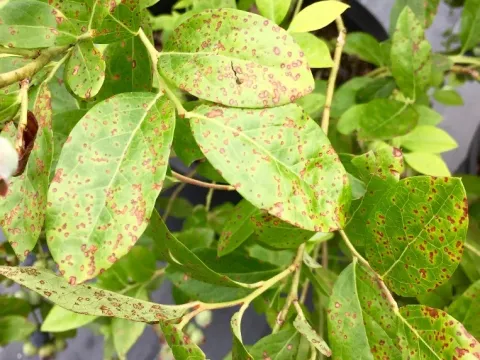
Blueberry rust
Pucciniastrum myrtilli
Blueberry rust is caused by the obligate fungal pathogen Pucciniastrum myrtilli, which belongs to the division Basidiomycota and the order Pucciniales. It is a specialized rust fungus that specifically targets species within the Ericaceae family.
What the section contains
Blueberry rust
The life cycle of this pathogen is complex and heteroecious, meaning it requires two unrelated host plants to complete its development throughout the seasons.
The fungus is characterized by the production of urediniospores, which are responsible for the rapid spread of the disease within blueberry crops during the active growing season.
Systemically, the pathogen adapts to survive harsh winters by forming teliospores on fallen leaves, which act as the primary inoculum source for the following spring.
Understanding the taxonomic position and biological requirements of Pucciniastrum myrtilli is crucial for implementing effective preventative strategies in agricultural settings.
The primary hosts of this pathogen are blueberries (Vaccinium myrtillus) and related species such as bilberries and lingonberries, which suffer significant foliar damage.
Hemlock trees (Tsuga canadensis) serve as the alternate host, where the fungus undergoes its sexual stage, making the proximity of hemlocks to blueberry fields a major risk factor.
By invading leaf tissues and disrupting photosynthesis, the fungus drains energy from the plant, which is vital for the development of fruit and vegetative growth.
Severe infestations lead to premature defoliation, which severely stresses the plant and compromises its ability to survive winter conditions and produce a healthy harvest.
Over time, recurring infections decrease the overall productivity and longevity of the plantation, leading to reduced berry size and yield losses.
Disease symptoms usually emerge during mid-summer, when environmental conditions such as high humidity and moderate temperatures promote spore germination and infection.
Spore dissemination is primarily driven by wind, allowing the fungus to spread across fields rapidly once the first infection sites are established.
Late summer to early autumn is often the period of maximum disease incidence, as secondary cycles of the fungus accelerate during wet weather events.
The transition into winter sees the pathogen shift from active spore production to the survival stage, where it rests on debris on the plantation floor.
Monitoring for the disease should be intensified during periods of frequent fog or rainy weather, as these are ideal conditions for the pathogen's growth.
The first clinical signs are small, yellow-to-brown chlorotic spots on the upper surface of the leaves, which expand as the infection progresses.
On the underside of the infected leaves, orange-colored powdery pustules, known as uredinia, become visible and release massive amounts of spores.
- Yellowing of leaf margins and surrounding tissue.
- Curling or necrosis of leaves in areas of heavy infection.
- Premature leaf drop leading to defoliation before autumn.
Under a microscope, the spores exhibit distinct characteristics consistent with the Pucciniastrum genus, allowing for accurate laboratory identification.
In high-pressure situations, the entire underside of the leaf may appear coated in a rusty dust, which is a hallmark visual diagnostic feature of this condition.
Sanitation is the most effective management tool; collecting and removing or burying fallen leaves significantly reduces the overwintering population of the fungus.
Strategic planting should include avoiding close proximity to hemlock trees, as breaking the cycle of alternate hosts is a primary preventive measure.
Fungicide applications, specifically those containing copper or systemic active ingredients, can be used to control outbreaks when early symptoms are detected.
Proper canopy management and pruning techniques enhance airflow throughout the bushes, which keeps foliage drier and less susceptible to fungal colonization.
Maintaining optimal plant health through balanced fertilization and correct irrigation minimizes stress, allowing the blueberry bushes to better withstand infection pressure.