
Blueberry red leaf spot
Blueberry red
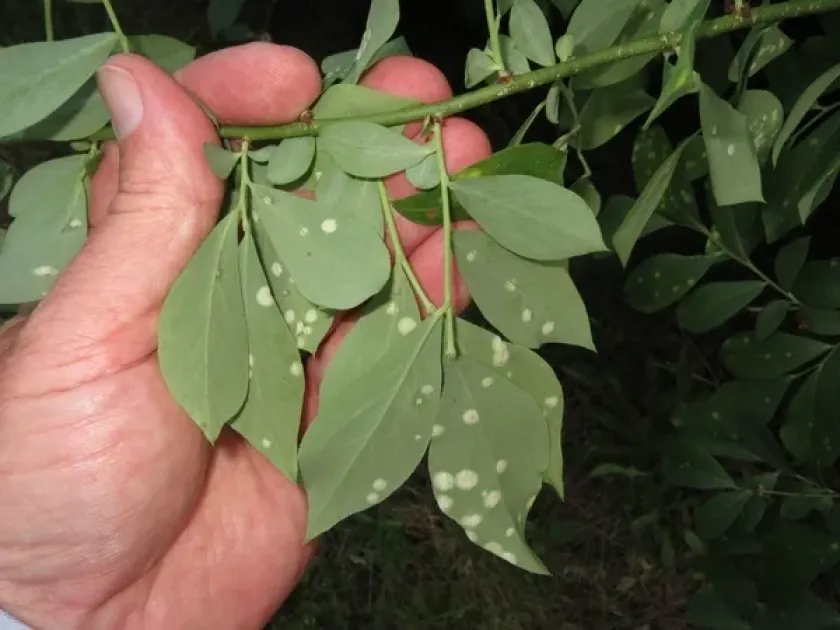
Description
How to identify
The causal agent of this disease is the fungus Exobasidium vaccinii, which belongs to the Basidiomycota division. This pathogen is a highly specialized parasite that affects members of the Ericaceae family, particularly blueberries.
The fungus overwinters as mycelium within the infected host tissues, typically residing in buds and stems. As the growing season begins, the pathogen produces basidiospores on the leaf surfaces.
The fungus is taxonomically classified within the Exobasidium genus. It is known for inducing hypertrophic growth in host tissues, which results in the characteristic deformations and leaf thickening observed in the field.
Biological development of the fungus is strictly dependent on high humidity and moisture. The mycelium penetrates the leaf mesophyll, leading to significant physiological disruptions in the plant.
Accurate identification is achieved through visual inspection of red, hypertrophied leaf spots that appear during the early stages of spring growth.
What it damages
The disease primarily affects the foliage, although it can also infect young shoots and flower buds. This infection reduces the photosynthetic capacity of the plant, weakening its overall health.
Heavy infection levels can lead to premature leaf drop, which significantly impacts the development of fruit buds for the following season. Consequently, the yield potential of the blueberry crop is drastically reduced.
The pathogen spreads through spores, which are disseminated by wind or rain splashes. Healthy plants become infected when conditions of high moisture persist on the plant surface.
Commercial blueberry plantations are particularly susceptible during wet, cool spring weather. Constant moisture levels facilitate the germination of spores and the establishment of new infection sites.
Failure to implement control measures can lead to an accumulation of inoculum, turning the entire patch into a source of infection for subsequent years.
Signs of infestation
The primary symptom is the development of distinct, round or irregular spots that range in color from bright red to purple. As the disease progresses, these spots often become swollen.
A white or greyish powdery growth can often be observed on the underside of the leaf, corresponding to the fungal sporulation. This serves as a source of secondary infection throughout the season.
Infected leaves often become deformed, twisted, or thickened. These changes in pigmentation and texture are the result of the fungus manipulating plant cell growth and metabolic processes.
In cases of shoot infection, the affected branches may show swelling or bending. These symptoms are key indicators for identifying the presence of Exobasidium vaccinii.
- Bright red or purple leaf spots.
- White powdery spores on the leaf undersides.
- Hypertrophy and thickening of infected tissues.
- Premature leaf abscission.
- General decline in plant vigor.
Control measures
Sanitation is the most critical management strategy. Growers should prune and remove all infected plant parts as soon as they are identified to prevent the spread of fungal spores.
Improving air circulation within the plantation is essential. Proper spacing of plants reduces the duration of leaf wetness and prevents the creation of a microclimate conducive to infection.
Chemical control involving copper-based fungicides or other authorized antifungal products can be effective. Applications should ideally be timed before flowering and after harvest.
Effective soil drainage and water management practices help reduce humidity levels around the plants. Avoiding overhead irrigation during sensitive growth periods is highly recommended.
Consistent monitoring and early detection allow for targeted management, reducing the reliance on chemical inputs while maintaining the health of the blueberry crop.
Causes diseases · 1
Discussion
No discussions yet — be the first.