
Blueberry shock virus
Blueberry shock
Blueberry shock virus (BlShV) is a viral pathogen belonging to the genus Ilarvirus within the family Bromoviridae. It is an infectious agent that impacts the vascular system of Vaccinium species.
What the section contains
Blueberry shock virus
The virus consists of RNA particles and is considered a systemic pathogen, meaning it spreads throughout the entire vascular network of the host plant, affecting both vegetative and reproductive tissues.
Identification is challenging as the virus can remain latent for extended periods before causing acute symptom expression, often triggered by environmental stress.
Diagnosis relies on specialized laboratory testing, including Enzyme-Linked Immunosorbent Assay (ELISA) and Reverse Transcription-Polymerase Chain Reaction (RT-PCR) to confirm the presence of the virus.
There is currently no cure or chemical treatment for infected plants; thus, managing the virus focuses on containment and removal of the source of infection.
The primary host for this pathogen is highbush blueberry (Vaccinium corymbosum). Infection can devastate commercial yields, particularly in susceptible varieties.
During the primary year of infection, the virus causes the total collapse of floral development, leading to widespread bud death and failure of fruit set.
The virus reduces the vigor of the plant, leading to stunted shoots, reduced leaf area, and decreased overall biomass, which negatively impacts plant longevity.
Secondary effects include increased susceptibility to other pathogens and environmental stresses, further compromising the health and productivity of the entire blueberry bush.
For growers, the economic impact is severe due to the loss of marketable berries and the costs associated with rogueing and replacing infected bushes within the plantation.
The acute phase of the virus is typically observed during the spring, specifically during the bloom period, which gives the disease its common name, "shock".
Transmission occurs via infected pollen spread by bees and other pollinators during the blooming season, allowing the virus to move rapidly across a plantation.
The incubation period can span up to two years, during which an infected plant may show no visible symptoms but serves as a reservoir for further transmission.
Climatic factors such as weather patterns that favor high pollinator activity can exacerbate the spread of the virus across neighboring plants during the flowering window.
Once a bush has experienced the initial shock, it may appear to recover and produce leaves again, but it remains a carrier of the virus for the rest of its life.
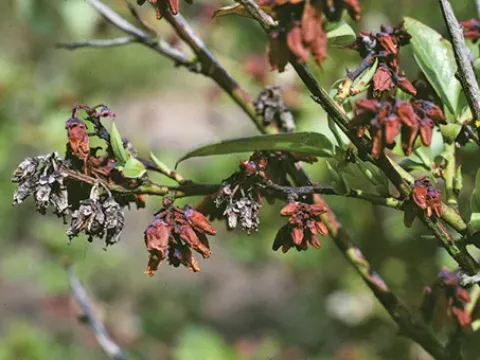
The most distinctive symptom is the sudden wilting and browning of flowers and young shoots during bloom, which often remain attached to the plant.
Leaves may show interveinal chlorosis or reddish discoloration, often accompanied by necrotic spots that develop as the season progresses.
Fruit set failure is a hallmark of the infection; the blossoms die before they can transition into berries, leading to significantly diminished yields.
In the seasons following the initial shock, plants may exhibit irregular growth, partial branch dieback, or a generally weak and sparse canopy.
Infected bushes often show an uneven appearance where some parts of the canopy look healthy while others show severe damage or lack of vitality.
The most effective management strategy is the use of certified virus-free planting stock to ensure that the plantation is free of the pathogen from the outset.
Growers should conduct regular inspections during the blooming season to identify symptomatic bushes and rogue them out as soon as they are spotted.
Removed plants must be destroyed or disposed of away from the production site to eliminate any risk of further transmission to healthy bushes.
It is recommended to maintain a buffer zone between new, healthy plantings and older, potentially infected blocks to minimize the movement of pollen by insects.
Sanitation is critical; pruning tools must be thoroughly disinfected with appropriate sanitizers between each plant to prevent mechanical transmission of the virus.