
Blossom blight
Monilinia laxa
Description
How to identify
Monilinia laxa is a filamentous fungal pathogen belonging to the Sclerotiniaceae family. It is widely recognized as the primary causal agent of blossom blight and brown rot in stone fruit species.
The pathogen overwinters as mycelium in mummified fruits, infected twigs, and bark cankers. In spring, it produces spores that are easily disseminated by wind, rain, and insects to susceptible plant tissues.
The fungus has a complex life cycle, featuring both an asexual stage (conidia) for rapid multiplication during the growing season and a sexual stage (apothecia) that contributes to genetic diversity.
Infection primarily occurs through the floral parts, specifically the stigmas, during the flowering period, when environmental conditions are often cool and wet.
Once established, the pathogen colonizes the floral tissue and progresses into the twigs, causing necrosis and systemic damage to the vascular system of the host plant.
What it damages
The disease primarily impacts stone fruits, including cherries, apricots, peaches, plums, and almonds. All floral organs and developing shoots are highly susceptible to infection.
Blossom blight leads to significant yield losses due to the failure of fruit set. The subsequent dieback of branches reduces the overall vigor and productivity of the orchard.
When the pathogen infects the fruit, it results in brown rot, which can cause total destruction of the harvest before, during, or even after the harvest process.
Extensive infections can result in the loss of entire branches or permanent scaffolds, necessitating severe pruning or the removal of entire trees.
The economic impact is twofold: direct loss of marketable produce and high costs associated with repeated fungicide applications to protect the orchard throughout the season.
Signs of infestation
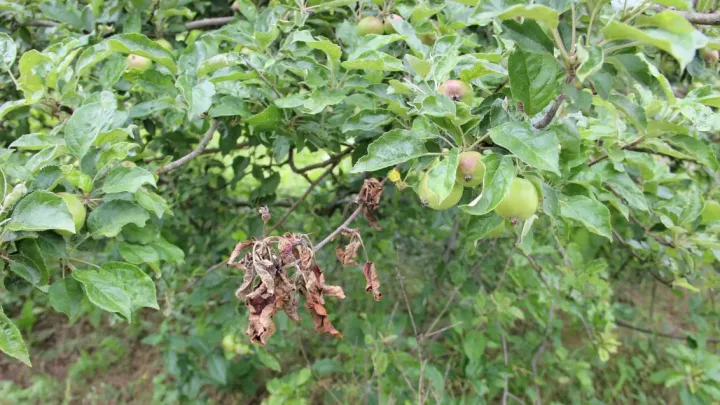
The first symptom is the sudden wilting and browning of blossoms, which become necrotic but remain attached to the spur, providing a source of inoculum for further infection.
Infected shoots exhibit sudden flagging, followed by the death of the twig. Cankers often form on the branches, accompanied by localized gummosis (oozing of sap).
Under humid conditions, greyish-tufted sporulation (conidial cushions) appears on the surface of infected flowers, twigs, and eventually on rotting fruits.
Leaves on infected branches curl, wither, and turn brown, giving the affected parts of the canopy an appearance similar to fire damage.
Fruits develop small, rapidly expanding circular brown spots that eventually cover the entire surface, leading to the formation of characteristic grey sporulation and eventual fruit mummification.
Control measures
Sanitation is the cornerstone of disease management: all infected twigs, branches, and mummified fruits must be pruned and removed from the orchard to eliminate the inoculum source.
Proper pruning techniques should be applied to remove any diseased tissue, ensuring cuts are made into healthy wood to stop the fungal spread.
Chemical control focuses on timely fungicide applications, particularly during the critical period of full bloom, to prevent spores from germinating on floral parts.
Dormant sprays using copper-based compounds are recommended during the late autumn or early spring to reduce the survival rate of the fungal inoculum on the bark.
- Maintain proper orchard spacing to improve air circulation and reduce humidity.
- Balance fertilization to avoid excessive vegetative growth that attracts infections.
- Implement effective pest control to prevent physical wounds on fruits and bark.
Causes diseases · 1
Discussion
No discussions yet — be the first.