
Blue mold
Penicillium expansum
Penicillium expansum is a fungal pathogen belonging to the Kingdom Fungi and the genus Penicillium. It is widely recognized as the primary cause of blue mold, which is the most destructive post-harvest disease affecting pome fruits.
What the section contains
Blue mold
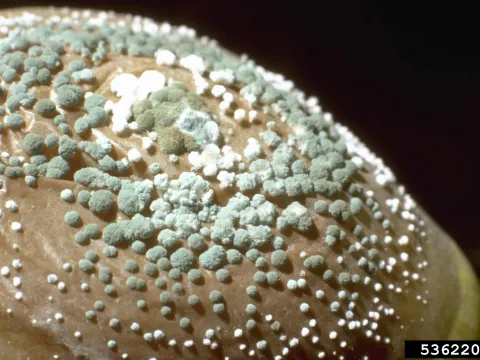
The fungus is characterized by its brush-like conidiophores and the production of massive amounts of blue-green conidia. These spores are highly resistant to environmental stress and disperse easily via air currents.
It is a highly adaptable pathogen that thrives in both field and storage conditions. The fungus produces the mycotoxin patulin, which is a significant safety concern for the food processing industry.
Growth occurs across a wide range of temperatures, from near freezing to warm summer temperatures. This resilience makes the fungus a persistent challenge for fruit producers and warehouse managers globally.
Taxonomically, it is classified within the family Trichocomaceae. Understanding its biology is essential for developing resistance management strategies and maintaining high standards in post-harvest logistics.
The primary hosts for Penicillium expansum include apples, pears, and quinces. It can also cause rot in various other fruits and vegetables if the conditions for fungal growth are favorable.
The economic impact is concentrated in the post-harvest phase. Infection typically occurs through wounds, such as bruises, punctures, or insect damage, leading to massive financial losses due to fruit rejection.
Once established, the rot spreads rapidly, softening the tissue and turning it into a watery, pulpy mass. The decomposition is swift, often resulting in the loss of entire crates of fruit.
Beyond physical damage, the presence of patulin renders affected fruits toxic, meaning they cannot be processed into juice, cider, or other products, further increasing economic waste.
The pathogen is known for its ability to cause "nest rot," where one infected apple spreads spores to adjacent fruits, creating a devastating chain reaction throughout the storage facility.
The infection starts as a small, light-brown, water-soaked lesion on the skin of the fruit. As the disease progresses, the lesion expands, and a characteristic blue-green, powdery mold develops on the surface.
When sliced, the decaying tissue exhibits a cone-shaped rot extending towards the core of the fruit. The texture of the affected area is soft and pulpy, distinctly different from the healthy tissue surrounding it.
A strong, earthy, moldy odor is a hallmark sign of advanced infection. In the final stages, the entire fruit may shrink, lose its shape, and become completely mummified by fungal growth.
High relative humidity inside storage bins promotes vigorous spore production. These spores accumulate on the surface and are easily transferred to healthy produce via handling or air circulation.
- Light-brown, water-soaked skin lesions.
- Dense blue-green mold growth on the lesion surface.
- Rapid softening and pulpy texture of the fruit flesh.
- Distinctive moldy or earthy smell.
- Widespread rot development within storage containers.
Effective management begins with minimizing mechanical injuries during harvest and transport. Careful handling is the single most important step to prevent pathogen entry points.
Rapid cooling of fruits after harvest is essential to slow down the metabolic rate of the pathogen. Maintaining the cold chain and proper air circulation prevents the buildup of humidity conducive to fungal growth.
Sanitation of packing houses and storage facilities is mandatory. Regular cleaning and disinfection of bins and crates reduce the initial inoculum load significantly.
Chemical control involving pre-harvest or post-harvest fungicide applications can provide a layer of protection, provided they are applied in strict compliance with local regulations and safety standards.
Integrated pest management in the orchard is crucial. Controlling insects that damage fruit skins limits the entry points for Penicillium expansum, thereby reducing the overall risk of infection.