
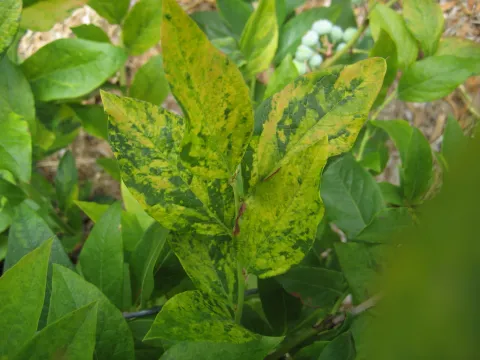
Blueberry mosaic
Blueberry mosaic
Blueberry mosaic is a viral condition caused by the Blueberry mosaic virus, a pathogen that exclusively infects members of the Ericaceae family. As an obligate parasite, the virus hijacks the cellular machinery of the blueberry plant to replicate its own genetic material.
What the section contains
Blueberry mosaic
Systemically, the virus travels through the phloem of the host plant, eventually spreading from the initial site of infection to all other parts of the plant, including the roots and fruits. This systemic nature makes the infection permanent and incurable once established within the plant tissue.
The primary vector for the spread of the virus in commercial plantations is the propagation of infected plant material. Whether through cuttings, layering, or suckers, if the parent plant carries the virus, the resulting clones will inevitably be infected, often displaying latent symptoms for years.
Diagnosis requires specialized laboratory testing, such as ELISA (Enzyme-Linked Immunosorbent Assay) or RT-PCR, to detect viral RNA. Because symptoms are often inconsistent and can mimic nutritional deficiencies, visual observation alone is rarely sufficient for accurate disease identification.
Understanding the biology of this pathogen is crucial for nursery management. Since the virus does not possess a cellular structure, it remains completely inactive outside of the host cell, yet it is highly efficient at surviving within the living tissues of the blueberry shrub throughout its lifespan.
The damage caused by blueberry mosaic is primarily physiological. By disrupting the photosynthetic process, the virus significantly reduces the plant's ability to produce sugars and energy, which are essential for vegetative growth and the development of high-quality berries.
Yield loss is one of the most severe economic impacts of this virus. Infected plants produce fewer berries, and those that do develop are frequently smaller, poorly colored, and lack the characteristic flavor profile required for the fresh market, leading to significant financial losses for producers.
Structural health is also compromised, as infected bushes exhibit reduced vigor and weakened root systems. This leads to increased susceptibility to secondary infections, such as fungal pathogens and root rots, which further degrade the plantation over time.
Winter hardiness is often impaired in virus-infected plants. Because the plant cannot store adequate energy reserves, it becomes prone to winter dieback, causing the loss of productive branches and potentially leading to the death of the entire shrub during severe weather conditions.
The long-term impact on a plantation is cumulative. As the virus spreads from plant to plant through pruning or root grafting, the overall commercial value of the field declines, eventually necessitating the removal and replanting of entire sections or the entire plot.
The hallmark symptom is a distinct mosaic pattern on the leaves, characterized by a mix of yellow, light green, and normal green patches. This variegation is a result of the localized destruction or inhibition of chlorophyll production by the virus.
Leaf deformation is another common sign. Infected foliage may appear crinkled, cupped, or smaller than healthy leaves. These distortions are most prominent during the early part of the growing season when the leaves are actively expanding and the viral activity is highest.
Symptom expression is notoriously patchy. A single bush may show heavy mosaic patterns on one branch while appearing perfectly healthy on others, creating a false sense of security for the grower. This heterogeneity is typical for systemic viral infections in perennial woody plants.
In cases of severe infection, growth stunting occurs. The distance between nodes on the stems may decrease, resulting in a bush that appears dense and bushy but lacks the structural integrity and reproductive capacity of a healthy, vigorous blueberry plant.
- Mottled or mosaic discoloration of leaf blades.
- Chlorotic rings or spots on foliage.
- Distorted, twisted, or stunted leaf development.
- Poor berry size and uneven ripening.
- Premature leaf drop and generalized bush weakness.
The cornerstone of control is the use of virus-free nursery stock. Growers must source plants from certified programs that utilize meristem culture and rigorous viral screening, as this is the only way to ensure the initial planting is clean.
Rogueing, or the immediate removal of symptomatic plants, is the most effective way to manage an active infection. Infected shrubs should be dug out completely, including the root system, and removed from the field to prevent the virus from spreading via underground root contact.
Sanitation of pruning equipment is essential. Since the virus can be transmitted mechanically through sap, pruners, shears, and harvest equipment should be disinfected between bushes using a solution of 70% alcohol or a designated horticultural disinfectant to stop human-assisted spread.
While insect vectors are not the primary cause of spread for this specific virus, integrated pest management (IPM) is still recommended. Controlling populations of sucking insects, such as aphids, can reduce the overall stress on the plants and minimize other potential viral transmission risks.
Good agricultural practices, including balanced fertilization and irrigation, help keep plants vigorous. Although no chemical cure exists to treat the virus itself, maintaining overall plant health allows bushes to remain productive for a longer period while you plan for the gradual replacement of the plantation.