
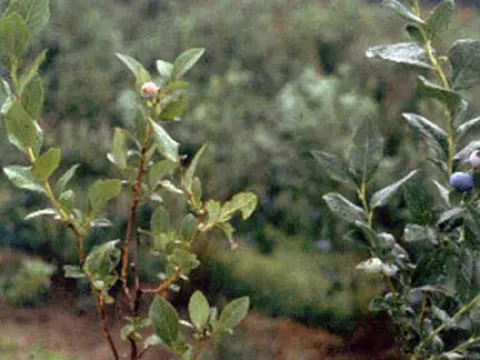
Blueberry shoestring virus
Blueberry shoestring
Blueberry shoestring virus (BSSV) is a plant pathogenic virus belonging to the genus Sobemovirus. It is a single-stranded RNA virus that specifically affects cultivated highbush blueberries.
What the section contains
Blueberry shoestring virus
The virus is an obligate parasite, replicating strictly within the host plant's cells. Its structure consists of a protective icosahedral protein capsid containing the viral genome.
Identification typically involves visual inspection for characteristic leaf deformations, though laboratory diagnostic methods like ELISA or RT-PCR are required for confirmation.
The virus persists in the vascular tissues of the plant, moving systematically throughout the shrub, which makes complete recovery impossible once an individual plant is infected.
Due to its systemic nature, once a plant is infected, the virus remains present for the entire life of the shrub, continually weakening its physiological functions.
The primary host for this pathogen is the highbush blueberry (Vaccinium corymbosum). It causes significant economic losses in commercial blueberry production worldwide.
Infected plants suffer from severe yield reduction and fruit quality degradation, often resulting in unmarketable berries that fail to ripen uniformly.
The disease weakens the overall vigor of the plant, leading to stunted growth and increased susceptibility to other environmental stressors, such as frost or drought.
In severe cases, entire sections of a plantation may require removal, leading to substantial financial impact for growers and the loss of long-term investments.
Furthermore, the presence of the virus complicates international trade and transport of blueberry plants due to strict phytosanitary regulations regarding this pathogen.
The most iconic symptom is the 'shoestring' appearance of leaves, which become narrow, elongated, and distorted because of irregular growth of the midrib and leaf tissues.
Reddish or purple streaks, often elongated, develop on the surface of young stems and shoots, which is a definitive diagnostic feature of this viral infection.
Berries on infected bushes often fail to color properly, showing abnormal patterns, and may ripen later than the rest of the crop, significantly lowering harvest quality.
The overall architecture of the plant is affected, with shortened internodes and a generally sparse appearance compared to healthy, robust blueberry bushes.
Symptoms may start on a few branches before eventually spreading throughout the entire plant, which is why immediate intervention is critical upon detection.
The primary vector for the transmission of BSSV is the blueberry aphid, Illinoia pepperi. Managing this pest is the most effective way to limit viral spread in the field.
The foundation of effective management is starting with certified, virus-free planting stock to ensure that the plantation remains disease-free from the outset.
Once a plant is confirmed to be infected, there is no cure; therefore, the recommended procedure is to rogue out (remove and destroy) the affected plants immediately.
- Strict weed control to eliminate potential alternative hosts.
- Regular monitoring and scouting for aphid populations.
- Application of appropriate insecticides to control the vector.
- Sanitizing pruning equipment to prevent mechanical transmission.
Strategic isolation of new plantings from older, infected fields helps maintain the health of the crop and prevents the movement of aphid vectors between plantations.