
Bois noir
Bois noir
Bois noir, also known as grapevine yellows, is a severe plant disease caused by the phytoplasma Candidatus Phytoplasma solani. It is a systemic vascular disease that primarily affects the phloem tissues of the vine.
What the section contains
Bois noir
The pathogen belongs to the class Mollicutes. These organisms lack a cell wall, making them extremely fragile outside the host plant or the insect vector that transmits them through its feeding process.
The primary vector responsible for the spread of this disease in vineyards is the planthopper Hyalesthes obsoletus. This insect acquires the phytoplasma by feeding on infected weeds such as field bindweed and then transmits it to the grapevines.
The infection process is complex: once introduced into the vine, the phytoplasmas multiply within the sieve tubes. This proliferation blocks the phloem, severely impeding the transport of nutrients and photosynthates throughout the plant.
Identification is often complicated because symptoms can resemble those caused by viruses or nutritional deficiencies. Laboratory confirmation using PCR (Polymerase Chain Reaction) is essential for a definitive diagnosis of the disease.
Bois noir causes significant damage to viticulture, resulting in substantial losses in yield and grape quality. In severe cases, the infected vines can lose their vigor and may die prematurely within a few growing seasons.
The pathogen has a broad host range, infecting various crops including tomato, pepper, and potato. This makes it a major concern for diversified agricultural areas where multiple host plants are grown in close proximity to vineyards.
Metabolic disruption is the primary cause of damage. Since the plant cannot transport nutrients efficiently, the roots become weakened, leading to poor development and reduced tolerance to environmental stressors like frost and drought.
The economic impact is multifaceted, involving the high cost of rogueing infected vines, purchasing certified planting material, and implementing intensive insect control programs to prevent further spread.
Grape varieties show varying degrees of susceptibility. White wine varieties, such as Chardonnay, are often more symptomatic than others, making them highly susceptible to the negative physiological impacts of the disease.
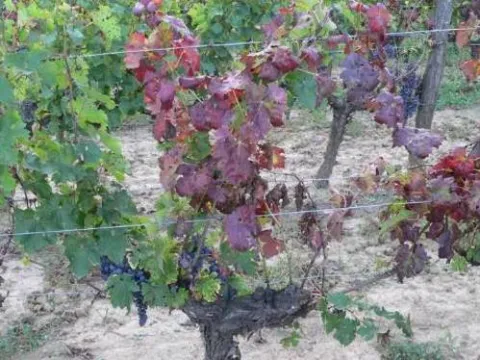
The most distinctive symptom is the downward rolling of leaves. As the season progresses, white varieties develop a yellowish hue, while red varieties often turn deep red or purple, reflecting a severe metabolic disorder.
Incomplete lignification of the shoots is a hallmark of the disease. The shoots remain green and herbaceous at the base in late autumn, often exhibiting characteristic black necrotic spots or stripes, which gives the disease its name, Bois noir.
The fruit set is heavily impacted; the bunches often wither and dry out prematurely. If berries persist, they remain small, fail to ripen properly, and exhibit significantly reduced sugar content and poor quality for winemaking.
General vine health declines rapidly. Infected vines exhibit stunted growth, reduced leaf canopy, and sometimes a complete failure to produce a viable crop in the subsequent years after the initial infection.
- Downward curling of the leaf blades.
- Yellowing (white varieties) or reddening (red varieties) of foliage.
- Black necrotic lesions on the woody parts of the canes.
- Premature shriveling and drying of grape clusters.
- Lack of proper shoot maturation and hardening before winter.
Management of Bois noir is centered on an integrated pest management (IPM) approach because there is no known chemical cure for infected vines. Prevention through vector control and host removal is critical.
Sanitation is vital; growers must eliminate alternative host weeds, especially field bindweed (Convolvulus arvensis) and nettle, which serve as the primary reservoir for both the phytoplasma and the planthopper vector.
Insecticide applications should be timed to match the life cycle of Hyalesthes obsoletus to reduce the population density of the vector and minimize the chances of disease transmission during the growing season.
Only certified, disease-free planting material should be used for new vineyard establishment. It is also recommended to avoid planting new vineyards near vegetable fields known to harbor phytoplasma infections.
Regular monitoring and rapid rogueing of symptomatic vines are essential to stop the spread within the vineyard. Once an infected vine is identified, it should be completely removed, including the root system, to prevent any potential recovery or persistence.