
Pelargonium rust
Puccinia pelargonii-zonalis
Pelargonium rust is caused by the fungus Puccinia pelargonii-zonalis, a member of the Pucciniaceae family. It is an obligate parasite, meaning it requires living host tissue to complete its life cycle and survive.
What the section contains
Pelargonium rust
This pathogen specifically infects plants of the genus Pelargonium, particularly the zonal group. It exists primarily in the urediniospore stage, allowing for rapid asexual reproduction and spread in greenhouse conditions.
The fungus penetrates the plant through the stomata. Once inside, it develops an extensive mycelial network in the intercellular spaces, drawing nutrients directly from the host and causing the characteristic symptoms of the disease.
The life cycle is favored by environmental conditions typical of poorly ventilated glasshouses: temperatures between 15°C and 22°C and high relative humidity combined with prolonged leaf wetness.
Because the fungus does not require an alternate host to complete its cycle on pelargoniums, it can cause recurring outbreaks within the same production facility throughout the year if not managed properly.
The damage caused by Puccinia pelargonii-zonalis is primarily cosmetic and physiological. Affected plants lose their vigor, as the fungal infection diverts nutrients away from vegetative growth and flower production.
Severe infestations lead to extensive chlorosis and leaf drop. When a plant loses a significant portion of its foliage, it loses its market value, rendering it unsellable for commercial growers and unappealing for home gardeners.
In addition to cosmetic damage, the disease weakens the plant, making it more susceptible to environmental stress and other opportunistic pathogens or pests that might further compromise plant health.
In nursery settings, a single infected plant can quickly become a focal point for an epidemic, potentially leading to the loss of entire batches of geraniums if containment measures are not strictly enforced.
Economic losses are compounded by the costs of fungicide applications, labor for manual removal of infected leaves, and the potential need to discard highly infested stock to prevent spread.
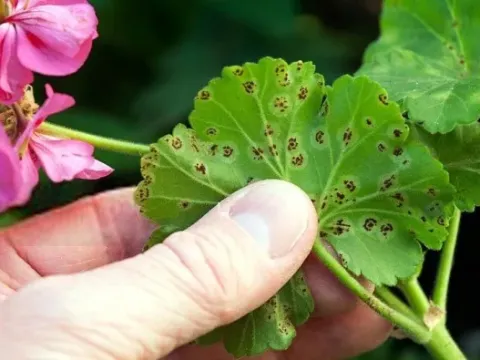
The most distinctive sign of Pelargonium rust is the presence of small, reddish-brown, circular pustules on the underside of the leaves. These pustules contain thousands of fungal spores.
On the upper surface of the leaf, corresponding to the pustules, yellow or chlorotic spots appear. These spots may eventually turn necrotic as the leaf tissue dies around the infection site.
As the disease progresses, the pustules rupture the leaf epidermis, releasing a dusty mass of spores. This spore dust is easily spread by air currents, splashing water from irrigation, or contact with tools and clothing.
Affected leaves tend to yellow prematurely, wither, and drop off the plant. In heavy infections, the plant may appear sparse, stunted, and incapable of developing healthy buds or flowers.
- brown, dusty pustules on the undersides of leaves;
- yellow or chlorotic spots on the leaf surface;
- premature leaf yellowing and shedding;
- stunted growth and poor overall plant vigor.
Cultural control is the first line of defense. Growers should ensure good air circulation, space plants adequately to prevent overcrowding, and avoid overhead irrigation to keep the foliage dry.
Sanitation is critical; all infected leaves and debris should be removed and destroyed immediately. Do not compost infected plant material, as the spores can survive in certain conditions.
Chemical control involving systemic fungicides, specifically those containing triadimefon, myclobutanil, or azoxystrobin, can be effective in suppressing the fungus if applied early in the infection process.
To prevent the development of fungicide resistance, rotate different classes of chemicals rather than relying on a single active ingredient for repeated applications throughout the season.
Always inspect new plant material upon arrival and maintain a strict quarantine period for new acquisitions to ensure they are free of rust spores before introducing them into your main collection.