
Peltaster fructicola
Peltaster fructicola
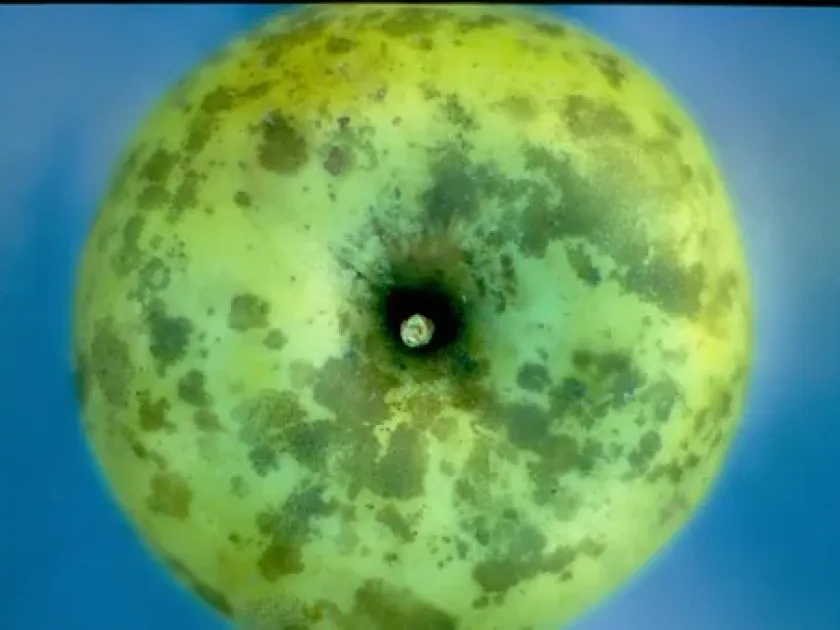
Description
How to identify
Peltaster fructicola is an imperfect fungus belonging to the order Capnodiales, within the family Schizothyriaceae. This pathogen is known primarily as a causal agent of superficial blemishes on pome fruits, often associated with the flyspeck disease complex.
The fungus is characterized by the formation of dark, dense, crust-like structures known as thyriothecia on the surface of the fruit cuticle. These structures are the sites where the fungus produces its spores, which are then disseminated by water and wind.
Unlike many other pathogens, Peltaster fructicola thrives on the surface of the fruit without penetrating deeply into the fruit flesh. It acts as an epiphyte during the early stages of colonization, eventually developing more aggressive growth patterns.
The fungus is highly resilient and adapted to the environmental conditions typical of temperate orchard climates. It can survive on various substrates, making it a persistent resident in commercial apple orchards with high canopy humidity.
Taxonomically, this fungus belongs to a group of Ascomycetes that are notorious for creating aesthetic problems in fruit production. Its presence is often noted alongside other similar fungi, complicating the diagnosis of specific orchard diseases.
What it damages
The primary economic damage caused by Peltaster fructicola is purely cosmetic. By creating dark, unsightly spots on the skin of apples, the fungus significantly lowers the grade of the fruit for fresh market consumption.
In addition to visual degradation, the fungus disrupts the fruit's natural cuticle layer. This disruption increases the rate of transpiration, leading to moisture loss and shriveling of the apples during storage, which further reduces marketability.
The presence of these spots often forces producers to implement extra sorting procedures, increasing labor costs. Severely affected batches may be completely rejected for export or high-end retail channels, resulting in financial loss.
Although the fungus does not typically cause rot in the deeper tissues of the fruit, it can facilitate entry for opportunistic decay organisms. These secondary invaders can cause the fruit to spoil prematurely during extended storage.
Economic impact is most pronounced in humid regions where frequent rainfall creates an ideal environment for the pathogen to flourish. In such areas, without proper management, a high percentage of the harvest can be affected.
Signs of infestation
The characteristic signs of infection are the appearance of small, distinct, dark-colored spots on the skin of the fruit. These spots are often circular and may be scattered individually or clustered together in groups.
As the infection progresses, the spots become darker, often taking on a black or near-black appearance. These spots are the fungal reproductive bodies, which are firmly attached to the cuticle and cannot be easily removed by wiping.
Infection symptoms usually become apparent as the fruit nears maturity. The spots do not cause depressions or necrosis in the flesh; the damage remains strictly superficial, making the fruit safe to eat but difficult to sell.
Under a magnifying lens, the colonies may show a net-like arrangement of dark hyphae extending between the individual clusters of fruiting bodies. This growth pattern is a diagnostic feature used by plant pathologists to identify the pathogen.
If environmental conditions remain humid, the spots can expand and coalesce, covering larger areas of the fruit surface. This creates a messy, soiled appearance that is easily recognizable by experienced orchardists.
Control measures
Management of Peltaster fructicola relies heavily on cultural practices designed to reduce humidity within the tree canopy. Pruning and canopy management are critical for promoting rapid drying of the fruit surface after rainfall.
Chemical control is an effective tool, with many standard fungicide programs used for apple scab also providing protection against this pathogen. Fungicides should be applied during the fruit development phase to prevent initial colonization.
Sanitation is a vital component of integrated disease management. Removing infected fruit from the trees and clearing orchard floors of debris helps to minimize the amount of inoculum present for the following season.
For fruit meant for long-term storage, meticulous post-harvest sorting is necessary. Removing any fruit showing early signs of infection prevents the spread of the fungus within shipping containers or cold storage facilities.
- Maintain optimal tree spacing to improve ventilation.
- Implement regular pruning to increase sunlight penetration.
- Apply protective fungicides following a strictly monitored schedule.
- Remove debris and mummified fruits from the orchard site.
Causes diseases · 1
Discussion
No discussions yet — be the first.