
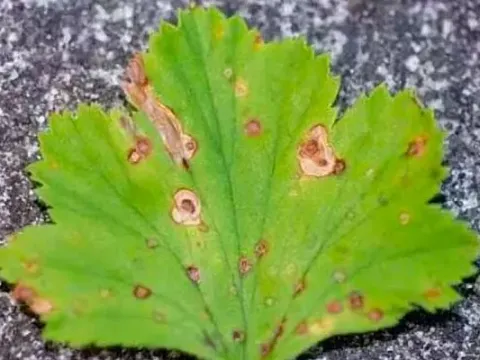
Pelargonium zonate spot
Pelargonium zonate
The causative agent of this disease is a fungal pathogen known as Pelargonium zonate. It is a highly specialized fungus that targets the genus Pelargonium, often causing significant damage to the plant's aesthetic value in both commercial and home settings.
What the section contains
Pelargonium zonate spot
The pathogen colonizes the leaf tissue by infiltrating the stomata or microscopic wounds. Once inside, the fungus spreads through the intercellular spaces, utilizing the plant's nutrients and causing localized cell death, which eventually forms the characteristic spots.
Under a microscope, the fungal structures appear as dense mycelial networks. These structures are responsible for the production of spores that facilitate the spread of the disease to adjacent, healthy foliage through splashing water or air currents.
Identification is primarily based on visual symptoms, specifically the concentric ring patterns. However, diagnostic confirmation in laboratory conditions often involves culturing the fungus on specific media to observe its growth characteristics.
Since the pathogen is host-specific, it thrives exclusively on geraniums, making monoculture greenhouse environments particularly vulnerable to rapid outbreaks if quarantine and sanitation measures are neglected.
The primary host is Pelargonium zonale, although other related species are also susceptible. The damage is primarily aesthetic, but it can lead to severe physiological stress, stunted growth, and even plant death in extreme cases.
The fungus disrupts the photosynthetic capacity of the foliage. As spots enlarge and coalesce, the leaf's ability to produce energy is compromised, leading to general plant decline and a reduction in the number of blooms per plant.
In propagation units, the impact is particularly devastating. Young cuttings are highly susceptible, and infection can result in total batch loss, significantly affecting nursery productivity and revenue.
Secondary damage occurs when the necrotic tissue becomes a habitat for opportunistic bacteria or other fungi, which may lead to stem rot or root system decline if the infection moves down the petiole.
Economic impact is significant for professional growers who must discard affected plants to maintain quality standards, leading to increased labor and disposal costs alongside the loss of inventory.
Disease development is highly dependent on environmental conditions, specifically high humidity and moderate temperatures. The fungus is most active during the spring and autumn months when temperature fluctuations create morning dew.
Optimal temperature for fungal growth ranges between 18°C and 24°C (64°F–75°F). Within this range, the pathogen can complete its infection cycle very rapidly, especially if humidity levels remain above 80% for prolonged periods.
In greenhouses, the season can extend year-round if humidity is not managed through proper ventilation. Poor air circulation creates localized microclimates where spores easily settle and germinate on leaf surfaces.
During the summer, while higher temperatures may slow down fungal activity, the pathogen can survive in the soil or decaying plant debris as resting structures, waiting for the return of more suitable, cooler conditions.
The presence of standing water or moisture on leaves, caused by overhead irrigation or improper drainage, is the single most important seasonal trigger for the rapid spread of the disease.
The diagnostic sign of this disease is the appearance of spots on the foliage that feature distinct concentric zones. These zones alternate in color, typically ranging from light brown to deep dark brown or black.
Initial symptoms manifest as small, yellow or pale spots that gradually develop into the typical target-like appearance. As the infection progresses, the center of the spot dries out and may become brittle.
- Characteristic target-like (concentric) spots on leaves.
- Yellow halos appearing around the necrotic spots.
- Leaves curling, turning yellow, and dropping prematurely.
- Fine, greyish-white mold growth on the undersides of spots in very humid conditions.
- Dark, sunken lesions on stems that lead to localized wilting.
If the infection reaches the stem tissue, it manifests as darkened, shriveled areas that disrupt the flow of water and nutrients, eventually causing the entire leaf stalk to collapse.
Severe infestations cause massive defoliation, which severely weakens the plant and leaves it vulnerable to other stress factors such as pest attacks or nutrient deficiencies.
The first line of defense is strict sanitation. All infected leaves and debris must be removed immediately and disposed of away from the growing area to minimize the spore load in the environment.
Improving greenhouse ventilation is essential. Reducing humidity levels around the foliage is a highly effective non-chemical control measure that prevents spore germination on the leaf surfaces.
Water management must be precise. Always irrigate at the base of the plant to avoid wetting the foliage. Proper spacing between pots is crucial to ensure adequate airflow and prevent the transmission of spores from leaf to leaf.
Chemical control involves the application of fungicides labeled for fungal leaf spots. Copper-based sprays or systemic fungicides are effective when applied preventatively or at the first signs of infection.
Always sterilize propagation tools (knives, shears) with alcohol or a bleach solution between uses. Using clean, pathogen-free growing media for every new batch of plants is the best way to prevent the introduction of the pathogen.