
Pelargonium line pattern virus
Pelargonium line
Pelargonium line pattern virus (PLPV) is a plant pathogenic virus belonging to the genus Pelargomovirus, within the Tombusviridae family. It is a single-stranded RNA virus that specifically targets members of the Pelargonium genus, commonly known as geraniums.
What the section contains
Pelargonium line pattern virus
The virus acts as a systemic pathogen, moving through the plant's phloem and affecting metabolic processes. Because it often persists in a latent state, infected plants may remain asymptomatic for extended periods while still acting as reservoirs for the virus.
The host range is primarily restricted to Pelargonium species, particularly zonal geraniums. Infection significantly impacts the aesthetic quality of these ornamental plants, which is a major concern for both commercial greenhouse producers and home gardeners.
Affected plants often exhibit stunted growth, reduced vigor, and a decline in flowering performance. In commercial propagation, the use of infected mother plants leads to rapid spread among entire batches of cuttings, causing severe economic losses.
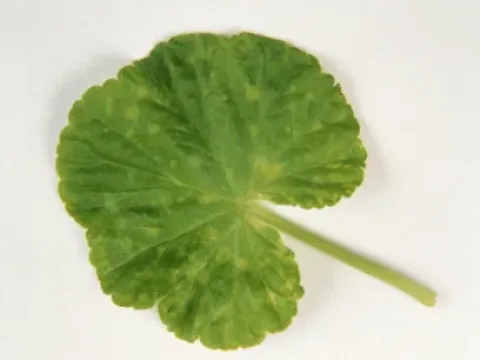
The primary symptom of this viral infection is the development of line patterns, rings, or chlorotic mosaic spots on the foliage. These patterns are often subtle, presenting as light green or yellow lines that trace the leaf veins or create circular markings.
Symptoms are most visible during periods of rapid growth and may vary in intensity depending on the cultivar's susceptibility. In some cases, the patterns may be obscured by the natural leaf markings or zoning common in certain geranium varieties, making diagnostic testing necessary.
Management of PLPV is strictly preventive as there are no chemical treatments available to cure established viral infections. The primary strategy involves the use of virus-free planting stock and certified plant material from reputable suppliers.
Sanitation is paramount, especially when taking cuttings. Gardeners and growers must disinfect pruning tools between every single plant using bleach, alcohol, or other approved sterilizing agents to prevent the mechanical transmission of the virus through plant sap.
Once a plant is identified as infected, it should be immediately removed and destroyed to prevent potential spread to healthy specimens. Routine monitoring of plant health and strict adherence to hygiene protocols are the most effective ways to maintain a virus-free garden or nursery.