
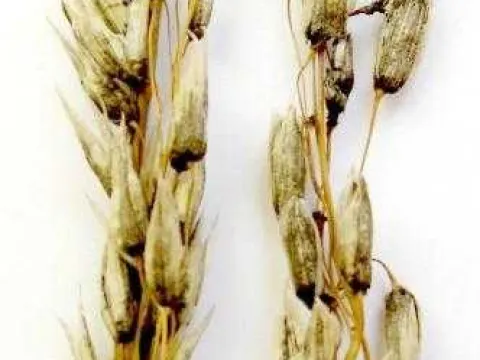
Pseudodiplodia avenae
Pseudodiplodia avenae
Pseudodiplodia avenae is a fungal pathogen belonging to the Dothideomycetes class. It is recognized as a specific parasite that affects cereal crops, primarily focusing on oats (Avena sativa) during their active growing season.
What the section contains
Pseudodiplodia avenae
The biological cycle involves the development of pycnidia, which are small, flask-shaped fruiting bodies formed within the host's plant tissues. These structures produce conidia, which serve as the primary inoculum for the spread of the disease.
The fungus overwinters on infected plant debris left in the field. When spring conditions provide optimal moisture and moderate temperatures, the dormant mycelium reactivates and produces new spores to infect the emerging cereal crops.
Transmission occurs through wind and splash dispersal during rainfall, allowing the conidia to land on healthy leaves and penetrate the plant tissue, thereby initiating the colonization process that leads to necrotic lesions.
Proper identification of this fungus is crucial for farmers, as it can often be mistaken for other types of leaf spots. Careful observation, including the detection of pycnidia, is essential for confirming the presence of Pseudodiplodia avenae.
The primary damage caused by Pseudodiplodia avenae is the destruction of the photosynthetic leaf area. By killing leaf tissues, the fungus inhibits the plant's ability to produce the energy required for grain filling.
Infected plants exhibit stunted growth and reduced vigor. When the infection is severe, the lower leaves die prematurely, forcing the plant to prioritize survival over grain development, leading to smaller, lighter kernels.
Beyond the loss of leaf surface, the disease can weaken the structural integrity of the plant, potentially increasing susceptibility to lodging. This makes harvesting difficult and further reduces the overall yield quality.
Economic losses in oat production attributed to this pathogen can be significant, especially in humid regions where the environmental conditions favor continuous fungal proliferation throughout the growing season.
Furthermore, the presence of the pathogen on seeds or harvested grain can affect quality standards, potentially rendering the crop unsuitable for seed production without specialized cleaning or treatment processes.
The initial signs of infection include the appearance of small, irregular spots on the leaves. These spots usually feature a distinct chlorotic halo, reflecting the plant's stress response to fungal toxins.
As the infection progresses, the spots expand and turn brown or grayish, with the center becoming necrotic. Under high humidity, the characteristic black pycnidia become visible on the dead tissue within these spots.
Disease progression typically moves upward from the lower canopy to the upper leaves. In severe cases, the entire leaf blade may shrivel and die, significantly reducing the plant's capacity for transpiration and photosynthesis.
Farmers can identify the pathogen by closely examining the spots for the presence of fruiting bodies. Unlike some other blights, Pseudodiplodia leaves distinct signs of its pycnidial development within the lesion.
- Irregular necrotic spots on the leaves.
- Yellowish halos surrounding the brown lesion centers.
- Visible formation of black pycnidia on dead tissue.
- Premature yellowing and drying of lower leaves.
- General stunted growth of affected plants.
Integrated pest management is the most effective approach to control Pseudodiplodia avenae. This starts with crop rotation, which breaks the pathogen's life cycle by removing the host plant for several consecutive seasons.
Sanitation practices, such as the deep burial of crop residues via plowing, are highly recommended. Removing the infected stubble prevents the fungus from surviving the winter and limits the initial inoculum level for the following year.
Chemical intervention involves the strategic application of fungicides. Triazoles and strobilurins have demonstrated efficacy in suppressing fungal development when applied during the vegetative stages if threshold levels of infection are exceeded.
Maintaining a balanced fertility program is also vital. Avoiding excessive nitrogen application prevents overly lush growth, which creates the high-humidity microclimate that facilitates rapid fungal spore spread.
Ongoing field scouting is essential for proactive management. Early detection of infection allows for localized application of control measures, preventing the disease from spreading throughout the entire field and minimizing crop loss.