
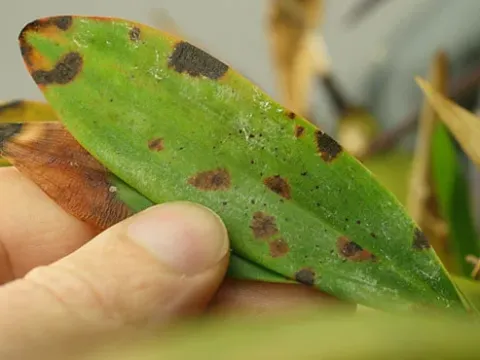
Pseudocercospora leaf spot of azalea
Pseudocercospora handelii
The causative agent of the disease is the fungus Pseudocercospora handelii. This pathogen is a specialized fungus that primarily attacks plants belonging to the genus Rhododendron, including various azalea cultivars.
What the section contains
Pseudocercospora leaf spot of azalea
The fungus produces conidia, which serve as its primary means of dispersal. These spores can be spread through wind currents, splashing water from irrigation, or contact during plant handling, facilitating the spread of infection within nursery settings.
The biological cycle of the fungus is strictly dependent on plant debris. Pseudocercospora handelii is capable of overwintering in fallen leaves and infected plant tissues, remaining viable until the next growing season to initiate new cycles of infection.
Diagnostic identification typically requires laboratory analysis, involving the observation of dark-colored conidiophores and spores under a microscope. These structures are usually located within the necrotic areas of the affected foliage.
The pathogen thrives in conditions characterized by high humidity and moderate temperatures. Because of these environmental requirements, the fungus poses a significant challenge in greenhouse production where such conditions are often maintained artificially.
The disease primarily targets the foliage of azaleas and rhododendrons. It compromises both the visual aesthetics and the physiological health of the ornamental shrubs, which is a major concern for commercial growers and gardeners alike.
Infection results in necrotic spotting that reduces the plant's total photosynthetic capacity. By damaging the leaf tissue, the fungus hinders the plant's ability to produce energy, which is essential for healthy growth and blooming.
Severe infestations frequently lead to premature leaf drop (defoliation). This loss of foliage creates significant stress for the plant, particularly as it enters the dormant season, leaving it more susceptible to environmental stressors and winter damage.
Plants suffering from chronic infection often exhibit stunted growth and reduced vigor. Furthermore, the loss of leaves can drastically decrease the number of flower buds formed for the following season, affecting the commercial value of the plants.
In industrial nurseries, Pseudocercospora handelii can cause massive inventory loss. Once established, it can spread rapidly throughout an entire collection if proper quarantine and management practices are not strictly enforced.
The first signs of infection appear as small, scattered spots on the leaves. These spots gradually enlarge and often develop a brownish or olive-green center with a darker, more defined border.
A distinctive feature of this pathogen is the dark, velvety fungal growth on the underside of the leaves. These spots contain the conidiophores and are most visible when humidity levels are high.
As the infection progresses, the lesions may coalesce, covering a large portion of the leaf surface. In some cases, the dead tissue within the spots may drop out, leaving holes in the leaves, similar to shot-hole symptoms seen in other plant diseases.
Disease progression typically moves from the lower, older leaves toward the newer foliage at the top of the plant. Significant yellowing of the leaves often precedes the eventual drop, signaling a systemic response to the fungal stress.
Regular visual inspections are crucial for early detection. Monitoring should be focused on the underside of the leaves in the lower canopy, as this is where the microclimate is most favorable for the initial fungal colonization.
Cultural management is the first line of defense. It is vital to remove and dispose of all fallen leaves and infected plant parts, as these materials act as the primary reservoir for the pathogen during the off-season.
Improving airflow and ventilation is essential to minimize humidity levels around the foliage. In greenhouse settings, avoid overhead irrigation and maintain sufficient spacing between plants to prevent the spread of fungal spores via water droplets.
Chemical control involves the application of fungicides, specifically those containing triazoles or strobilurins. These should be applied preventively or upon the earliest observation of symptoms to curb fungal development.
- Use fungicides with systemic action for better penetration.
- Maintain strict greenhouse sanitation protocols.
- Avoid overcrowding and ensure good plant spacing.
It is important to rotate between different chemical classes of fungicides to minimize the risk of developing resistance in the Pseudocercospora handelii population. Consistent monitoring throughout the growing season remains the key to successful control.