
Prunus necrotic ringspot virus
Prunus necrotic
Description
How to identify
The causal agent is the Prunus necrotic ringspot virus (PNRSV), which belongs to the Ilarvirus genus within the Bromoviridae family.
This virus is a widespread pathogen affecting almost all stone fruit species, often causing systemic infections that can persist throughout the life of the tree.
It is transmitted primarily through infected propagation material, such as grafting scions and rootstocks, and is also spread via pollen during the flowering period.
Transmission can occur through mechanical damage in orchards, such as during pruning, if tools are not properly sanitized between individual trees.
Detection is often challenging because many infected trees show no obvious symptoms, making laboratory diagnostics like ELISA or RT-PCR essential for screening nursery stock.
What it damages
The virus affects a broad range of crops, including cherries, plums, peaches, apricots, and almonds, resulting in significant economic losses in commercial orchards.
Infection leads to reduced vegetative growth, impaired fruit quality, and lower yield due to flower abortion or poor fruit set on the infected branches.
Over time, infected trees become weakened, showing increased susceptibility to winter damage and secondary pests or fungal diseases that colonize stressed wood.
The long-term impact involves a decline in the tree's productive lifespan, eventually leading to dieback and the need for early removal of the orchard block.
In nurseries, the presence of PNRSV compromises the quality of produced saplings, leading to the distribution of infected planting material to growers.
Signs of infestation
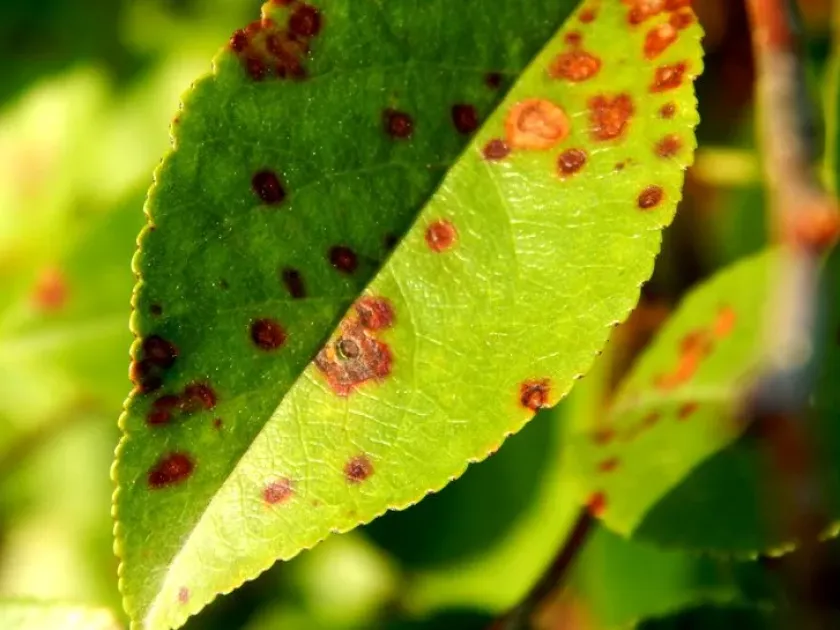
Spring symptoms typically include the appearance of chlorotic rings, spots, or line patterns on developing leaves, which may later become necrotic and tear, causing shot-hole symptoms.
Leaves may show mosaic-like patterns, curling, or distortion, while some varieties may exhibit severe stunted growth in new shoots.
In certain stone fruits, such as peaches, the infection can cause bark splitting, canker formation, and death of terminal shoot tips during the growing season.
Flower abnormalities, including discolored or malformed petals, are common indicators during the bloom phase, directly impacting fertilization success.
It is important to note that many cultivars are latent carriers, meaning they host the virus without displaying any visible signs, which hides the disease spread.
Control measures
The primary control strategy is the use of certified virus-free nursery stock to ensure that new orchards are established with healthy, pathogen-tested plants.
Rigorous orchard hygiene is mandatory, which includes the thorough cleaning and disinfection of pruning equipment between each tree to prevent mechanical transmission.
Any trees showing consistent symptoms of viral infection should be promptly removed and destroyed, including the root system, to eliminate the source of the virus.
Maintaining a clear spatial buffer between new plantings and older, potentially infected orchards can help reduce the risk of pollen-borne transmission.
- Use certified virus-tested rootstocks
- Systematic sanitation of pruning tools
- Routine monitoring of nursery blocks
- Removal of symptomatic trees
Causes diseases · 1
Discussion
No discussions yet — be the first.