
Protoventuria myrtilli
Protoventuria myrtilli
Protoventuria myrtilli is a species of ascomycete fungus within the Venturiales order. It is a specialized pathogen that primarily infects species of the Ericaceae family, most notably wild blueberries and cultivated highbush blueberries.
What the section contains
Protoventuria myrtilli
This fungus thrives as a parasite, infecting plant tissues through stomata or mechanical injuries. Its life cycle involves both an asexual stage producing conidia and a sexual stage where perithecia develop on overwintered fallen leaves.
The mycelium grows intercellularly within the leaf parenchyma, causing necrotic lesions. High relative humidity and cool, damp conditions are essential requirements for the germination of spores and the subsequent spread of the disease.
As a pathogen, it is closely related to other "scab-like" fungi. Its evolutionary adaptation allows it to survive in various microclimates, ranging from dense woodland thickets to intensive agricultural plantations.
Laboratory diagnosis relies on microscopic examination of the spores and perithecia. Because symptoms can resemble other leaf spot diseases, accurate identification is crucial for effective treatment and disease management.
The primary host for this pathogen is the common blueberry (Vaccinium myrtillus). The fungus causes lesions on leaves that significantly impair the plant's ability to photosynthesize effectively.
Severe infections can extend to young shoots, causing tissue death and reduced vigor in the bush. This damage compromises the plant's general immunity and makes it more susceptible to environmental stress, including winter cold.
By damaging the foliage, the fungus reduces the amount of carbohydrates accumulated by the plant, which is vital for winter survival. This often leads to a decline in overall plant productivity and smaller berry size.
In shaded or stagnant air conditions, the impact can be devastating, with infection rates affecting a large majority of the canopy. Such outbreaks lead to premature leaf drop and the overall weakening of the plantation.
The economic loss is linked to both lower yields and a decrease in fruit quality. Berries from heavily infected bushes may be under-developed, less sweet, and have a reduced shelf life, making them unsuitable for commercial markets.
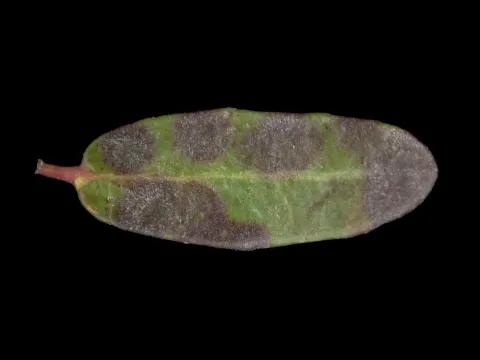
The first symptoms typically appear in spring as small, brownish-gray spots on leaves. As the infection progresses, these spots expand, often developing a darker, more defined margin around the lesion.
A distinctive feature of Protoventuria myrtilli is the presence of an olive-colored or grayish fungal growth on the underside of the leaves, directly beneath the spots. This represents the fungal conidia.
As the tissue dies, the center of the leaf spots may crumble or fall out, creating a "shothole" appearance. When infection is dense, these lesions coalesce, covering large portions of the leaf blade.
Infected shoots may show dark, elongated ulcers or cankers, which can lead to bark cracking. This interrupts the vascular flow within the shoot, causing wilting of the branch extremities.
During late autumn and winter, the fungus produces small, black, spherical perithecia on fallen leaves. These structures serve as the primary inoculum source for the following spring season.
Effective management requires an integrated approach that focuses on reducing the source of inoculum and improving the growing conditions for the plants. Sanitation is the most critical factor in disease control.
Collecting and burning fallen leaves is highly recommended to break the life cycle of the pathogen. Since the fungus overwinters on debris, removing this material significantly limits the risk of primary spring infection.
Proper pruning is essential to increase airflow through the canopy. By reducing humidity levels around the foliage, growers can create an unfavorable environment for spore germination and fungal growth.
- Remove and dispose of all infected plant debris in autumn.
- Ensure adequate plant spacing for good ventilation.
- Use copper-based or systemic fungicides during the early leaf-development stage.
- Maintain optimal drainage to prevent water accumulation near the base of the bushes.
For commercial growers, a prophylactic spray program using registered fungicides is recommended if conditions favor disease outbreaks. Rotation of chemical classes is advised to prevent the development of resistant fungal strains.