
Pseudopezicula tracheiphila
Pseudopezicula tracheiphila
Description
How to identify
Pseudopezicula tracheiphila is an ascomycete fungus that acts as a specialized pathogen causing the disease commonly known as grapevine leaf scorch or "red blotch" (German: Roter Brenner).
The fungus completes its life cycle by forming apothecia on overwintered fallen leaves. During wet spring weather, these structures release ascospores, which are the primary inoculum that initiates the infection on young grapevine leaves.
Once the spores germinate, the mycelium penetrates the plant tissue, specifically invading the xylem vessels. By colonizing the vascular system, the fungus disrupts water and nutrient transport, leading to a systemic physiological collapse of the affected shoot.
During the summer, the pathogen develops a conidial stage known as Phialophora tracheiphila. These secondary spores are disseminated by wind and rain splashes, enabling the rapid spread of the disease throughout the vineyard canopy.
The pathogen is highly persistent, capable of surviving as dormant mycelium in infected woody tissues and organic debris. This creates a stable reservoir of infection that can persist over several years if not properly managed.
What it damages
The primary host for Pseudopezicula tracheiphila is the cultivated grapevine (Vitis vinifera). The disease causes significant physiological stress to the vines, reducing their overall vigor and capacity to produce healthy crops.
The obstruction of the vascular system prevents efficient water movement to the canopy. Consequently, the leaves lose their photosynthetic capacity, which directly results in poor sugar accumulation in the developing berries.
Early defoliation is a classic symptom of severe infection. When a significant portion of the foliage is lost prematurely, the vine enters the winter dormancy period in a weakened state, increasing its susceptibility to winter kill and frost damage.
In addition to foliage, the fungus can infect rachises and flower clusters. This leads to the withering and abortion of flowers and fruit, resulting in loose, underdeveloped clusters with poor market quality.
In severe infestation cases, the impact on yields can be devastating, with losses ranging from 20% to over 50% in vulnerable vineyards. Furthermore, poor grape quality can severely downgrade the resulting wine.
Signs of infestation
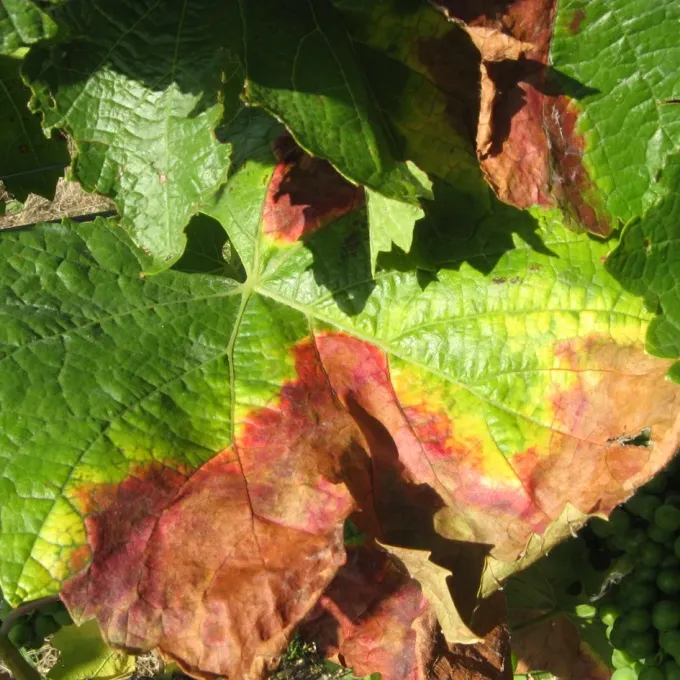
The first symptoms typically appear in early summer as chlorotic spots on the leaves. On white grape varieties, these spots turn yellow, while on red varieties, they exhibit a characteristic deep red or brownish-red discoloration.
The spots are often angular, being strictly confined by the leaf veins. As the infection progresses, the tissue within these spots undergoes necrosis, becomes brittle, and may eventually fall away, creating a perforated appearance.
The lesions frequently coalesce, covering large sections of the leaf blade. This massive tissue death triggers early senescence and leaves fall off, which is why the disease is commonly referred to as "red blotch" or "red burning" of vines.
Infection of the inflorescences causes browning and drying of the flower pedicels. If the fungus reaches the bunch stem, it can cause the entire cluster to dry out and collapse before the fruit reaches maturity.
- Angular yellow or red spots on foliage.
- Browning and necrosis of vascular tissues.
- Premature leaf abscission.
- Desiccation of flower clusters and bunches.
- Reduced sugar content and fruit development.
Control measures
Sanitation is the most critical management practice. Collecting and destroying fallen leaves during autumn and winter is essential to remove the primary inoculum source (apothecia) for the upcoming growing season.
Improving canopy aeration through proper vine training, leaf stripping, and thinning helps to maintain low humidity levels. This creates an unfavorable environment for spore germination and mycelial growth.
Chemical control involves the strategic application of fungicides. Preventive sprays using copper-based products or systemic fungicides (such as triazoles or strobilurins) are highly effective when applied before symptoms appear.
The timing of fungicide applications is crucial, with the period from the appearance of the first leaves through pre-flowering being the most critical window to prevent initial infections.
Integrated Pest Management (IPM) programs should include regular vineyard monitoring to identify and treat early infection spots before they develop into a widespread epidemic. Maintaining vine health through balanced fertilization also helps in mitigating the impacts of the disease.
Causes diseases · 1
Discussion
No discussions yet — be the first.