
Plum rust
Tranzschelia discolor
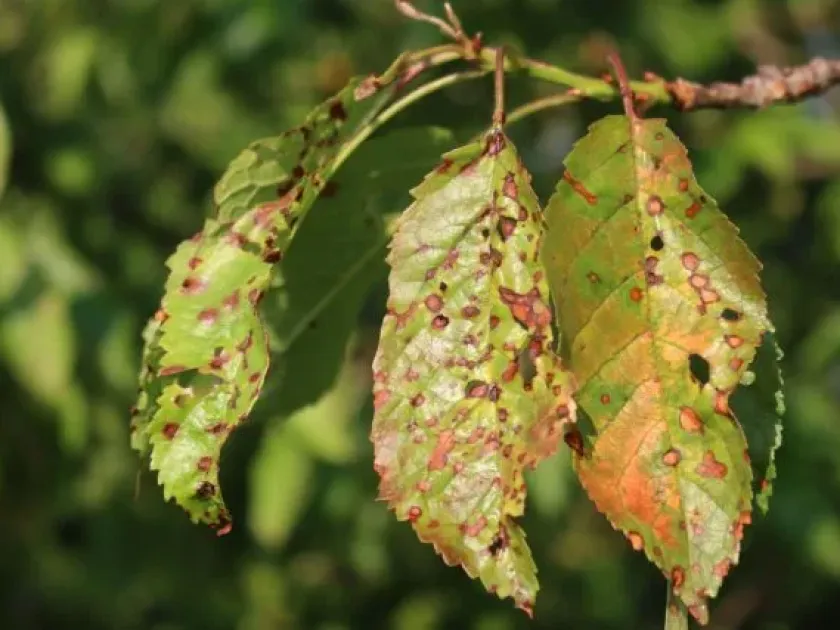
Description
How to identify
The pathogen Tranzschelia discolor is a fungal species belonging to the order Pucciniales, widely recognized as the causative agent of rust in stone fruit trees.
It is a heteroecious rust fungus, meaning it may require different hosts to complete its complex biological life cycle, though it is best known for its asexual phase on fruit trees.
The fungus colonizes the leaves of host plants, where it develops its characteristic fruiting bodies, known as uredinia and telia, which produce infectious spores.
Identification is primarily performed through visual inspection of foliar symptoms and microscopic examination of the spores found in the rust-colored pustules.
This pathogen persists in the environment by over-wintering as teliospores on leaf litter or in crevices on the tree bark, surviving until the next growing season.
What it damages
The infection targets various stone fruit species, including plums, peaches, nectarines, apricots, and almonds, causing significant horticultural damage.
Premature leaf drop caused by the infection severely reduces the tree's photosynthetic capacity, which impairs nutrient storage and fruit development.
Trees affected by rust exhibit decreased vigor, making them significantly more susceptible to winter frost injury and secondary pests.
Fruit quality is negatively impacted, often resulting in reduced size, poor sugar accumulation, and loss of commercial value.
Long-term infections can lead to tree decline, reducing the overall lifespan and productive output of the orchard.
When it appears
Symptoms of plum rust typically emerge in mid-to-late summer, usually becoming noticeable from July through August as the season progresses.
The spread of the fungus is driven by wind currents and splashing water, which disseminate spores to healthy tissues throughout the canopy.
Favorable environmental conditions for the development of Tranzschelia discolor include warm, humid weather and prolonged periods of leaf wetness.
Late in the season, the fungus produces darker, more resilient teliospores, which are specifically adapted to endure the harsh conditions of winter.
Orchards with high humidity levels and poor airflow are particularly prone to rapid disease outbreaks and increased infection rates.
Signs of infestation
Initial symptoms present as small, pale yellow or chlorotic spots appearing on the upper surface of the leaves.
On the undersides of these spots, characteristic reddish-brown, dusty pustules form, releasing masses of spores into the environment.
As the infection severity increases, the spots merge, leading to extensive necrosis, yellowing, and eventual defoliation of the tree.
- Chlorotic spots on the upper leaf surface.
- Reddish-brown, powdery pustules on the leaf underside.
- Premature yellowing and leaf shedding.
- Diminished fruit quality and tree health.
The infected leaves often look burnt or dusty due to the accumulation of spores on the plant surface during peak infection periods.
Control measures
Effective sanitation is critical, requiring the prompt removal and destruction of fallen leaves to eliminate the primary source of overwintering inoculum.
Pruning strategies should aim to keep the canopy open, promoting better air circulation and reducing the humidity levels favorable to fungal growth.
Chemical control involves the timely application of fungicides, such as copper-based products or triazoles, before the onset of heavy spore dispersal.
Implementing a balanced fertilization program helps maintain tree vigor, allowing the plant to better withstand the stress caused by the infection.
Monitoring the orchard for early signs of the disease is essential for applying localized treatments and preventing widespread outbreaks.
Causes diseases · 3
Discussion
No discussions yet — be the first.