
Plum pox
Plum pox
Description
How to identify
Plum pox, or sharka, is caused by the Plum pox virus (PPV), a member of the genus Potyvirus and family Potyviridae.
It is recognized globally as one of the most severe quarantine diseases affecting stone fruits, capable of causing widespread destruction in fruit industries.
The virus is primarily transmitted by various species of aphids in a non-persistent manner and through the propagation of infected nursery stocks.
Identification is challenging because trees can remain asymptomatic for long periods while still acting as reservoirs for the virus.
Standard detection methods include molecular diagnostics like RT-PCR and serological tests such as ELISA to ensure plant health in certification programs.
What it damages
The host range includes various Prunus species: plums, peaches, apricots, nectarines, and almonds, as well as wild cherry and wild plum varieties.
Infected trees suffer from reduced fruit quality, premature fruit drop, and significant yield losses, often rendering the harvest unsuitable for market.
The tree's physiological health declines over several years, leading to stunted growth and increased susceptibility to other environmental stressors and diseases.
Peaches are particularly vulnerable, often displaying severe symptoms on fruit and leaves that lead to total crop failure and tree decline.
The long-term economic damage involves not just crop loss, but the expensive mandatory removal and destruction of entire infected orchard blocks.
Signs of infestation
Foliar symptoms typically appear as chlorotic rings, spots, or vein clearing, which are most visible on leaves in the early spring season.
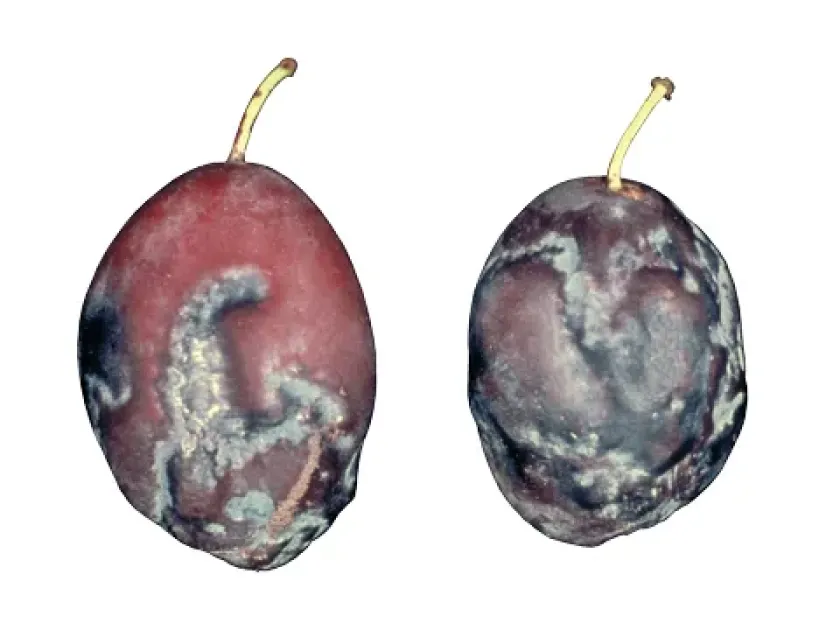
Fruit symptoms are characteristic, showing depressed spots, rings, and irregular bumps on the skin, often accompanied by necrotic areas in the flesh.
A distinctive feature of affected fruit is the presence of pale rings or spots on the stones (pits) themselves, visible after cutting open the fruit.
Early fruit drop is a common indicator of a severe infection, as the tree attempts to shed fruits that cannot reach proper maturity.
Blossoms of some susceptible varieties may also exhibit color breaking or deformations, though this is less consistent than leaf and fruit symptoms.
Control measures
The most effective strategy is the use of virus-indexed, certified disease-free nursery stock to prevent the introduction of the pathogen into new areas.
Strict phytosanitary protocols, including the immediate uprooting and burning of infected trees, are mandatory in most regions to limit the spread.
While insecticide applications can control aphid populations, they only slow down the viral transmission and cannot provide complete protection.
Orchard management should prioritize isolation from known infected areas and regular inspections to detect and remove asymptomatic viral carriers.
Ongoing research is focused on developing genetically resistant or tolerant cultivars as a sustainable solution to mitigate the risk of sharka infection.
Causes diseases · 1
Discussion
No discussions yet — be the first.