
Podosphaera
Podosphaera
Description
How to identify
The genus Podosphaera belongs to the kingdom Fungi and the phylum Ascomycota. These are obligate parasites and are among the most common causes of powdery mildew in various plant species.
The primary diagnostic feature of this genus is the presence of chasmothecia (cleistothecia), which are microscopic fruiting bodies equipped with appendages that feature dichotomously branched tips.
During its life cycle, the fungus produces a superficial mycelium that forms abundant white conidial chains. It does not penetrate the plant epidermis deeply, instead drawing nutrients via specialized organs called haustoria.
The pathogen overwinters as mycelium inside infected buds or as fruiting bodies on fallen leaves. In spring, spores are released, carried by wind or water splashes, and initiate new infections on host tissues.
These fungi thrive in moderate temperatures and high humidity, which favor conidial germination and rapid colonization of the host's surface tissues.
What it damages
The most significant species, Podosphaera leucotricha, specifically targets pome fruits, primarily apples. Another notable species, Podosphaera mors-uvae, is responsible for severe powdery mildew in gooseberries.
The pathogen attacks young leaves, stems, flower buds, and shoots. Heavy infections cause leaves to curl, distort, and eventually drop prematurely, significantly impacting the plant's health.
When flower clusters are affected, fruit set is often reduced. Surviving fruits are frequently small, deformed, and covered in a corky, net-like skin, rendering them commercially unviable.
Shoots become covered in a dense, felt-like white mat that eventually darkens. This stunts shoot growth and can lead to the necrosis of growing tips, reducing the plant's cold tolerance and vitality.
At the orchard level, the damage manifests as decreased plant vigor, reduced fruit bud formation for the following year, and substantial losses in marketable crop quality.
When it appears
Primary infections begin early in the spring, shortly after bud break, whenever temperatures remain above 10-12°C. The most susceptible tissues are young leaves and emerging flower buds.
Peak infection spread occurs during alternating warm and humid weather conditions. Optimal development occurs between 18°C and 25°C with a relative humidity exceeding 70-80%.
During the summer months, the pathogen undergoes multiple cycles of asexual reproduction, producing several generations of conidia, which can spread the disease throughout the canopy.
In mid-to-late summer, sexual fruiting bodies (chasmothecia) form on the aging mycelium. These structures mature throughout autumn, ensuring the pathogen can survive the winter.
As temperatures drop at the end of the season, the fungus enters a quiescent state, with the mycelium hidden inside dormant buds serving as the primary inoculum for the next growing season.
Signs of infestation
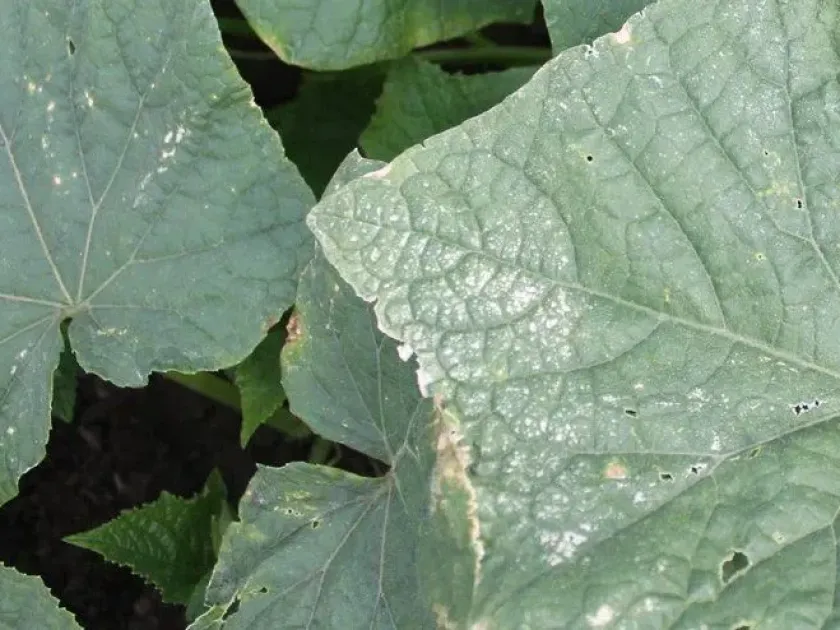
The first sign of the disease is the appearance of white, dusty, or cobweb-like patches on the leaves. These patches grow thicker and can eventually cover the entire surface with a grayish mycelial mat.
Affected shoots often look as though they have been dusted with flour or chalk. Under a magnifying glass, the fungal conidial chains are clearly visible as powdery structures.
The tissue beneath the infection sites may show signs of chlorosis followed by browning. Infected leaves curl along the midrib and dry out, losing their ability to photosynthesize effectively.
Infection on young fruit appears as light spots that gradually turn into scarred, russeted, or net-like patterns, negatively affecting the fruit's storage potential and market value.
By autumn, small, black, spherical dots—the mature chasmothecia—can be observed on infected stems and fallen leaves, indicating the presence of the sexual stage of the fungus.
Control measures
Integrated management begins with strict sanitation, including the pruning and removal of infected shoots where the fungus overwinters. Collected debris should be burned to prevent re-infection.
Selecting resistant varieties is the most sustainable approach to control. Breeding programs continuously work to improve the genetic resistance of fruit trees to Podosphaera species.
Chemical control is often necessary during high-pressure periods. It is critical to rotate fungicides with different modes of action to prevent the development of resistant fungal strains:
- Sulfur-based fungicides (contact).
- Triazoles (systemic).
- Strobilurins (systemic-contact).
- Biological control agents based on beneficial microbes.
Proper cultural practices are essential, including balanced fertilization to avoid excess nitrogen, sufficient irrigation, and canopy management to improve airflow and reduce micro-humidity.
Early-season monitoring is vital; identifying and treating localized infection spots early can prevent a full-scale outbreak, reducing the need for extensive chemical applications later in the season.
Causes diseases · 1
Discussion
No discussions yet — be the first.