
Polymyxa graminis
Polymyxa graminis
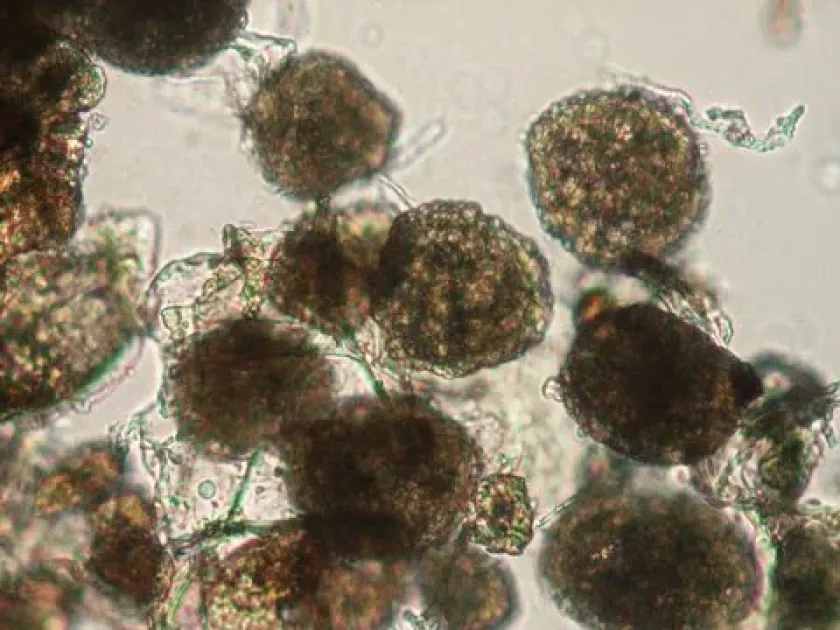
Description
How to identify
Polymyxa graminis is a soil-borne obligate parasite belonging to the phylum Plasmodiophoromycota. It is not a true fungus but acts as a slime mold-like organism that colonizes the roots of cereal crops.
The pathogen lacks a mycelium and exists as an intracellular organism within the host root cells. Its primary significance in agriculture is its role as a vector for various plant viruses.
The organism persists in the soil as resting spores contained within cystosori. These structures are extremely resilient and can survive in the soil for over a decade in the absence of a host.
When moisture is present, the spores release motile zoospores. These zoospores swim through soil water films, attracted by root exudates, to locate and penetrate host root hairs.
Inside the plant, the parasite completes its lifecycle by forming plasmodia, eventually producing new generations of resting spores that can infect neighboring roots or persist in the soil.
What it damages
The major impact of Polymyxa graminis is its ability to transmit serious viral diseases, most notably Wheat Streak Mosaic Virus (WSMV) and others that cause significant yield losses.
The pathogen affects a wide range of cereals, including wheat, barley, rye, and oats. Many wild grasses also serve as alternate hosts, complicating the management of the pathogen.
Infected crops exhibit stunted growth, excessive tillering, and characteristic yellow or light green striping on leaves, which is often mistaken for nutrient deficiencies.
The severity of the damage depends on the population density of the parasite in the soil and the susceptibility of the cereal cultivar to the specific viruses transmitted.
Yield losses can be severe, ranging from 30% to 80% in heavily infested fields, as the viral infection severely weakens the plant's metabolism and reproductive capacity.
When it appears
Initial infection of winter cereals typically occurs during the autumn, shortly after seedling emergence, provided that soil moisture and temperature conditions are favorable.
A second wave of infection often occurs in the spring during the resumption of vegetative growth, driven by snowmelt and rising soil temperatures.
The pathogen is primarily spread across fields through the movement of infested soil by farm machinery, wind erosion, or water runoff during heavy rainfall.
The prevalence of the pathogen is highest in regions with mild winters and moist soil conditions, which support the longevity and mobility of the zoospores.
The disease cycle is tightly linked to the presence of host roots and favorable environmental conditions for zoospore swimming, typically occurring at temperatures of 10-15°C.
Signs of infestation
Visual symptoms usually appear as mosaic patterns, chlorotic streaks, or stripes along the leaf veins, which often lead to premature leaf senescence and death.
Stunted growth, deformation of the plant canopy, and a general lack of vigor are common indicators of systemic viral infection transmitted by the parasite.
Root systems may appear superficially normal, but microscopic examination would reveal the presence of cystosori within the epidermal root cells.
Infection is often patchy in fields, reflecting the distribution of the pathogen in the soil and areas where moisture levels remained optimal for zoospore movement.
Because symptoms are systemic and can vary, professional diagnostics, including molecular tests like PCR, are required to confirm the presence of the viral infection.
Control measures
Controlling Polymyxa graminis is challenging due to the longevity of its resting spores in the soil, making direct chemical eradication essentially impossible.
- Deploy resistant or tolerant cereal cultivars that can resist the viruses transmitted by the parasite.
- Implement strict crop rotation schedules, avoiding susceptible cereals for at least 3-5 years to starve the pathogen.
- Manage wild grass populations and volunteer cereals, as these act as critical reservoirs for the pathogen and the viruses it carries.
- Adjust planting dates for winter cereals to minimize the overlap between seedling emergence and periods of peak zoospore activity.
- Improve soil drainage to reduce water saturation, which is necessary for zoospore movement and successful host infection.
Causes diseases · 1
Discussion
No discussions yet — be the first.