
Blackberry rust
Kuehneola uredinis
Blackberry rust is caused by the fungus Kuehneola uredinis, a member of the Basidiomycota division. It is an obligate parasite that requires living host tissue to complete its life cycle, primarily affecting species within the Rubus genus.
What the section contains
Blackberry rust
The fungus is characterized by its complex life cycle, which involves the production of different spore types. These spores are highly effective at spreading the infection across plantations through wind and splashing water during rainfall.
Temperature and moisture are the primary environmental factors determining the spread of the disease. In temperate regions, the pathogen is capable of overwintering in infected stems, ensuring that the fungus remains present season after season.
Taxonomically, Kuehneola uredinis belongs to the Pucciniomycetes class. Its biological nature allows it to survive in various environments, often making it a persistent challenge for blackberry growers globally.
Microscopic identification is based on the morphology of its uredinia and telia. These structures produce the distinct yellow-to-orange powder seen on infected leaves, which serves as a definitive sign for diagnostic purposes.
The primary impact of blackberry rust is the reduction of plant vigor and overall yield. Because the fungus depletes resources from the host, the plants become stunted and produce significantly smaller, less palatable berries.
Severe infections lead to premature defoliation, which severely limits the plant's ability to store energy for the next growing season. This weakness significantly increases the risk of winter kill, especially in regions with harsh winters.
When the infection spreads to the canes, it can cause structural damage, including cracks and cankers. These openings not only weaken the stems but also serve as entry points for secondary infections and wood-boring insects.
Commercially, blackberry rust reduces the shelf life and quality of the fruit. Growers often face significant financial losses due to the need for increased labor for pruning and the cost of necessary fungicide treatments.
Without intervention, a localized rust outbreak can quickly become an epidemic, potentially rendering an entire plantation unproductive within a few seasons due to constant re-infection from surrounding plant debris.
The first signs of infection appear as small, bright yellow or orange spots on the upper surface of leaves. As the fungus develops, these turn into distinct, raised pustules on the underside of the leaves.
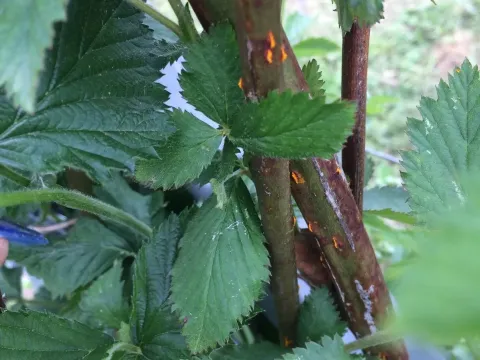
Canes show characteristic symptoms such as longitudinal cracking and the development of orange, powdery spore masses. The infected stems may become brittle, twisted, or distorted, failing to support a full crop load.
In high humidity, the spore-laden pustules can merge, giving the foliage a scorched, sickly appearance. This widespread infection leads to the yellowing and eventual browning of leaves, causing them to drop early.
Early-stage detection involves inspecting the lower leaf surfaces for minute powdery clusters. During the transition to winter, the color of these pustules often deepens, signaling the fungus's shift to a dormant spore production phase.
Monitoring is crucial during the active growing months when environmental conditions favor spore dispersal. Identifying these visual cues early allows for faster implementation of management practices.
The most effective management strategy is sanitation. Growers should prune and destroy all infected canes and remove fallen leaves, as these materials harbor the fungal inoculum throughout the dormant season.
Plant spacing and site selection are equally important. Ensuring adequate air circulation between rows significantly reduces the humidity levels that the fungus needs to infect plant tissues successfully.
Fungicides containing copper or specific systemic compounds can be used to protect plants. These treatments should be applied preventatively or at the first signs of the disease, following the manufacturer's label instructions carefully.
Managing nitrogen levels is essential; avoid excessive nitrogen fertilizer, which promotes soft, succulent growth that is highly susceptible to infection. Balanced nutrition supports the plant's natural immune system.
- Remove and burn all infected plant material.
- Maintain proper row spacing for airflow.
- Use fungicides as a preventative measure.
- Monitor plants frequently during the growing season.
- Select resistant blackberry cultivars whenever possible.