
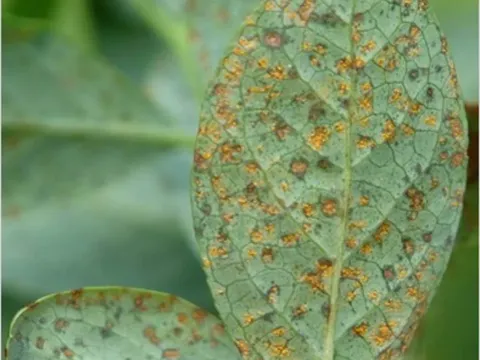
Blueberry rust
Naohidemyces vaccinii
Blueberry rust is a fungal disease caused by the pathogen Naohidemyces vaccinii, which is a basidiomycete rust fungus. This pathogen specifically targets plants within the Vaccinium genus, including highbush blueberry.
What the section contains
Blueberry rust
The fungus is heteroecious, meaning it requires two distinct hosts to complete its life cycle. In many regions, the alternate host is the Norway spruce (Picea abies), where the pathogen initiates its seasonal development.
The life cycle involves several spore stages, which allow the fungus to survive under various environmental conditions and disperse effectively across agricultural landscapes.
Mycelial growth occurs within the leaf tissues, where the fungus extracts nutrients, leading to a significant depletion of the host plant's vital energy reserves.
Diagnostic identification of Naohidemyces vaccinii involves microscopic observation of the characteristic uredinia and telia structures formed on the undersides of infected leaves.
The primary impact of the disease is the infection of blueberry foliage, which results in significant leaf drop and a reduction in the overall photosynthetic capacity of the plants.
Because the foliage is compromised, infected plants struggle to store adequate carbohydrates, which negatively affects the development of fruit buds and yield for the subsequent season.
In cases of severe infestation, the blueberry bushes become weakened, showing stunted growth and reduced vigor, making them more susceptible to other environmental stressors.
The berries themselves may not show direct signs of fungal growth, but they often fail to size up properly, become smaller, and show a decrease in sugar content and overall market quality.
In nursery settings, blueberry rust can be catastrophic, causing extensive loss of young stock and financial strain for growers due to strict quarantine and disposal requirements.
The disease typically emerges in early summer when moist, temperate conditions allow for the germination of spores carried from nearby coniferous trees.
During the mid-summer months, specifically July and August, the infection can spread rapidly through the development of secondary urediniospores, which can initiate new infections within days.
High relative humidity and extended periods of leaf wetness, such as those caused by dew or frequent rain, are critical drivers for the spread and colonization of the fungus.
As the season transitions into autumn, the fungus begins to form overwintering spores, ensuring its survival until the following spring in leaf litter.
Epidemics are most severe during years with excessive summer rainfall, which creates the perfect microclimate for the massive production and dispersal of rust spores.
Early symptoms include the appearance of small, yellowish-green spots on the upper leaf surface, which gradually expand and become more chlorotic over time.
The most diagnostic sign is the presence of bright orange, powdery pustules (uredinia) on the undersides of the leaves, corresponding to the yellow spots seen above.
As the disease progresses, these spots may become necrotic, and the leaves will eventually turn yellow, curl, and fall off, resulting in premature defoliation of the bushes.
In some instances, the rust may also attack soft, non-woody shoots, causing distortion and necrotic lesions on the stem tissue.
- Yellow or red spots on the upper leaf surface.
- Bright orange, powdery pustules on the leaf underside.
- Premature yellowing and dropping of leaves.
- Stunted growth of new shoots.
Cultural management is the first line of defense, involving the thorough raking and removal of infected leaf litter to reduce the amount of inoculum present in the field.
Proper pruning and spacing between blueberry plants are essential to promote better air circulation and leaf drying, which discourages fungal spore germination.
Chemical control measures include the application of registered fungicides, such as copper-based products or systemic triazoles, timed to coincide with high-risk weather conditions.
Integrated Pest Management (IPM) practices, including scouting for early symptoms and removing symptomatic plants, are vital for preventing large-scale outbreaks.
Avoiding the establishment of new blueberry plantations near known alternate hosts, like spruce trees, is a key strategy for long-term disease prevention in affected regions.