
Blueberry rust
Pucciniastrum minimum
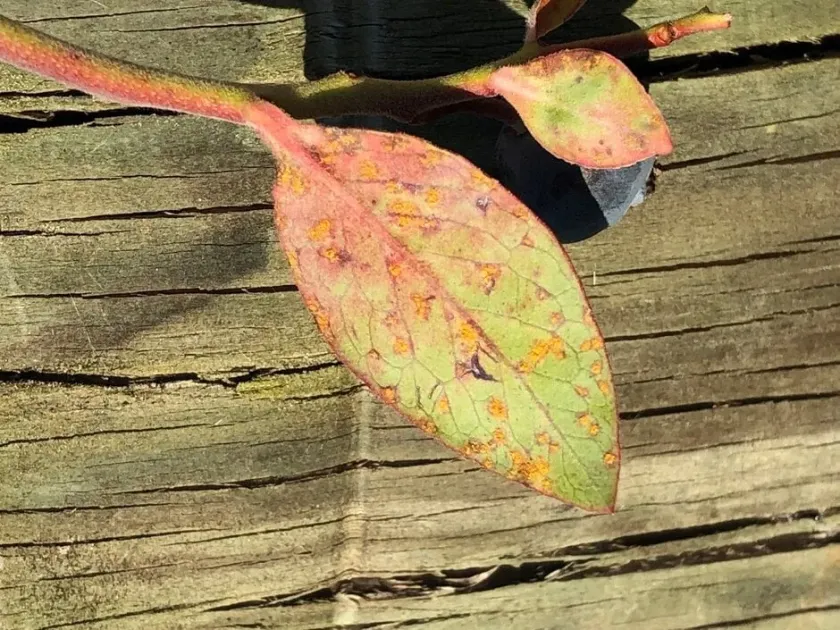
Description
How to identify
Blueberry rust is caused by the fungus Pucciniastrum minimum, an obligate parasite belonging to the phylum Basidiomycota. This pathogen specifically targets plants within the Vaccinium genus.
The fungus has a complex life cycle that often requires an alternate host to complete its development. Hemlock trees (Tsuga spp.) frequently serve as the primary host for the initial stages of the fungus.
The pathogen spreads through the production of urediniospores, which are easily wind-dispersed, allowing it to colonize healthy blueberry and cranberry fields over significant distances.
Systematically, this rust fungus is highly specialized, and its biology is tightly linked to the phenology of its host plants, responding rapidly to environmental cues like humidity and temperature.
Understanding the taxonomic and biological classification of this organism is essential for growers aiming to mitigate the risk of infection in high-density berry plantations.
What it damages
The primary damage caused by blueberry rust is the premature defoliation of the bushes. By shedding leaves mid-season, the plants lose their ability to synthesize energy and store carbohydrates.
This loss of vigor directly impacts fruit quality and production yield. Berries may become undersized, poorly colored, or fail to mature properly, leading to significant economic losses for producers.
Plants affected by the fungus show reduced hardiness, making them more susceptible to winter injury. Over successive seasons, the cumulative stress can lead to the death of branches or entire bushes.
The presence of the fungus also makes the plants more vulnerable to other opportunistic pathogens, which exploit the weakened state of the host tissues, complicating the overall disease management.
Furthermore, because the disease spreads via wind-borne spores, a single infected plant can quickly jeopardize the health of an entire field if proactive measures are not taken.
When it appears
Blueberry rust symptoms typically emerge in early to mid-summer, depending on climatic conditions. The infection process is triggered by periods of prolonged leaf wetness and moderate warmth.
The fungus thrives in temperatures between 18°C and 24°C when moisture levels are high. These conditions allow for the rapid development of urediniospores, leading to secondary infection cycles.
As the season progresses into autumn, the pathogen shifts its biology to form teliospores, which are the resting stages designed to survive cold temperatures and overwinter successfully.
In regions with mild winters, the fungus may persist on evergreen hosts or in sheltered plant tissues, providing an immediate source of inoculum when the growing season begins again.
Successful monitoring during the wet periods of summer is vital, as this is when the pathogen is most active and capable of causing the most significant spread throughout the planting.
Signs of infestation
The earliest sign of infection is the appearance of small, light-colored or yellowish spots on the upper leaf surface, which gradually darken as the fungal tissue develops beneath.
The most diagnostic feature is the presence of small, powdery, bright orange or yellow pustules on the underside of the leaves, which are collections of fungal spores ready for dispersal.
Severe infestations cause the foliage to yellow, curl, and eventually drop. Significant defoliation in late summer is a classic sign of advanced blueberry rust infection in a field.
In some cases, young shoots or stems may exhibit lesions or deformities. This indicates that the pathogen is affecting the vegetative growth points, which is particularly detrimental to young plants.
- Small yellow spots on the top side of leaves.
- Orange powdery pustules on the undersides of leaves.
- Early leaf senescence and drop.
- Deformation and necrotic spots on young shoots.
- Overall stunted growth of the plant.
Control measures
Sanitation is a cornerstone of blueberry rust management. Removing and destroying infected leaves and debris helps eliminate the primary inoculum sources for the following season.
Proper canopy management, including regular pruning, improves air circulation and reduces the duration of leaf wetness, creating an environment that is less favorable for fungal growth.
Fungicide applications are necessary for managing outbreaks. Copper-based fungicides or systemic options registered for Vaccinium are effective when applied preventively or at the first signs of disease.
Choosing resistant cultivars is the most sustainable long-term strategy for rust control. Farmers should select varieties that have proven durability against fungal pathogens in their specific climate.
Maintaining spatial isolation from potential alternate hosts, such as hemlock trees, is an effective way to prevent initial infection, especially when establishing new blueberry plantations.
Causes diseases · 1
Discussion
No discussions yet — be the first.