
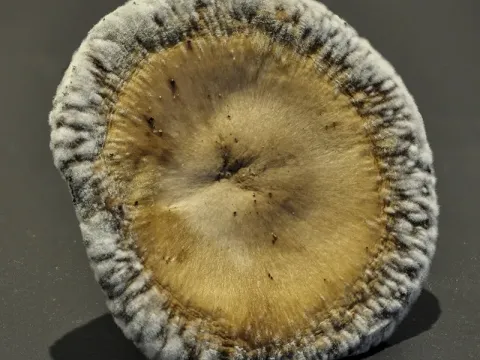
Penicillium brevi-compactum
Penicillium brevi-compactum
Penicillium brevi-compactum is a species of the genus Penicillium within the Trichocomaceae family, well-known for its ubiquitous presence in soil.
What the section contains
Penicillium brevi-compactum
The fungus is distinguished by its short, compact conidiophores, which are clearly visible under microscopic examination of cultures.
It is biologically notable for producing various secondary metabolites, including mycophenolic acid, which has implications for both crop quality and toxicology.
The fungus forms velvety, grey-green colonies on common laboratory media, which is a standard method for identifying this specific species.
As a saprophytic organism, it thrives by decomposing organic matter but can act as a pathogen under stress conditions for the host plant.
This fungus primarily causes seed decay and seedling blight, severely affecting the germination potential of cereal and legume crops.
In post-harvest environments, it is a common cause of storage rot, leading to significant spoilage of fruits and vegetables in warehouses.
Damage to the seed coat reduces the overall vigor of the crop, resulting in poor stand establishment and decreased final yield quality.
The accumulation of mycotoxins produced by this pathogen makes the infested feed or grain unsafe for livestock consumption.
The infection often compromises the integrity of plant tissues, making the produce commercially unacceptable and difficult to transport.
The fungus is most active during harvest and storage periods, especially when environmental conditions are characterized by high humidity.
Optimal growth occurs at temperatures ranging between 20°C and 25°C, although the fungus remains viable under a wider range of conditions.
Poorly ventilated warehouses provide the ideal environment for the rapid multiplication and dissemination of conidia during the winter storage months.
In field conditions, spore dispersal is driven by air currents and moisture, often increasing during the rainy harvest season.
The biological cycle is rapid, allowing the pathogen to colonize agricultural products within days if storage parameters are neglected.
The most evident sign is the development of a white to greyish-green powdery mold on the surfaces of seeds, fruits, or roots.
Affected tissues undergo rapid degradation, losing their firmness and often emitting a characteristic musty or stale odor.
On grain samples, the germ area typically becomes discolored and covered in a dense layer of fungal mycelium and spores.
Fruits exhibit localized soft rot spots that expand quickly, eventually leading to the complete breakdown of the plant structure.
Seedling emergence is often hindered by the presence of the fungus, leading to pre-emergence rot where the seeds fail to sprout entirely.
The primary control strategy involves rigorous management of storage conditions, maintaining grain moisture levels below critical thresholds.
Proper aeration and temperature control in silos and warehouses are essential to prevent the microclimates favored by Penicillium species.
Seed treatment with professional-grade systemic fungicides is a standard procedure to provide early protection against soil-borne pathogens.
Strict sanitation practices within storage facilities, including the removal of damaged produce, are critical to limiting the spread of spores.
Integrating crop rotation and maintaining good field hygiene helps reduce the overall soil-borne inoculum pressure of the pathogen.