
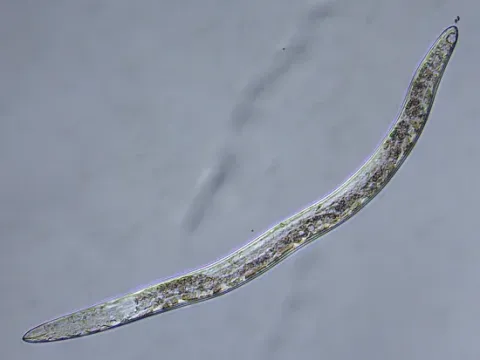
Paratrichodorus allius
Paratrichodorus allius
Paratrichodorus allius is a microscopic plant-parasitic nematode belonging to the family Trichodoridae. These organisms are known for their ability to damage the roots of a wide range of economically important crops by direct feeding.
What the section contains
Paratrichodorus allius
The morphology of these nematodes includes a blunt, cylindrical body, typically ranging from 0.5 to 1.5 mm in length. A defining feature of this genus is the presence of an onchiostyle, a curved feeding tube used to pierce plant cells.
Identification is rarely possible via visual inspection in the field. Laboratory diagnostics using standardized soil extraction methods, such as the Baermann funnel technique or centrifugation, are required for accurate species determination.
As ectoparasites, they reside in the soil profile surrounding the roots rather than entering the root tissue themselves. This behavior makes them notoriously difficult to detect until significant plant damage has already occurred.
Besides direct mechanical injury to roots, they serve as essential vectors for several plant-pathogenic viruses. This viral transmission often causes more devastating yield losses than the physical damage caused by the feeding nematodes themselves.
The host range of Paratrichodorus allius includes vegetables, cereals, and bulb crops. Potatoes, onions, and tomatoes are particularly susceptible to their feeding habits, leading to stunted and deformed root systems.
The feeding activity specifically targets the root tips, which are responsible for the uptake of water and nutrients. Damage leads to the characteristic "stubby root" symptom, where the root system fails to elongate and develops a stunted appearance.
Economic damage manifests as reduced plant vigor, inconsistent crop maturity, and significant yield penalties. In root crops like carrots or onions, the aesthetic damage often renders the produce unmarketable.
The indirect impact via viral transmission is profound. Diseases like tobacco rattle virus (TRV) can cause necrotic spots and systemic growth abnormalities, leading to total field crop failures in highly infested areas.
Overall, the presence of these nematodes weakens the plant's immune response, making the crop more susceptible to secondary soil-borne fungal pathogens such as Rhizoctonia or Pythium species.
The activity of Paratrichodorus allius is largely dependent on favorable soil temperature and moisture levels. They are most active during the spring and early summer when soil temperatures are between 15°C and 25°C.
They prefer well-aerated, sandy to sandy-loam soil types. In such environments, the nematodes can move freely through the thin water films surrounding soil particles to seek out new root tips to feed upon.
There is no specific dormancy or cyst stage in their life cycle. If the soil remains moist and a host plant is present, the population can continue to feed and reproduce throughout the entire growing season.
Dissemination occurs over long distances through human activity, such as moving contaminated soil on machinery, equipment, or through the trade of infested seedlings or ornamental planting material.
During the winter months, these nematodes survive at lower metabolic rates within the rhizosphere of perennial weeds or dormant crops, awaiting the return of warmer conditions to resume their destructive cycle.
Field symptoms often appear as localized patches of stunted or chlorotic plants. These patches may be irregular in shape and reflect areas with high population densities of the nematode within the soil.
Plants affected during the seedling stage often display slow growth and a pale green color. In more severe cases, germination may appear uneven across the field, leading to gaps in the crop stand.
Upon carefully excavating the plant roots, one can observe a lack of fine root hairs and a blunt, truncated appearance of the primary roots. The root system may look brush-like or abnormally branched.
Foliar symptoms associated with viral transmission include irregular leaf patterns, mosaics, or necrotic lesions. These visual signs appear after the nematode has successfully inoculated the plant with a pathogen.
Decreased water uptake during dry periods leads to temporary wilting even when irrigation is sufficient. This indicates that the compromised root system cannot transport enough moisture to the canopy.
Integrated Pest Management (IPM) is the most effective approach for controlling Paratrichodorus allius. This starts with long-term crop rotation using non-host species to starve the nematode population.
Cover crops that act as natural nematicides, such as specific varieties of oilseed radish or marigolds, can significantly reduce soil populations when incorporated into the field as green manure.
Sanitation practices are critical. Cleaning all machinery and tools before moving from infested fields to clean areas prevents the spread of contaminated soil particles carrying the nematodes.
Chemical control involving soil fumigation is an option in high-value vegetable crops. However, these applications are expensive and subject to strict regulatory oversight regarding environmental impact and safety.
- Regular soil testing and nematode density monitoring.
- Implementation of weed management to eliminate alternative hosts.
- Usage of high-quality, certified, and clean planting material.
- Avoidance of excessive irrigation that favors nematode movement.
- Adopting resistant or tolerant crop cultivars where available.