
Paracercospora fijiensis
Paracercospora fijiensis
Description
How to identify
Paracercospora fijiensis is a fungal pathogen belonging to the Ascomycota division, scientifically recognized as the cause of Black Sigatoka disease.
This fungus exists in both asexual and sexual life stages, producing conidia and ascospores that facilitate its spread across banana plantations.
The pathogen utilizes wind and water splash to disseminate spores, which then land on host leaves and germinate under specific environmental conditions.
High relative humidity and surface moisture are essential for the germination and subsequent penetration of the fungus into the host's leaf tissues.
Once inside the leaf, the fungal mycelium colonizes the intercellular spaces, secreting enzymes that lead to cellular death and subsequent necrotic lesions.
What it damages
The primary hosts of Paracercospora fijiensis are banana and plantain plants (Musa spp.), which are staple food crops in many tropical countries.
Severe infection significantly reduces the photosynthetic leaf area, which directly impairs the plant's ability to produce sugars for fruit development.
Affected plants often produce smaller bunches, and the quality of the fruits suffers due to premature ripening and poor storage longevity.
Black Sigatoka is considered one of the most destructive diseases in the global banana industry, causing massive financial losses annually.
Repeated defoliation from the disease weakens the rhizome system, reducing the plant's overall vigor and the potential of future sucker generations.
Signs of infestation
The earliest symptoms appear as small, light-colored specks on the underside of young leaves, which are often overlooked in early stages.
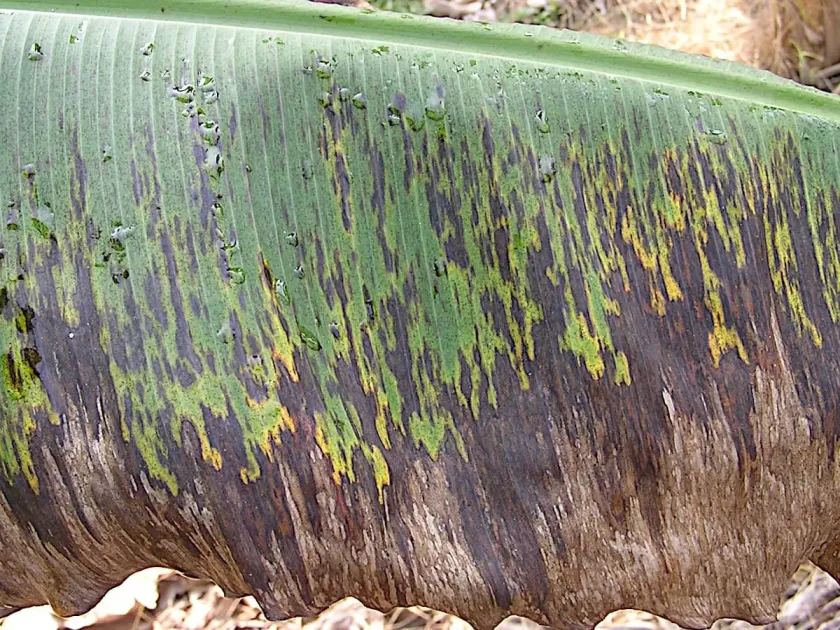
These specks evolve into brown or black streaks that run parallel to the leaf veins, becoming increasingly visible as the disease progresses.
Distinctive yellow halos develop around these spots, and the centers of the lesions eventually turn into sunken, necrotic tissues.
Black, velvet-like fungal growth may be visible on the surface of the lesions, especially during humid weather, consisting of the pathogen's spores.
In advanced stages, the lesions coalesce, causing large portions of the leaf to dry out and collapse, significantly reducing the lifespan of the foliage.
Control measures
Management of Black Sigatoka relies heavily on the application of protectant and systemic fungicides to prevent the spread of the fungus.
Deleafing, or the removal and safe disposal of infected leaf portions, helps to reduce the inoculum load within the plantation environment.
Implementing proper spacing and canopy management improves airflow within the plantation, helping to dry leaves faster and inhibit spore germination.
Research into resistant banana hybrids and cultivars is a top priority for sustainable management and reducing reliance on chemical control methods.
Integrated Pest Management (IPM) strategies, including constant monitoring and weather-based forecasting, ensure timely intervention against outbreaks.
Causes diseases · 1
Discussion
No discussions yet — be the first.