
Paraphaeosphaeria
Paraphaeosphaeria
The genus Paraphaeosphaeria belongs to the kingdom Fungi, phylum Ascomycota, and order Pleosporales. These microscopic fungi are known as significant plant pathogens that primarily affect cereal crops and other agricultural species.
What the section contains
Paraphaeosphaeria
The life cycle of the pathogen involves both sexual stages, forming pseudothecia, and asexual stages, characterized by the development of pycnidia. This versatility allows the fungus to survive under various environmental conditions.
The fungus is largely soil-borne and residue-borne. It survives the winter season in the form of dormant mycelium or fruiting bodies on crop stubble, remaining a persistent threat to susceptible crops.
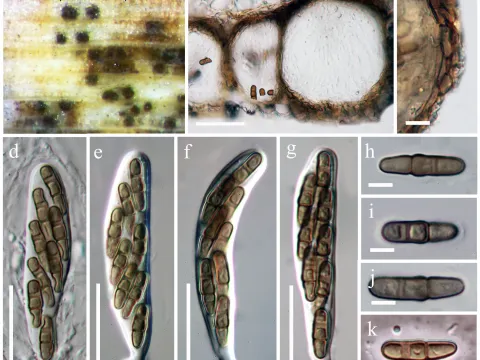
Morphological identification is based on the characteristics of spores and pycnidia observed under high-magnification microscopy. Precise taxonomy often requires molecular identification methods in laboratory settings.
Pathogen dispersal occurs primarily through wind-borne spores and rain-splashed conidia. This efficient mechanism allows for rapid transmission throughout a field during periods of high humidity.
Paraphaeosphaeria species are known to cause leaf spot diseases on a variety of hosts, with cereal crops like wheat and barley being the most economically impacted. The pathogen causes necrosis on leaf tissues.
The primary damage results from the destruction of leaf tissue, which drastically reduces the photosynthetic capacity of the plant. This loss of vitality leads to poor grain filling and reduced kernel weight.
When the infection is severe, it can cause premature senescence of the foliage. This reduces the overall plant biomass and significantly impacts the yield potential of the entire crop.
Beyond leaf damage, the fungus may infect the stems and heads, leading to lodging and lower grain quality. It often acts in combination with other leaf-spotting fungi, further complicating the pathology.
Economic losses vary based on environmental conditions and the susceptibility of the cultivar. In conditions favorable to the pathogen, widespread infection can lead to major yield reductions.
Development is highly dependent on climate, with the disease thriving in humid conditions. The pathogen is most active during the spring and early summer when moisture levels remain high.
The incubation period for Paraphaeosphaeria is shortened by frequent rainfall and mild temperatures ranging from 18°C to 25°C. These conditions trigger massive spore release and infection cycles.
Disease progression typically starts on the lower leaves during the tillering stage. As the season progresses and the canopy closes, the fungus moves upward towards the flag leaf, which is the most critical for yield.
Overwintering occurs on crop residues left on the soil surface. The pathogen remains dormant during cold periods and reactivates rapidly when soil moisture and temperature reach threshold levels in spring.
Environmental management, such as monitoring rainfall, is critical for predicting the timing of outbreaks and scheduling fungicide applications accordingly.
The initial signs of infection are small, chlorotic spots on the lower foliage. As the disease advances, these spots expand into brown or greyish necrotic lesions, often with a yellow halo.
A distinctive diagnostic feature is the appearance of small black dots known as pycnidia within the necrotic areas. These structures house the spores and are easily visible with a hand lens.
In severe cases, individual spots coalesce to cover the entire leaf, resulting in a blighted appearance. This damage disrupts the plant's ability to maintain hydration and nutrient transport.
Stem infection may lead to tissue weakening, causing plants to lodge (fall over) before harvest. Head infection can cause discolouration of the glumes and shriveled grains.
Early identification involves regular field scouting, particularly of the lower canopy. Observing the presence of characteristic pycnidia is the most reliable way to confirm the infection.
Cultural practices are the first line of defense. Implementing a sound crop rotation plan that avoids planting susceptible cereal crops back-to-back helps reduce pathogen load in the soil.
Deep plowing or mechanical incorporation of crop residues into the soil accelerates decomposition. This reduces the availability of the substrate that the fungus uses to survive the winter.
Chemical control involving fungicides from classes such as triazoles or strobilurins is highly effective. Applications should be timed based on growth stages and weather forecasts to ensure optimal protection.
Selecting resistant or tolerant cultivars is a sustainable strategy to mitigate the impact of the disease. Breeding programs continue to focus on improving the resilience of major cereal crops.
Integrated Pest Management (IPM) strategies, including field monitoring and threshold-based treatment, are essential to achieve effective control while maintaining economic efficiency and environmental standards.