
Paratrichodorus
Paratrichodorus
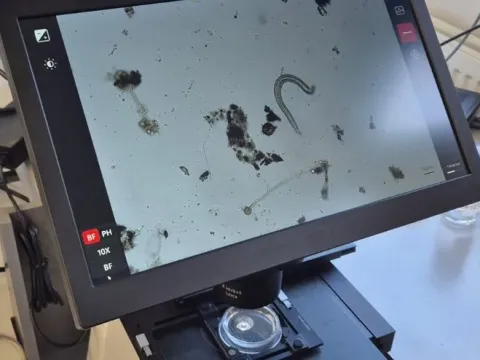
Paratrichodorus is a genus of plant-parasitic nematodes belonging to the order Triplonchida. These microscopic soil-dwelling organisms are known as ectoparasites.
What the section contains
Paratrichodorus
They are characterized by a unique feeding apparatus called an onchiostyle, which is a curved, tooth-like structure used to puncture plant cell walls.
Adults are typically small, ranging from 0.5 to 1.5 mm in length, making them invisible to the naked eye under field conditions without specialized extraction.
They are primarily found in the rhizosphere of plants, where they move through soil pores, seeking out new root tips for sustenance.
Taxonomically, they are distinguished from other genera by the specific structure of their pharyngeal glands and the shape of their caudal region.
Paratrichodorus nematodes cause direct damage by feeding on root tips, which leads to the cessation of root elongation and the development of a "stubby" root system.
However, their greatest economic impact is their ability to transmit tobraviruses, most notably the Tobacco Rattle Virus (TRV), which causes corky ringspot in potatoes.
Direct feeding damage reduces the plant's ability to take up water and nutrients, resulting in stunted growth, chlorosis, and significantly lower yields.
Vegetable crops, sugar beets, and ornamental plants are highly susceptible to both direct feeding damage and virus-induced developmental disorders.
The damage is often patchy within a field, appearing as irregular areas of stunted, yellowing plants that fail to thrive despite adequate fertilization.
The activity and population dynamics of Paratrichodorus are highly dependent on soil moisture and temperature, with peak activity occurring during the growing season.
These nematodes have a life cycle that includes egg, four juvenile stages, and adult, with development proceeding optimally in sandy and silty loam soils.
Their movement is restricted in heavy clay soils, making them most problematic in lighter, well-aerated soils where moisture is easily maintained.
Seasonal fluctuations in soil temperature can trigger vertical migration, with populations often moving deeper into the soil profile during extreme cold or drought.
The most critical period for infection is during the early seedling stages when roots are tender and highly susceptible to the feeding and viral transmission.
Field symptoms typically manifest as irregular stunted patches where plant growth is significantly retarded compared to surrounding areas.
Plants may exhibit deficiency symptoms such as pale leaves, despite sufficient nutrient availability in the soil, due to poor root uptake capacity.
Root systems show classic signs of stubby root syndrome: thickened, shortened root tips, lack of fine lateral roots, and occasionally brown necrotic lesions.
In potatoes, tubers may show internal rust spots, necrotic rings, or misshapen forms, which are classic diagnostic indicators of Tobacco Rattle Virus (TRV).
If suspicious symptoms appear, root and soil sampling must be sent to a laboratory for nematode extraction and virus testing to confirm the pathogen presence.
Integrated management is essential, as there is no single "silver bullet" for controlling these soil-borne pathogens effectively.
- Implement long crop rotations with non-host crops to starve the nematode populations over time.
- Ensure rigorous cleaning of all farm machinery before moving from infested fields to clean areas to prevent soil transport.
- Use certified, high-quality, disease-free planting material to avoid introducing the virus or nematodes into new soil.
- Apply nematicides in high-risk scenarios where crop value justifies the cost and environmental impact.
Bio-fumigation and the use of cover crops that suppress nematode populations are becoming popular sustainable alternatives to chemical control.
Monitoring nematode populations prior to planting is a vital decision-making tool for growers to estimate the risk of potential yield loss.